Accessing Cues are the changes in a person’s body that show which representational system they use to process information. Eye movements are the most obvious signs, but breathing changes, posture, and skin tone are also signs. In clinical diagnostics, these eye accessing cues provide a real-time insight into the client’s cognitive strategy, enabling the therapist to monitor the structure of thought irrespective of content.
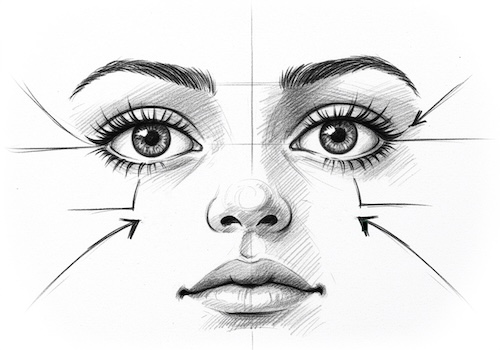
Neurological Connections #
The neurological basis for accessing cues lies in the hardwired connections between the brain’s cognitive processing centers and the oculomotor nerves that control eye movements. The brain is organized economically; to access a specific type of information, it orients the eyes toward the cortical region responsible for processing that data. This creates a predictable map of cognitive function. While lateralization (left-right movement) can vary with handedness, the vertical axis is largely universal.
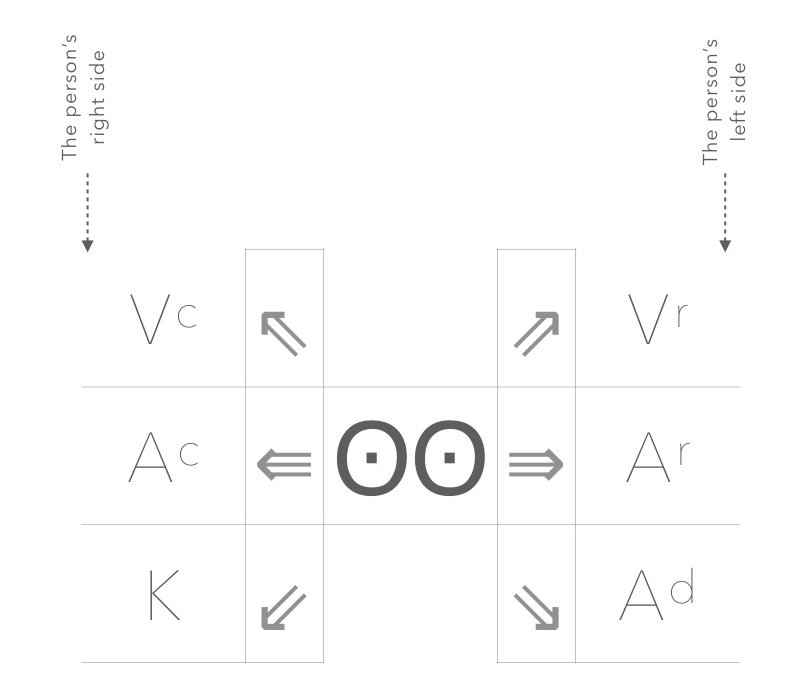
Vertical Axis (Visual vs. Kinesthetic/Auditory Digital): Upward eye movements reliably engage the visual cortex in the occipital lobe, the brain’s center for sight. This is where we process both remembered images (Visual Remembered) and construct new ones (Visual Constructed). Conversely, downward movements shift processing away from the visual cortex. Eyes moving down and to the right typically access the kinesthetic system—emotions and bodily sensations—which involves the limbic system and parietal lobe. Eyes moving down and to the left engage the language centers for auditory digital processing, or internal dialogue.
Horizontal Axis (Remembered vs. Constructed): For a typically organized right-handed person, movements to their left access stored, historical information (remembered), while movements to their right access created or imagined information (constructed). This pattern is often, but not always, reversed for left-handed clients.
Combining these axes provides a detailed framework:
- Up-Left: Visual Remembered (Recalling images from the past).
- Up-Right: Visual Constructed (Creating new images).
- Level-Left: Auditory Remembered (Recalling sounds).
- Level-Right: Auditory Constructed (Creating new sounds).
- Down-Left: Auditory Digital (Internal self-talk).
- Down-Right: Kinesthetic (Accessing feelings, emotions, and tactile sensations).
Strategy Elicitation #
The primary application of accessing cues is the elicitation of behavioral strategies. Every behavior follows a specific sequence of internal representations. An anxiety strategy often follows a rapid, unconscious sequence where a visual construction of a future disaster leads immediately to a kinesthetic sensation of fear, followed by internal dialogue confirming the danger. By calibrating the eye movements, a clinician detects the initial visual trigger even if the client remains unaware of it, allowing for intervention at the start of the sequence rather than the end.
When the person is right in front of you:
Interruption of Loops #
Pathology often forms in a “stuck” processing loop. A distinct pattern emerges in depressive states where the client restricts their processing almost exclusively to the lower visual field. These clients alternate between internal dialogue and kinesthetic sensation, moving their eyes side-to-side along the bottom axis while the visual cortex remains inactive. Because the client does not look up, the neurology required for future planning remains offline. Recognizing these patterns allows for mechanical intervention. Directing the client to physically look up mechanically engages the visual cortex, interrupts the kinesthetic access, and forces the brain to generate an image. This breaks the state more effectively than verbal argumentation.