Instructions #
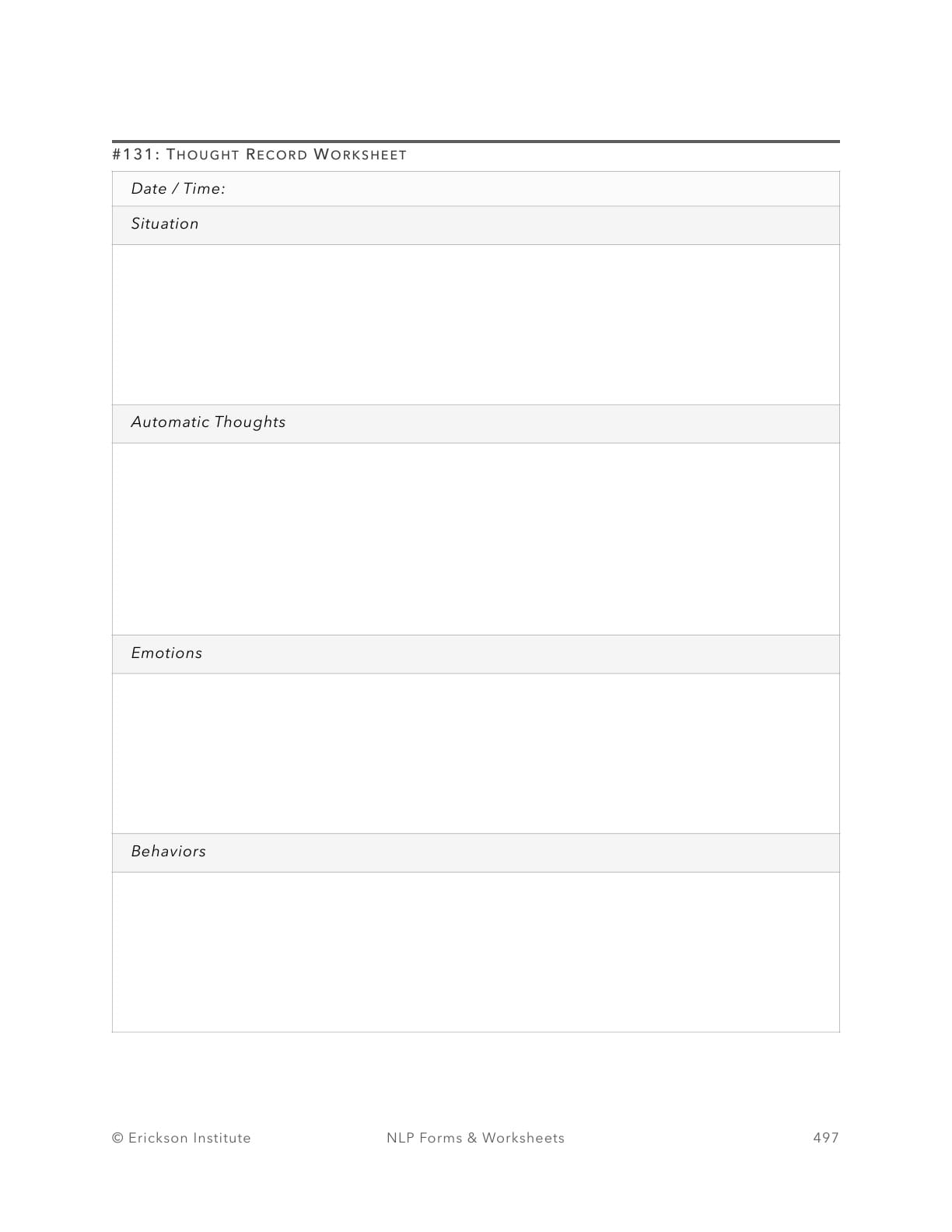
This is a useful tool that can help clients examine and challenge their automatic thoughts, emotions, and associated behaviors in specific situations.
It offers clients a structured framework for gaining insight into their thought patterns and developing more realistic and positive thought patterns. Clients identify and describe the particular situation or event that triggered their thoughts, emotions, and behaviors.
This provides context and a starting point for exploration. Clients write down any automatic thoughts that arise in response to the situation. These thoughts are frequently immediate and involuntary, and they can be negative or distorted.
Clients can become aware of the patterns that influence their emotional and behavioral responses by recording their thoughts. Clients identify and label the emotions they feel in response to their automatic thoughts.
This step assists clients in connecting their thoughts to their emotional state and understanding how their thoughts affect their feelings. Clients record the behaviors or actions they take as a result of their thoughts and emotions.
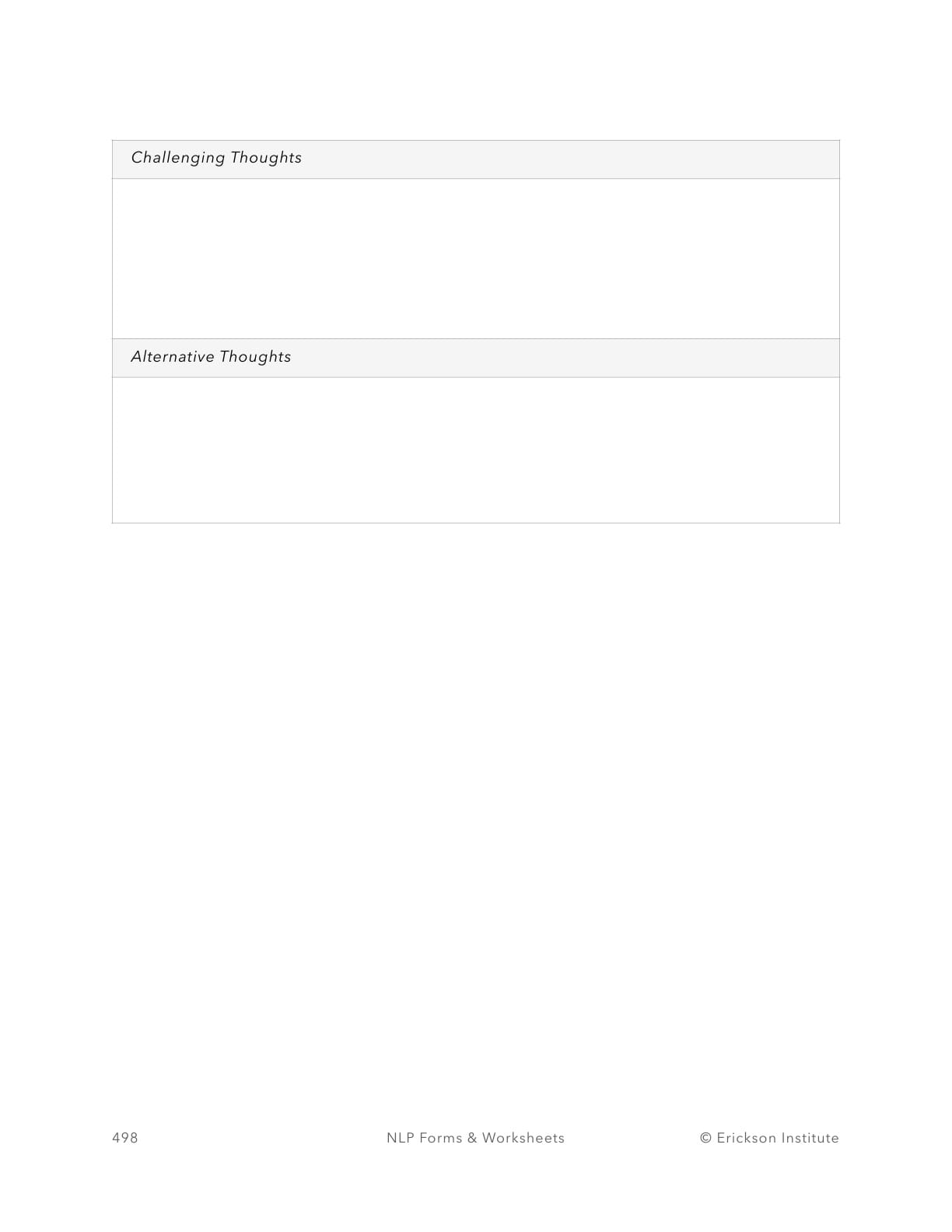
This draws attention to the link between thoughts, emotions, and behaviors and encourages clients to consider the consequences of their automatic responses. Clients are guided to examine the evidence for and against their automatic thoughts in order to challenge them.
They are encouraged to question the validity and accuracy of their initial thoughts in search of more balanced and realistic viewpoints. Alternative Thoughts: Clients generate more realistic, positive, and balanced thoughts.
This step encourages cognitive restructuring and assists clients in developing new supportive and adaptive thought patterns. Clients can gain a better understanding of the interplay between their thoughts, emotions, and behaviors by using the Thought Record Sheet.
It gives them the ability to challenge negative thought patterns and replace them with more realistic and positive ones. The Thought Record Sheet is an effective tool for self-reflection, personal growth, and emotional well-being.
In sessions, therapists can use this tool to guide clients through the process of thought examination and cognitive restructuring, facilitating positive change and improved mental health.
Worksheet #
Source #
Access the full suite of 500 therapy and coaching templates. This worksheet features in my book, available on Amazon:
500 Practical NLP Forms, Templates & Worksheets: For Therapy, Coaching & Training