Instructions #
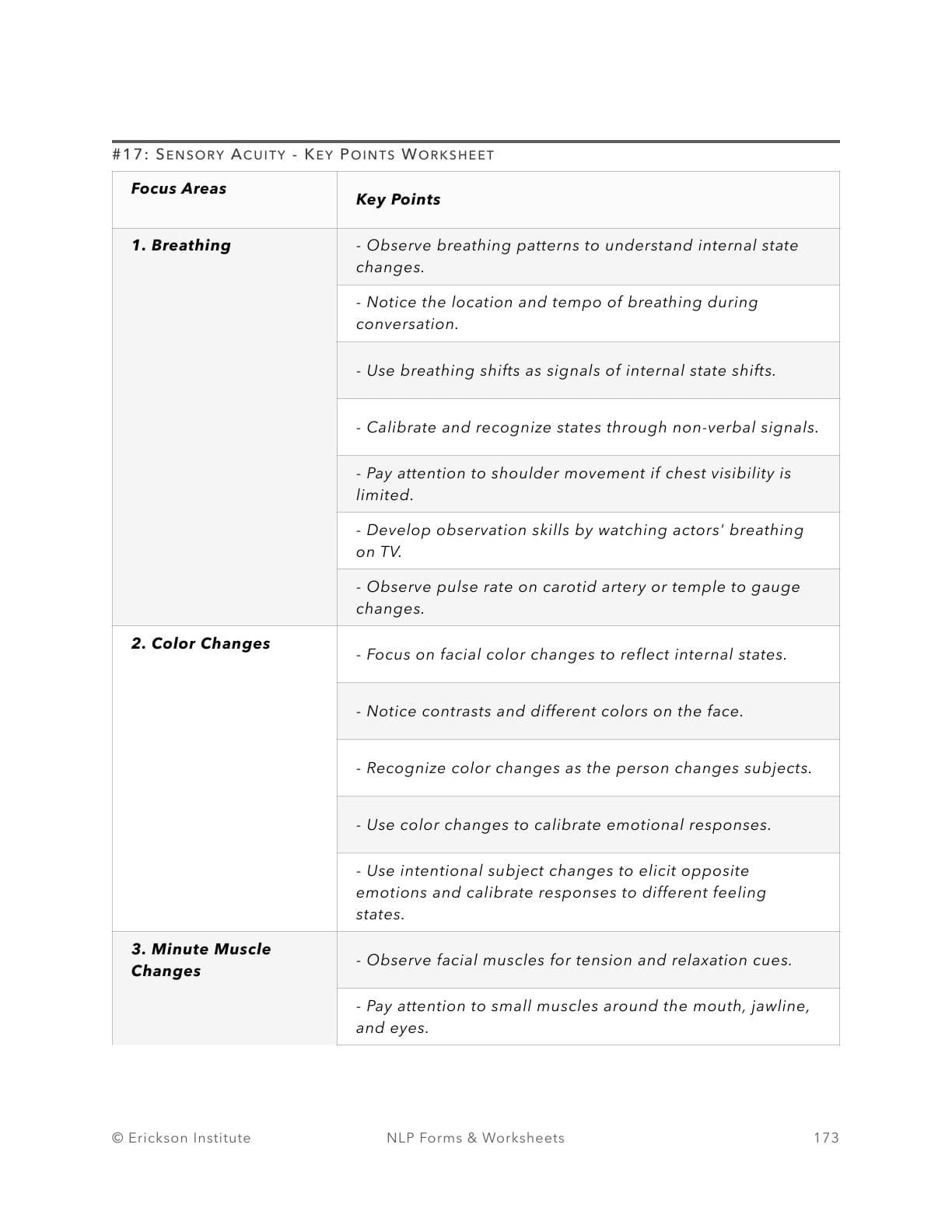
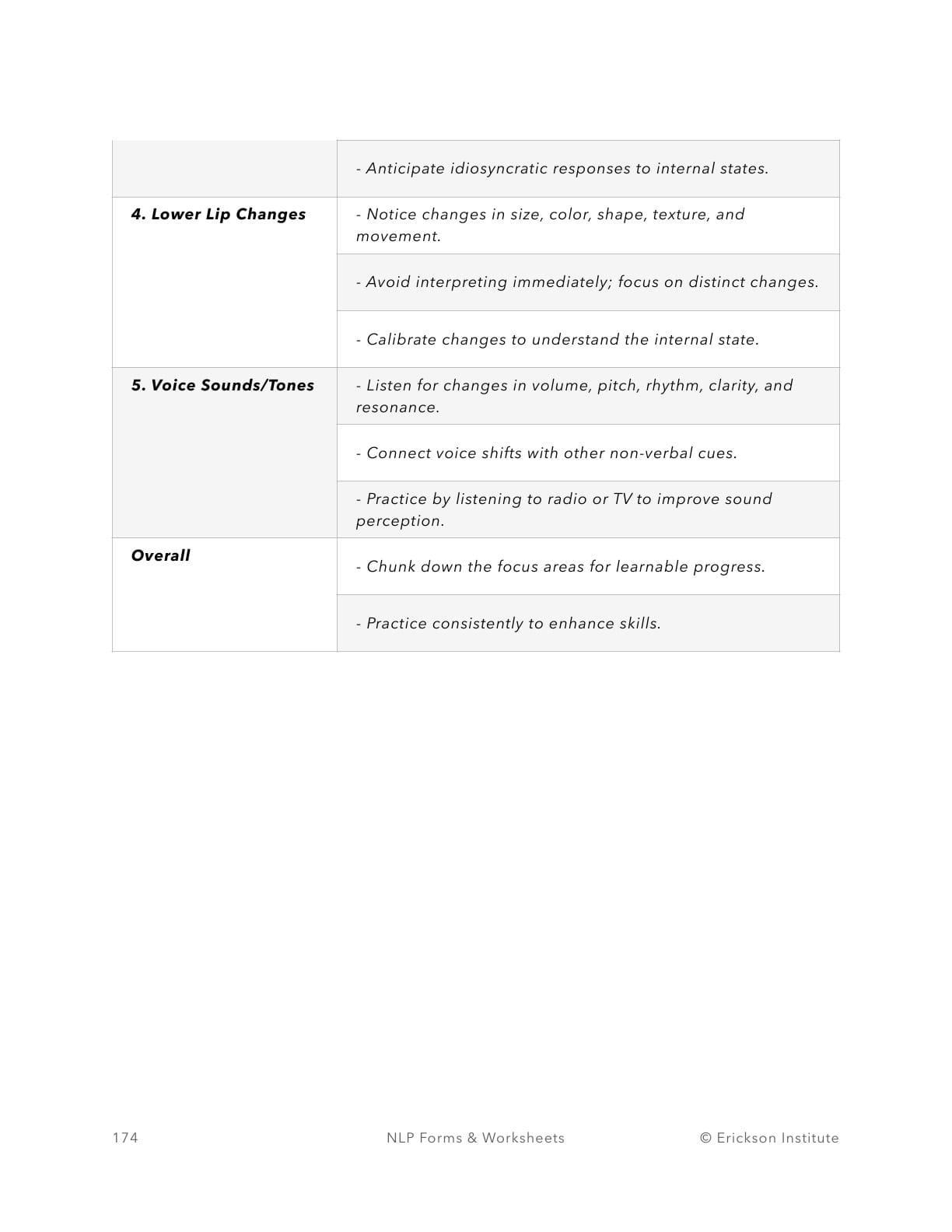
Sensory acuity, within the context of Neuro Linguistic Programming (NLP), refers to the ability to sharpen and heighten our senses to perceive subtle cues and information from the external world.
It involves developing a greater awareness and sensitivity to the sensory experiences we encounter.
By enhancing sensory acuity, clients can become more perceptive observers of both verbal and non-verbal cues, such as body language, tone of voice, facial expressions, and physiological changes.
This heightened awareness allows us to better understand the underlying emotions, thoughts, and intentions of others. Sensory acuity also involves being attentive to our own sensory experiences and internal states.
By paying close attention to our own thoughts, emotions, and bodily sensations, we can gain valuable insights into our own mental and emotional processes.
Practicing sensory acuity involves training ourselves to notice even the subtlest sensory information and to interpret its significance accurately. It requires curiosity, openness, and an intention to gather meaningful data from our senses.
Through repeated practice and feedback, we can refine our sensory acuity skills and become more adept at perceiving and interpreting the sensory information in our environment.
Worksheet #
Source #
Access the full suite of 500 therapy and coaching templates. This worksheet features in my book, available on Amazon:
500 Practical NLP Forms, Templates & Worksheets: For Therapy, Coaching & Training