Instructions #
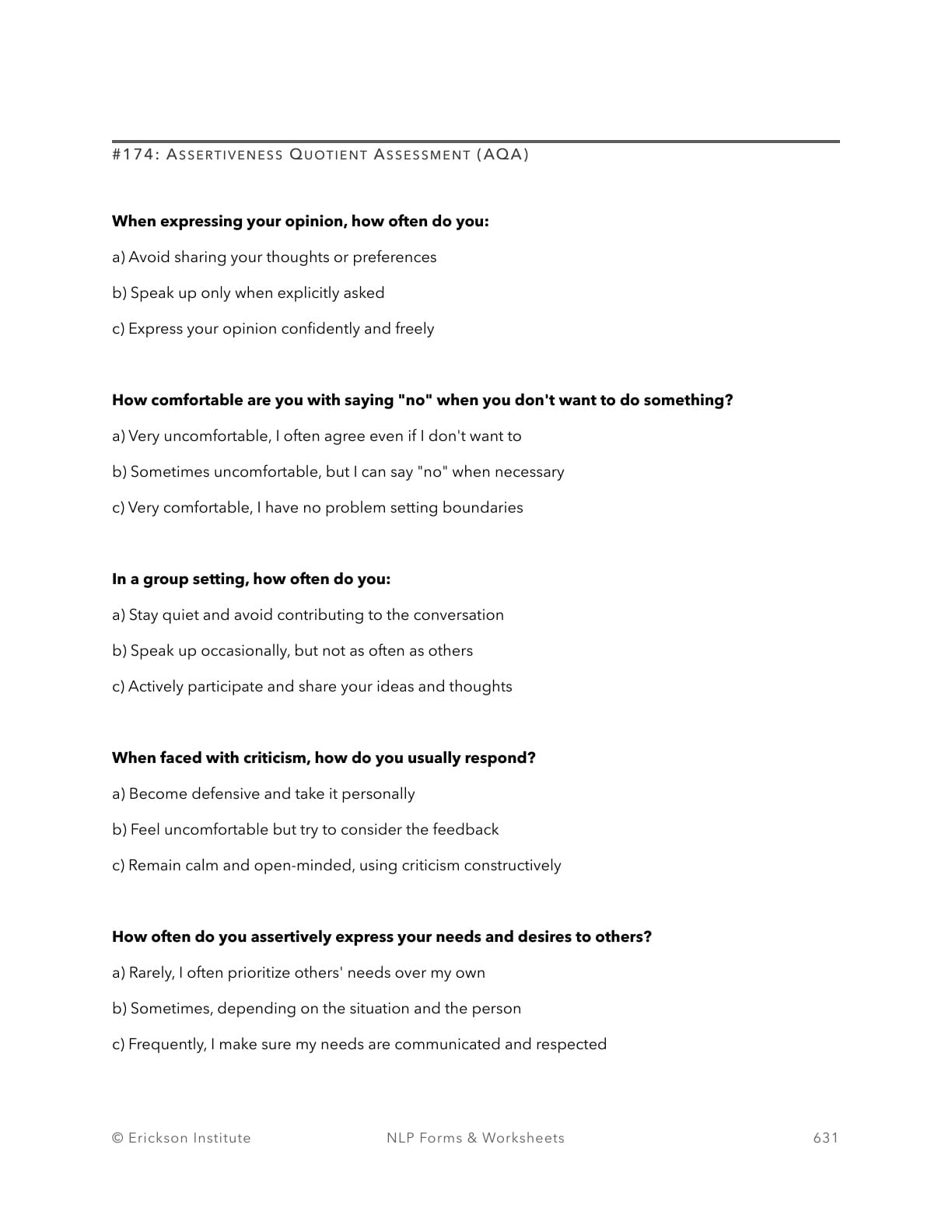
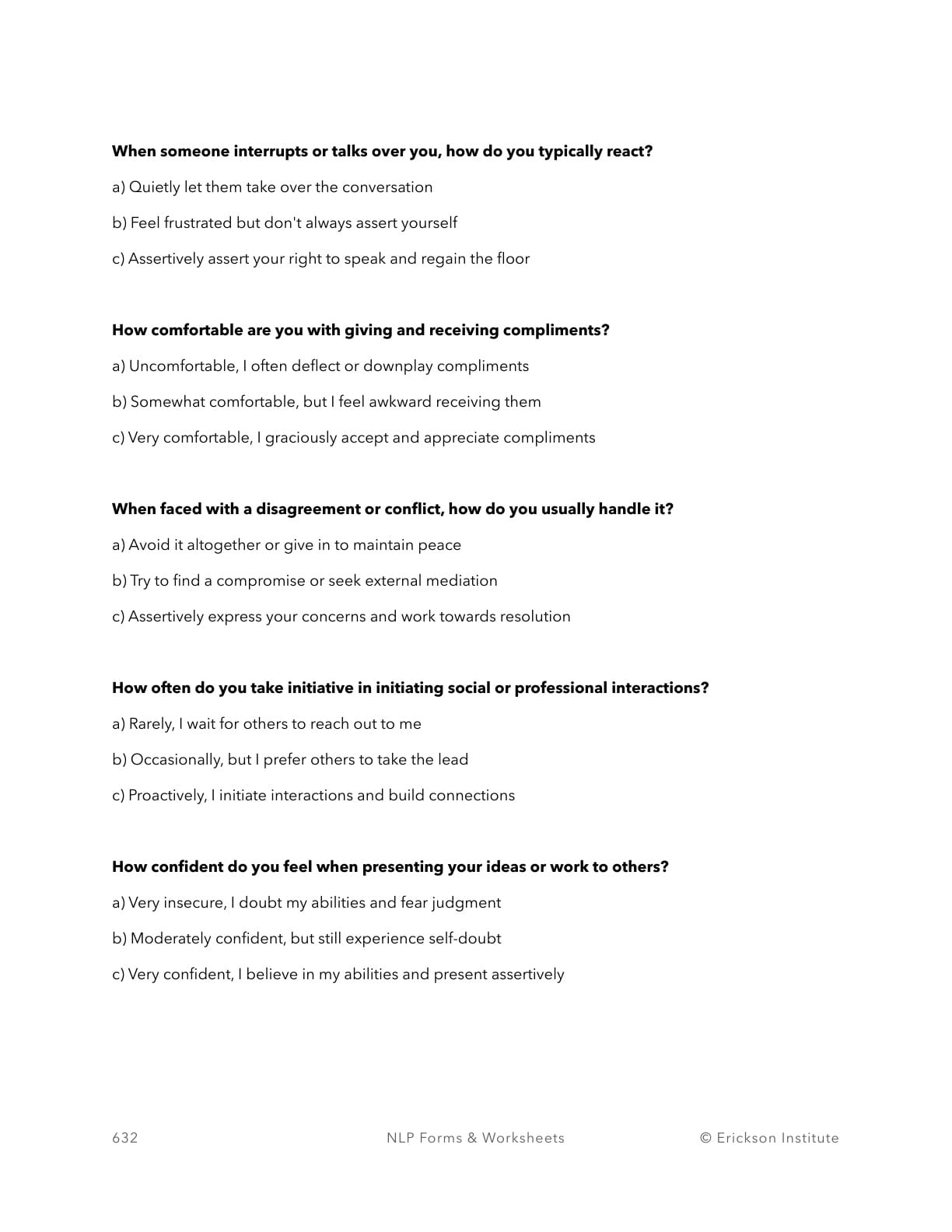
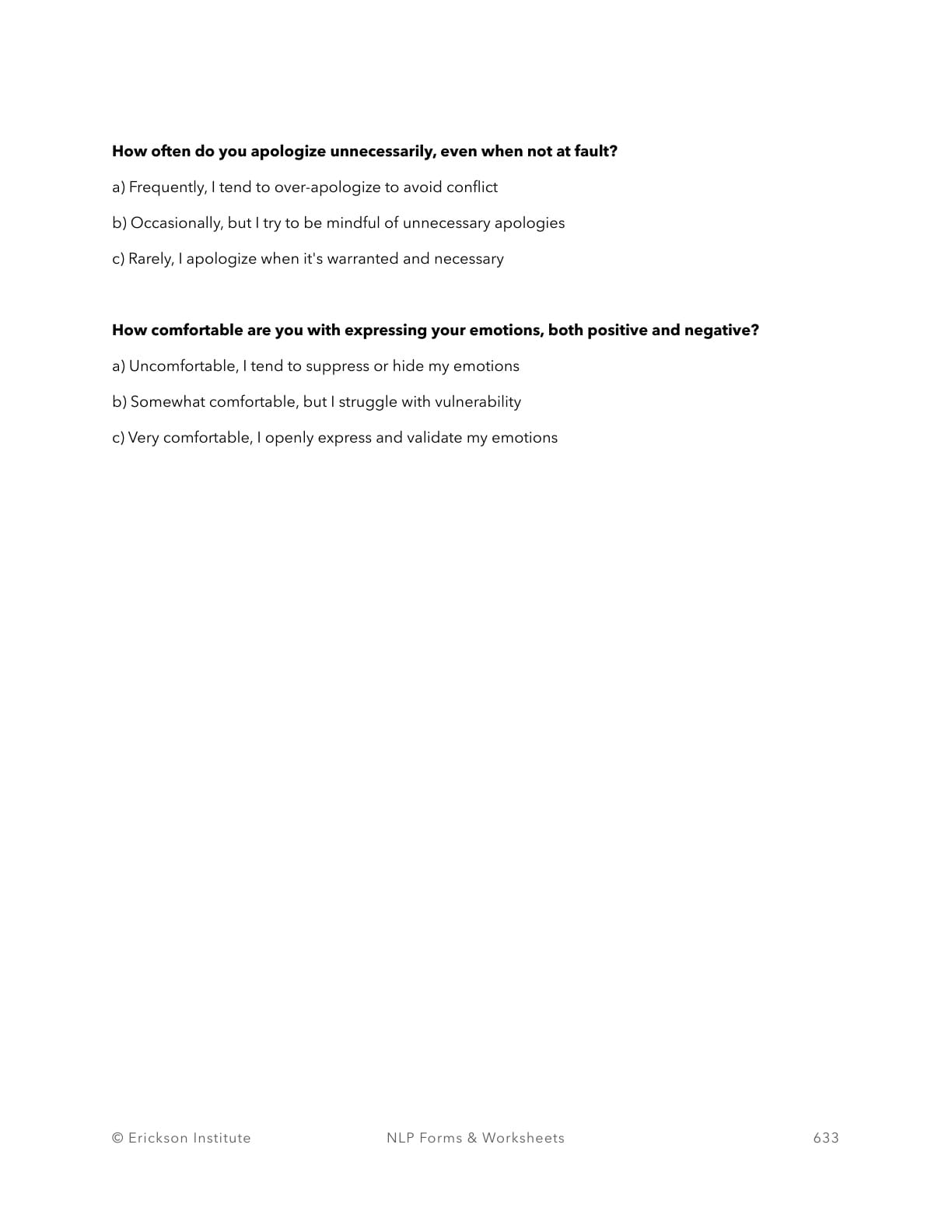
The ability to express oneself confidently, directly, and respectfully while honoring one’s own needs and rights is referred to as assertiveness.
It entails effectively communicating one’s opinions, desires, and boundaries, as well as standing up for oneself without violating the rights of others.
Clients need assertiveness in interpersonal interactions because it allows them to express their thoughts, feelings, and needs openly and honestly.
It promotes healthy relationships by establishing clear boundaries, boosting self-esteem, and encouraging mutual understanding and respect.
Clients who are assertive are better equipped to handle conflicts, negotiate effectively, and assert their rights, resulting in higher self-esteem and overall well-being. Understanding your clients’ level of assertiveness can help guide your therapeutic approach.
Clients who struggle with assertiveness may struggle in a variety of areas of their lives, including personal relationships, work settings, and decision-making processes.
You can gain insight into specific areas where they may need support or skill development by assessing their assertiveness.
By assisting clients in developing their assertiveness, you enable them to express their needs and opinions authentically, make informed decisions, and effectively advocate for themselves.
Worksheet #
Source #
Access the full suite of 500 therapy and coaching templates. This worksheet features in my book, available on Amazon:
500 Practical NLP Forms, Templates & Worksheets: For Therapy, Coaching & Training