Instructions #
People may be reluctant to be assertive out of concern that they will come off as aggressive and face rejection from others. A misunderstanding or ambiguity regarding the distinction between assertiveness and aggression is the root of this fear.
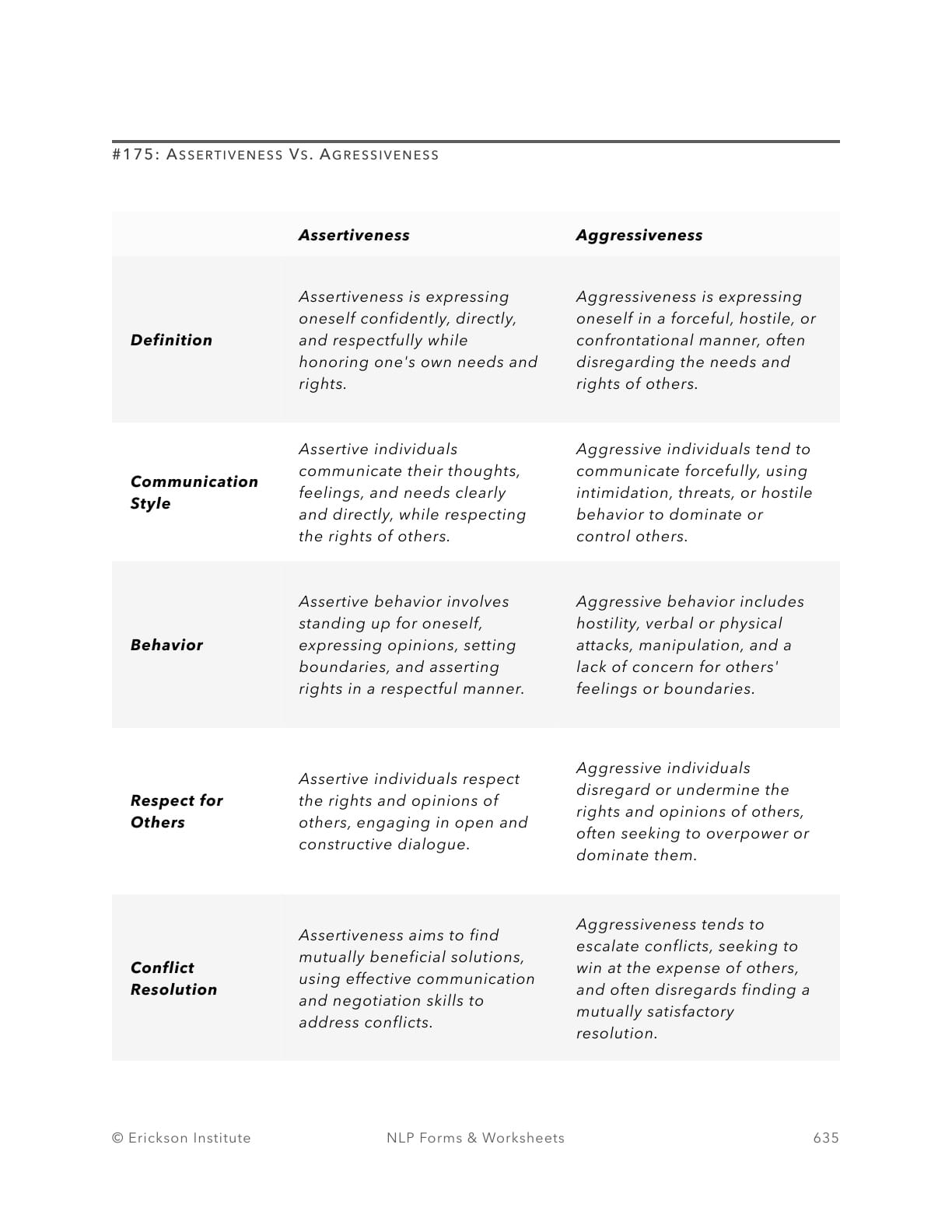
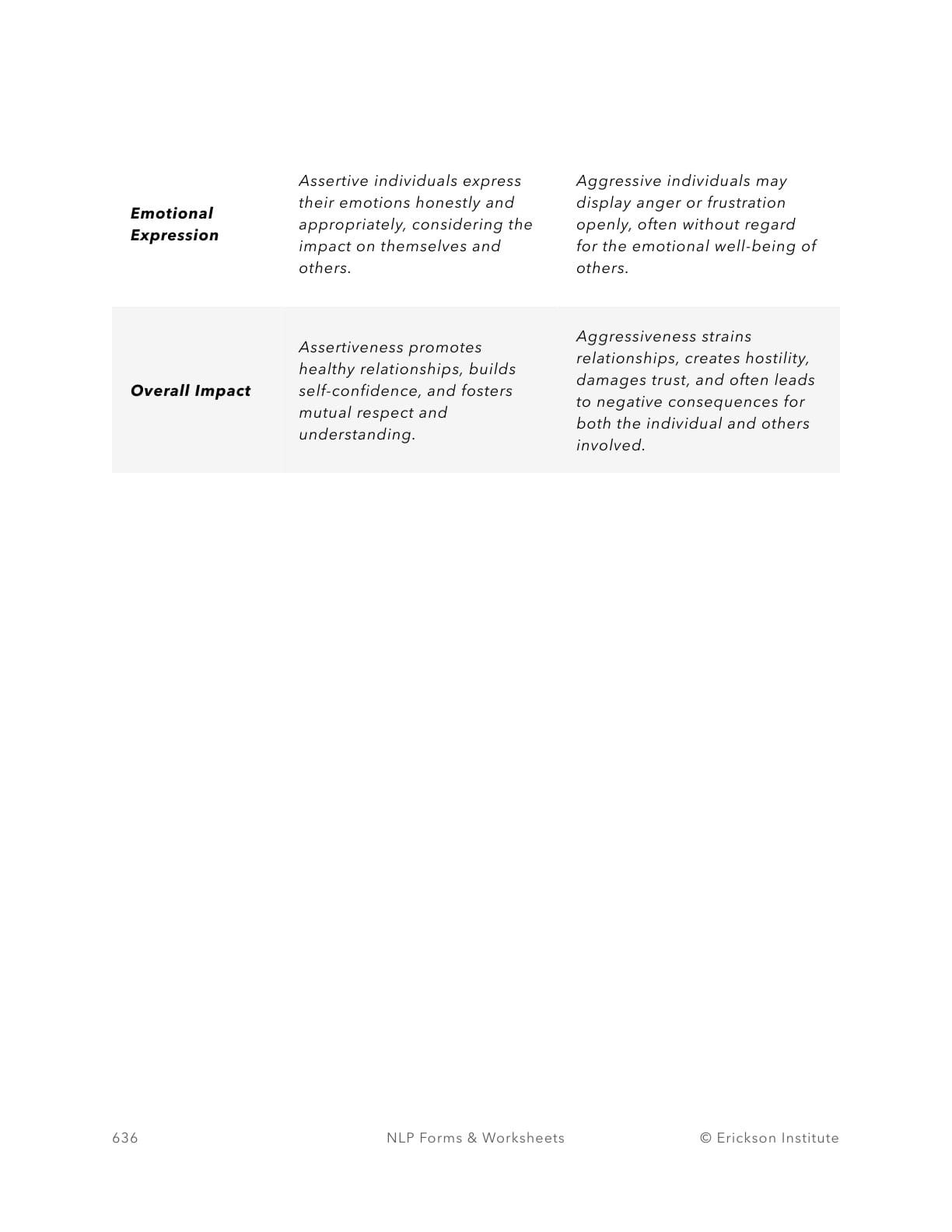
You can effectively explain the differences between the two and help alleviate their inhibitions by using the comparison table provided.
To begin, emphasize that assertiveness is about confidently and respectfully expressing oneself while respecting the rights and feelings of others.
It entails clear communication, establishing boundaries, and advocating for one’s own needs and opinions while respecting the rights of others.
This distinction emphasizes the importance of assertiveness as a balanced and constructive approach to communication and interpersonal interactions. Then, emphasize the contrasting nature of aggressiveness.
Explain that aggressive behavior is defined as forceful and hostile behavior that frequently disregards the rights and opinions of others. It is more concerned with dominating or overpowering others than with fostering mutual understanding and respect.
Stress that aggression is not an effective or desirable communication style because it strains relationships and has negative consequences. People can gain a better understanding of assertiveness and how it differs from aggressiveness by reading this clear comparison.
This can help alleviate the fear of being perceived as aggressive when assertive. Assure them that assertiveness is an important skill that fosters healthy relationships, self-confidence, and effective communication.
Encourage them to embrace assertiveness as a way to authentically express themselves and address their needs and concerns without resorting to aggression. Furthermore, it is critical to emphasize that assertiveness is a skill that can be learned and improved over time.
Worksheet #
Source #
Access the full suite of 500 therapy and coaching templates. This worksheet features in my book, available on Amazon:
500 Practical NLP Forms, Templates & Worksheets: For Therapy, Coaching & Training