Instructions #
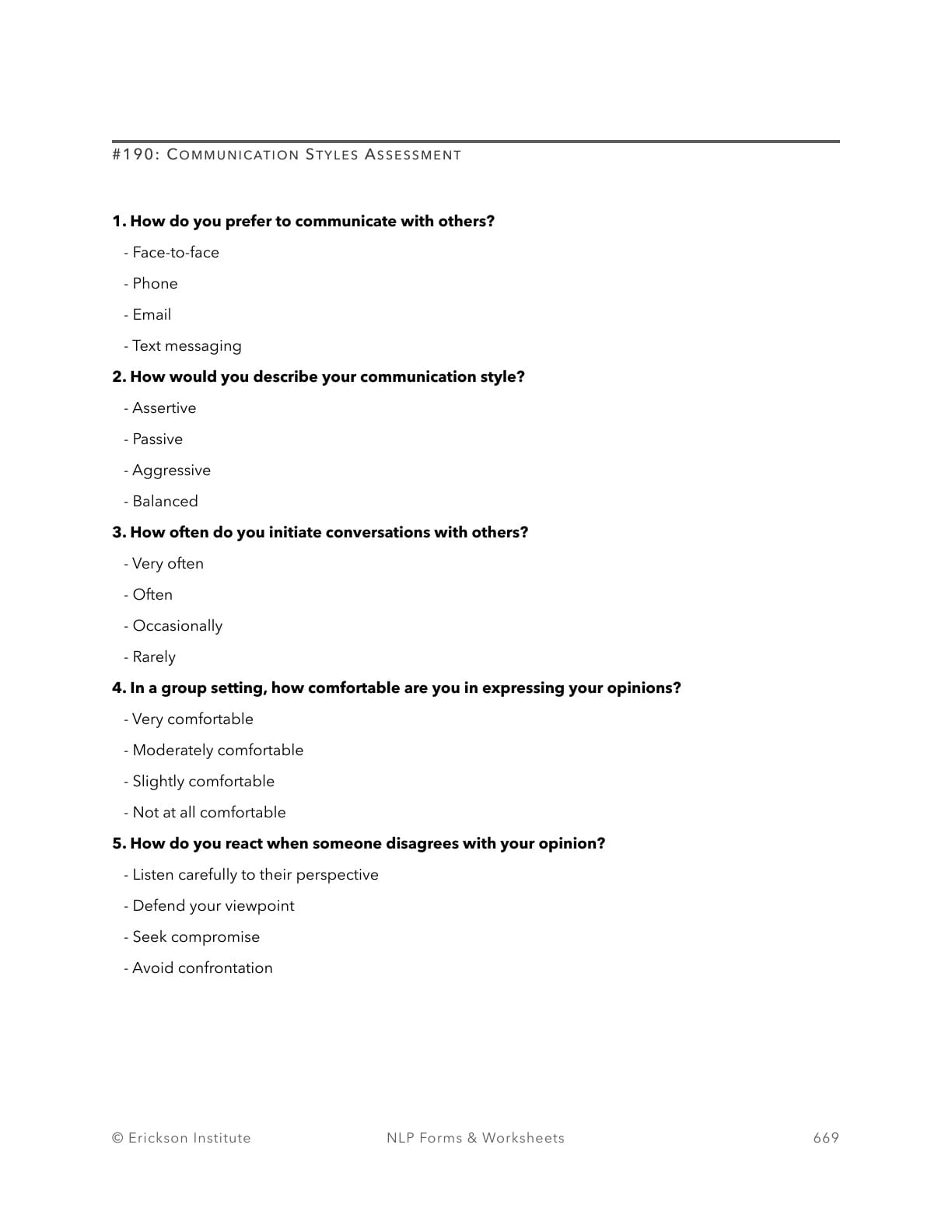
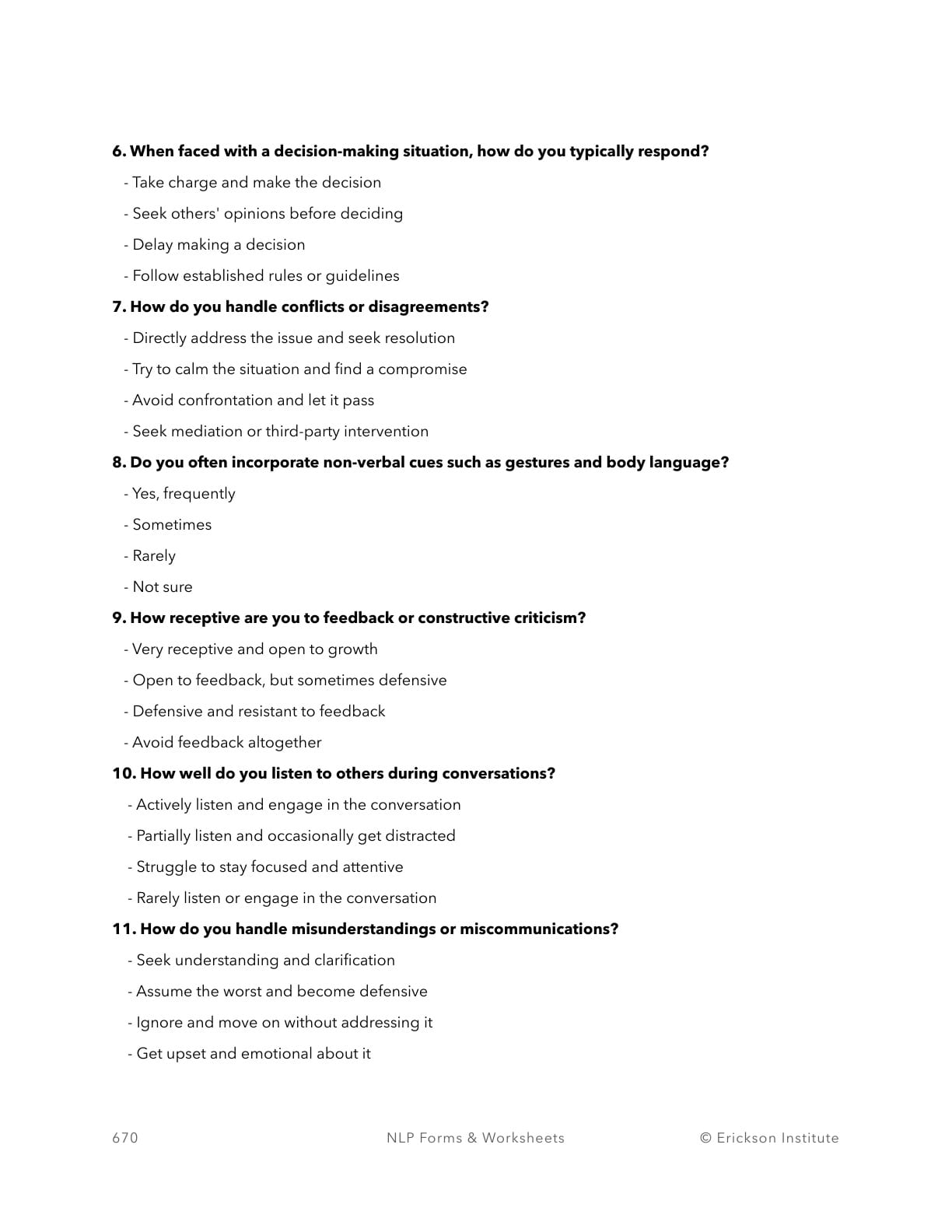
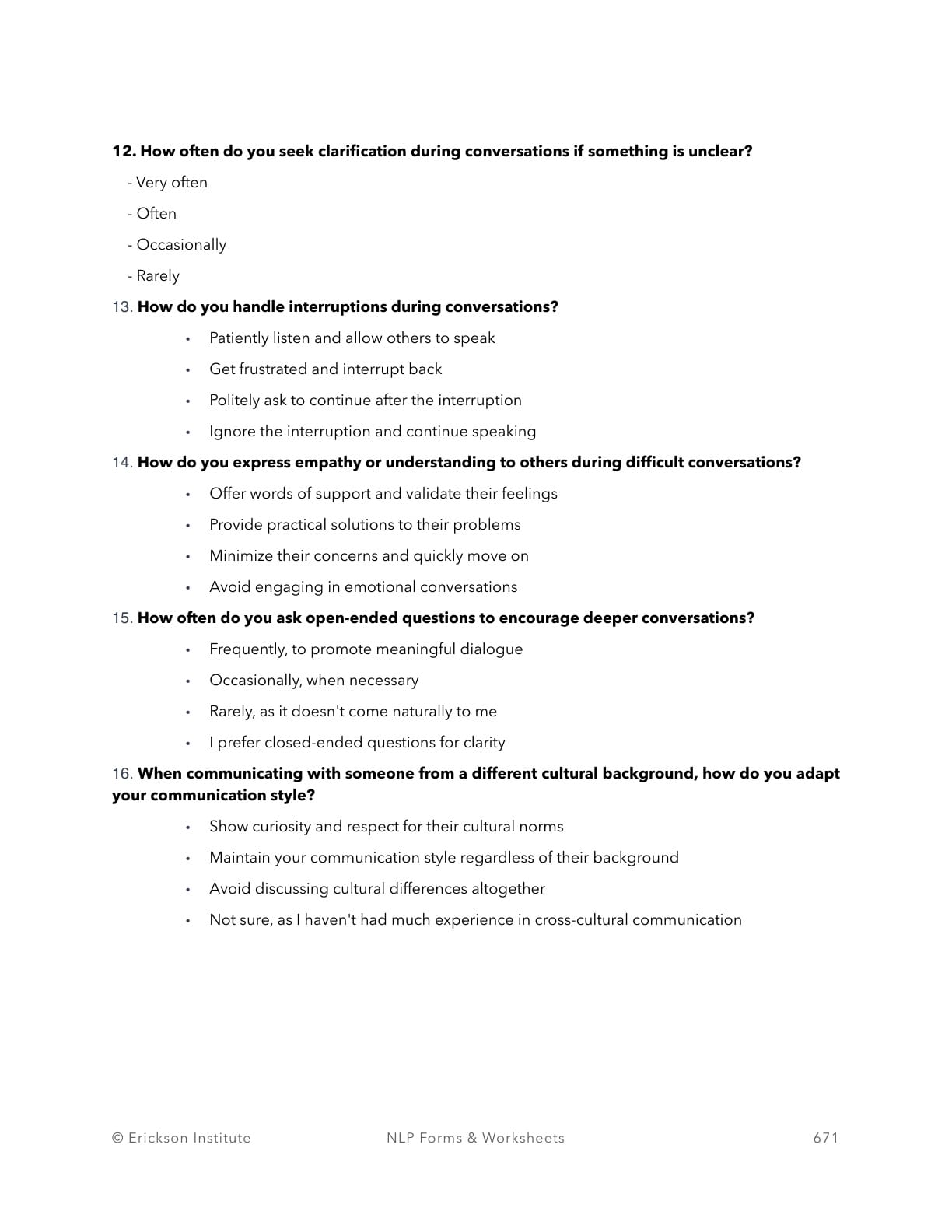
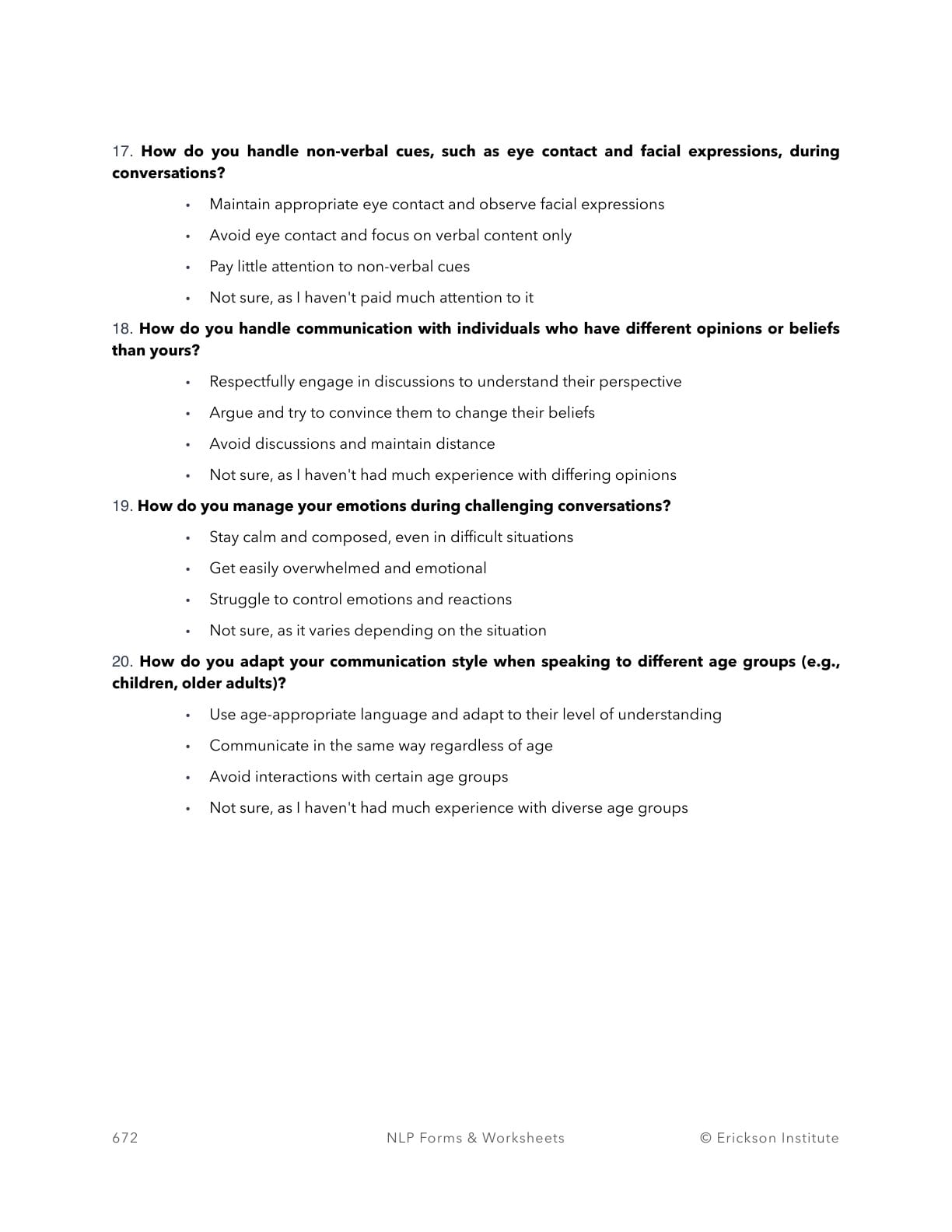
Assertiveness, active listening, empathy, conflict resolution, cultural sensitivity, nonverbal cues, and emotional management are among the topics covered in the questionnaire.
You can learn about your client’s communication tendencies and preferences by asking them to respond to these questions. You can learn about the client’s communication strengths, areas where they may struggle, and overall communication style from their responses.
This understanding can help guide your therapeutic approach, allowing you to provide tailored strategies and interventions to support your client’s communication growth.
You can help them improve their communication skills, foster healthier relationships, and work toward their therapeutic goals by identifying specific areas where they may benefit from skill development or behavior modification.
Worksheet #
Source #
Access the full suite of 500 therapy and coaching templates. This worksheet features in my book, available on Amazon:
500 Practical NLP Forms, Templates & Worksheets: For Therapy, Coaching & Training