Instructions #
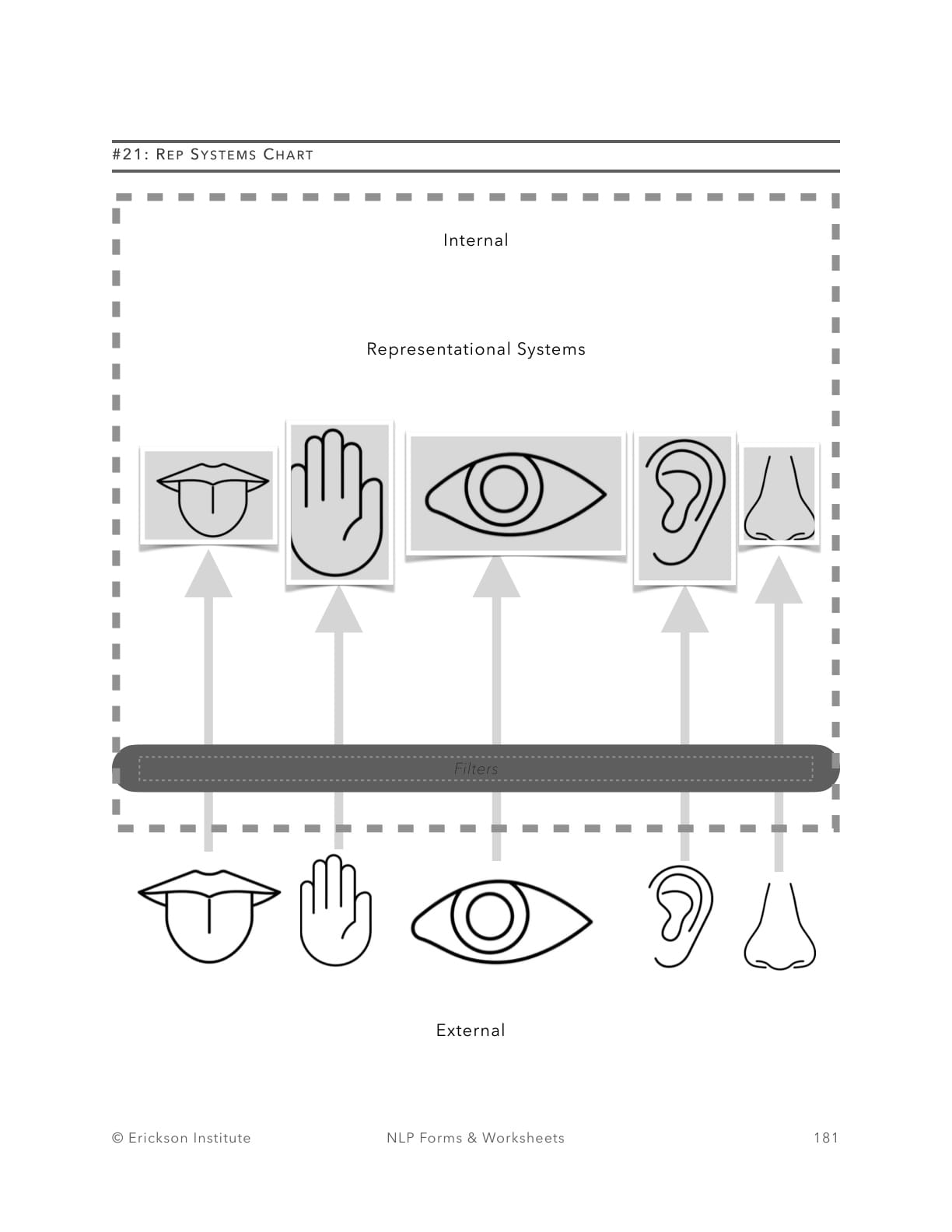
The general idea is that our physical senses are where our experience of the world begins. We receive sensory information from our surroundings through our senses of sight, hearing, touch, taste, and smell.
These sensory inputs supply raw data for our minds to process and interpret. Once we receive sensory information, our minds filter and translate it using the same internal representational systems.
Internal processing entails forming mental representations of sensory experiences that are shaped by our unique perceptual filters, beliefs, memories, and biases. When we see a beautiful sunset, for example, our visual senses capture the colors, shapes, and patterns of the sky.
Our subjective experience of the sunset, however, is the result of our mind’s interpretation and filtering of this sensory input. Someone may find it peaceful and serene, while another may find it inspiring or nostalgic.
Our internal representational systems and the meanings we assign to sensory information influence our subjective experiences.
Internal representational systems, such as visual, auditory, and kinesthetic, assist us in making sense of sensory input and developing a rich and complex internal experience of the world. They serve as cognitive frameworks for processing, storing, and retrieving information.
Depending on our dominant representational systems, our internal representations can include mental images, sounds, sensations, emotions, and language.
Understanding this process is useful in NLP and other fields because it demonstrates how our perception of reality is subjective and influenced by our internal processing.
We can gain insights into our thoughts, emotions, and behaviors by becoming aware of our representational systems and how they shape our experiences.
This awareness opens the door to personal development, effective communication, and the ability to consciously shape our perception of the world.
Worksheet #
Source #
Access the full suite of 500 therapy and coaching templates. This worksheet features in my book, available on Amazon:
500 Practical NLP Forms, Templates & Worksheets: For Therapy, Coaching & Training