Instructions #
Alcoholism is a chronic disease characterized by excessive and compulsive alcohol consumption. This type of behavior can lead to physical and psychological dependence on alcohol.
Alcohol use disorder is defined by a consistent and problematic pattern of alcohol consumption that has a negative impact on multiple aspects of a person’s life, including physical health, interpersonal relationships, occupational functioning, and overall quality of life.
Alcoholism is frequently associated with the phenomenon of tolerance, which refers to the need for progressively larger amounts of alcohol to achieve the desired level of intoxication.
Furthermore, when a person reduces or discontinues their alcohol consumption, they may experience a variety of withdrawal symptoms. Alcoholism has been observed to function as a coping mechanism for clients who face difficulties processing or managing emotional difficulties.
When confronted with intense emotions that appear overwhelming or insurmountable, some people may turn to alcohol to temporarily suppress or numb their emotional distress. Alcohol’s psychoactive properties have the potential to provide temporary relief from emotional distress.
The substance in question has the ability to alter brain chemistry by influencing neurotransmitters involved in mood and emotion regulation, such as dopamine and serotonin.
Alcohol has the ability to produce euphoria, relaxation, and temporary relief from negative affective states.
It is important to note that emotional problems can manifest themselves in a variety of ways, including unresolved traumas, deeply ingrained insecurities, fears, or feelings of inadequacy.
It is possible that your emotional difficulties stem from past experiences, dysfunctional family dynamics, or internal conflicts. Clients may turn to alcohol as a form of evasion or avoidance rather than confronting and dealing with these emotions head-on.
Alcohol consumption can cause a temporary state of emotional detachment, which may provide clients with temporary relief from their emotional distress by facilitating forgetfulness or suppression of their problems.
One possible explanation is that this behavior is used as a temporary distraction or as a form of self-medication to relieve emotional discomfort.
Furthermore, alcohol has the potential to lower inhibitions and alleviate social anxieties, facilitating interpersonal interactions and engagements.
The phenomenon in question has the potential to instill a distorted sense of self-assurance and authority, allowing clients to effectively navigate social situations that would otherwise elicit feelings of unease or apprehension.
It is critical to recognize that using alcohol as a coping mechanism for emotional difficulties is not a viable or healthy solution. As we discuss alcoholism, it is important to remember that this condition can have a wide range of negative consequences.
Physical health complications, strained interpersonal relationships, financial hardships, and a general decline in overall well-being are examples of these.
To achieve long-term recovery, it is critical to recognize the emotional factors that contribute to alcoholism and cultivate effective coping mechanisms.
Professional help, such as therapy or support groups, can assist clients in examining and resolving the underlying causes of their emotional difficulties, as well as learning more constructive ways to regulate and articulate their emotions.
Worksheet #
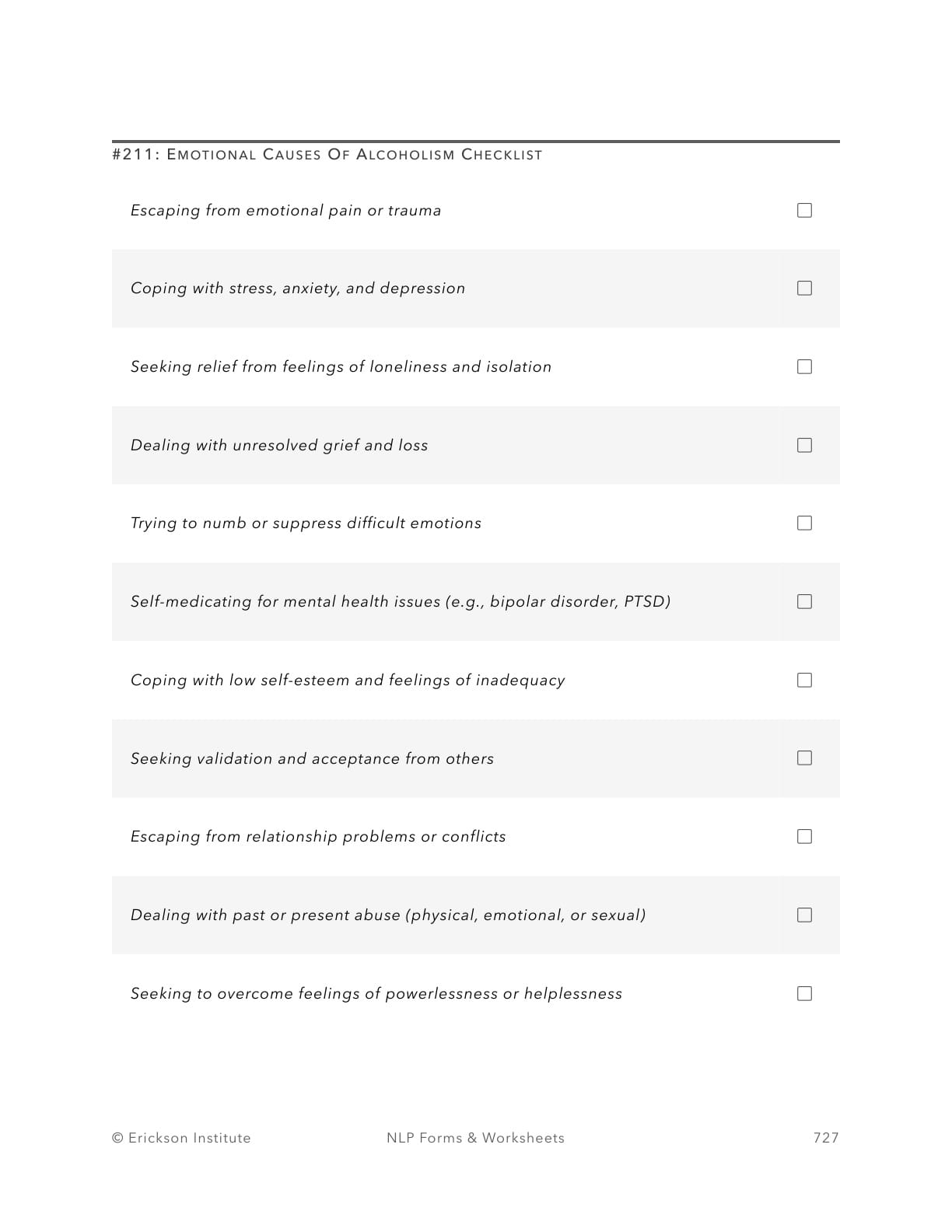
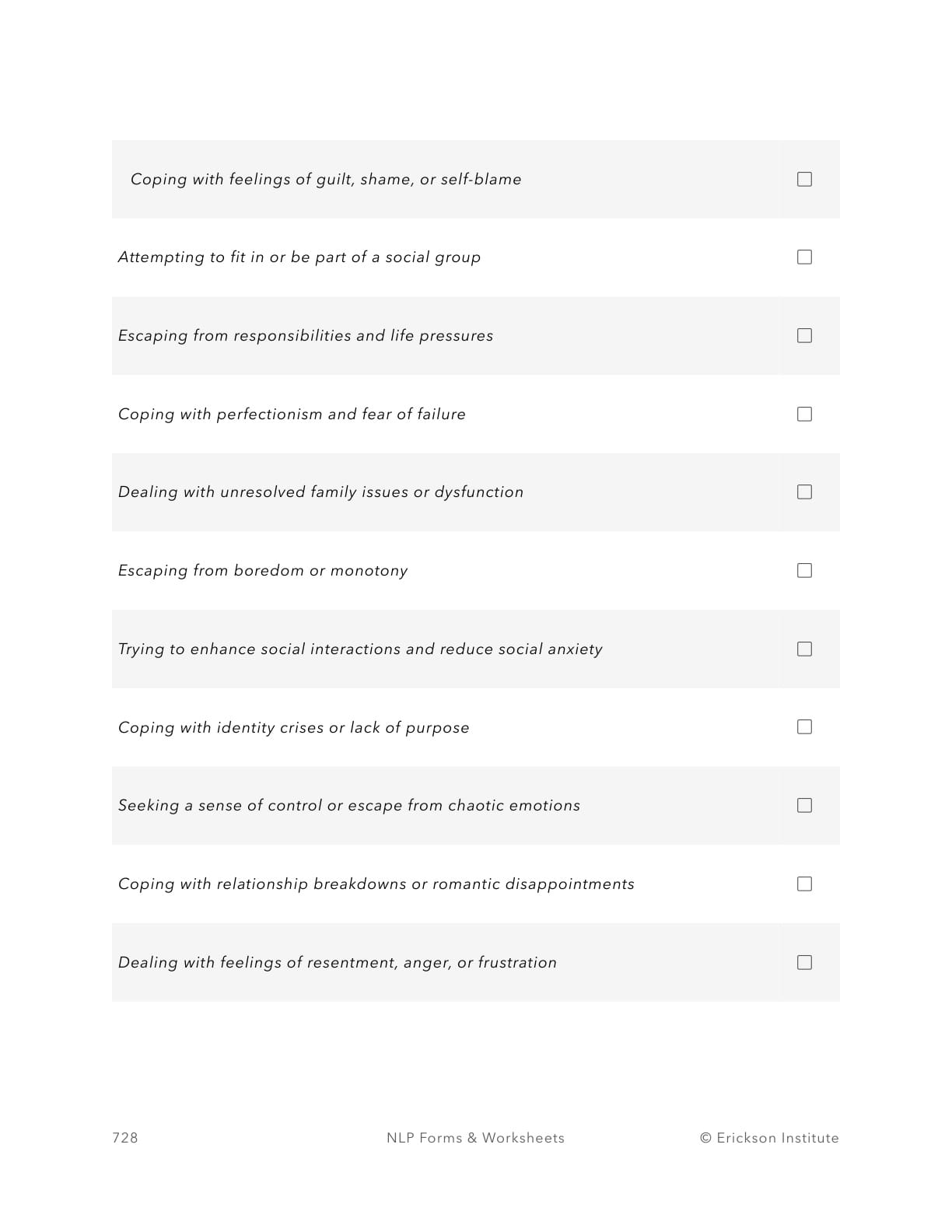
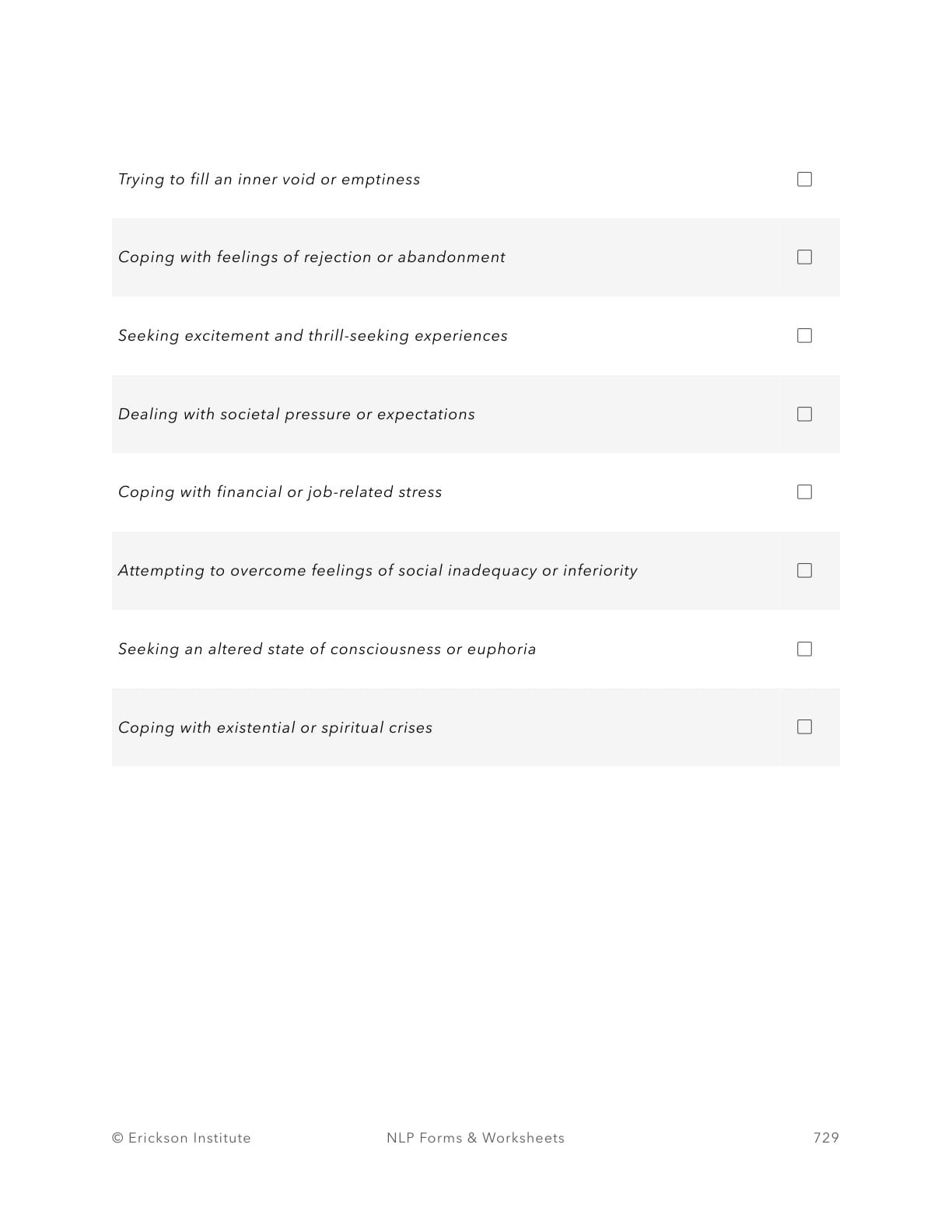
Source #
Access the full suite of 500 therapy and coaching templates. This worksheet features in my book, available on Amazon:
500 Practical NLP Forms, Templates & Worksheets: For Therapy, Coaching & Training