Instructions #
The Johari Window is a psychological tool that assists people in understanding and improving their self-awareness and interpersonal relationships.
It was created in the 1950s by psychologists Joseph Luft and Harry Ingham and is named after a combination of their first names (Jo-seph and Har-ry).
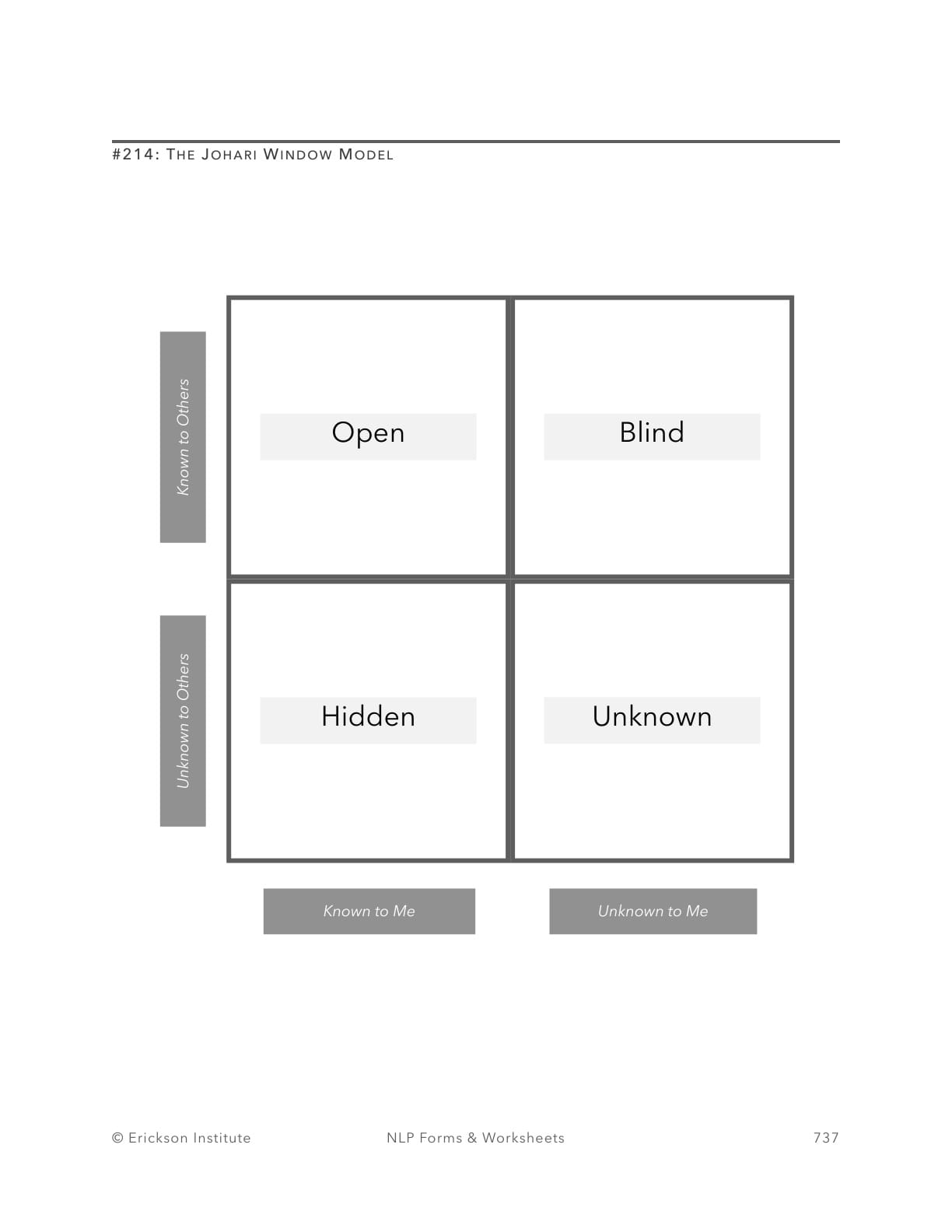
The Johari Window is made up of a grid divided into four quadrants, each of which represents a different aspect of a person’s knowledge or information about themselves: This quadrant represents information or knowledge about the client that is known by both the client and others.
It includes aspects of their personality, behavior, thoughts, and feelings that they openly share and that others recognize. It reflects the public persona of the client.
This quadrant represents information or knowledge about the client that is known to the client but not to others. It includes private thoughts, experiences, emotions, or personal history that the client chooses not to reveal or conceal.
This quadrant reflects the private self of the client. Blind Area: This quadrant represents information or knowledge about the client that others have but the person does not.
It includes aspects of their behavior, strengths, weaknesses, or impact on others that others notice but the client is unaware of. This section emphasizes the significance of feedback and external observations in self-discovery and personal growth.
Unknown Area: This quadrant represents information or knowledge that both the client and others are unaware of. It represents undiscovered aspects of an individual’s personality, potential, or talents.
This section highlights the possibility of self-discovery and personal growth through new experiences or self-reflection.
The goal of using the Johari Window is to gradually expand the Open Area by increasing self-awareness and disclosure, reduce the Hidden Area by sharing more with others, reduce the Blind Area by providing feedback and self-reflection, and gradually explore and expand the Unknown Area through personal growth and new experiences.
Worksheet #
Source #
Access the full suite of 500 therapy and coaching templates. This worksheet features in my book, available on Amazon:
500 Practical NLP Forms, Templates & Worksheets: For Therapy, Coaching & Training