Instructions #
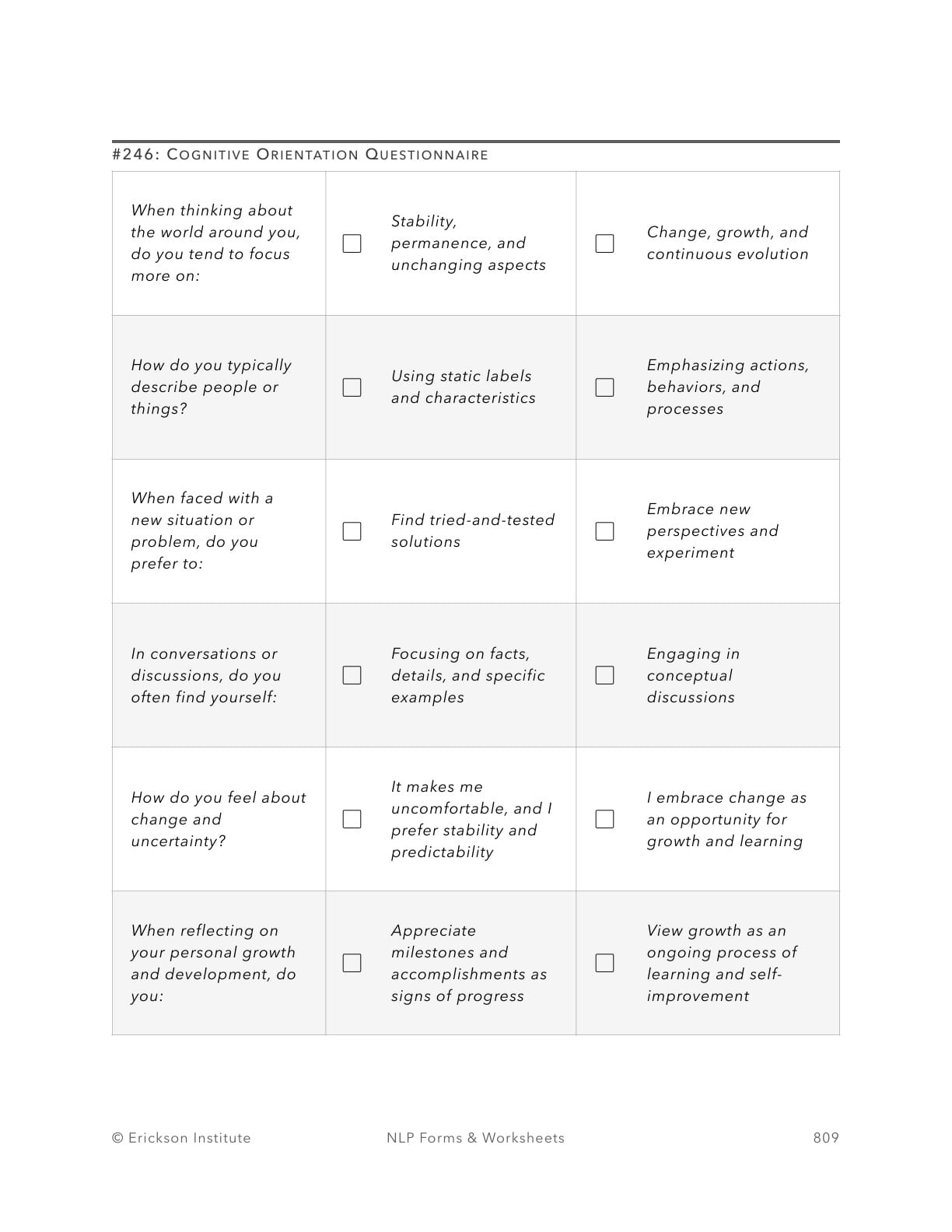
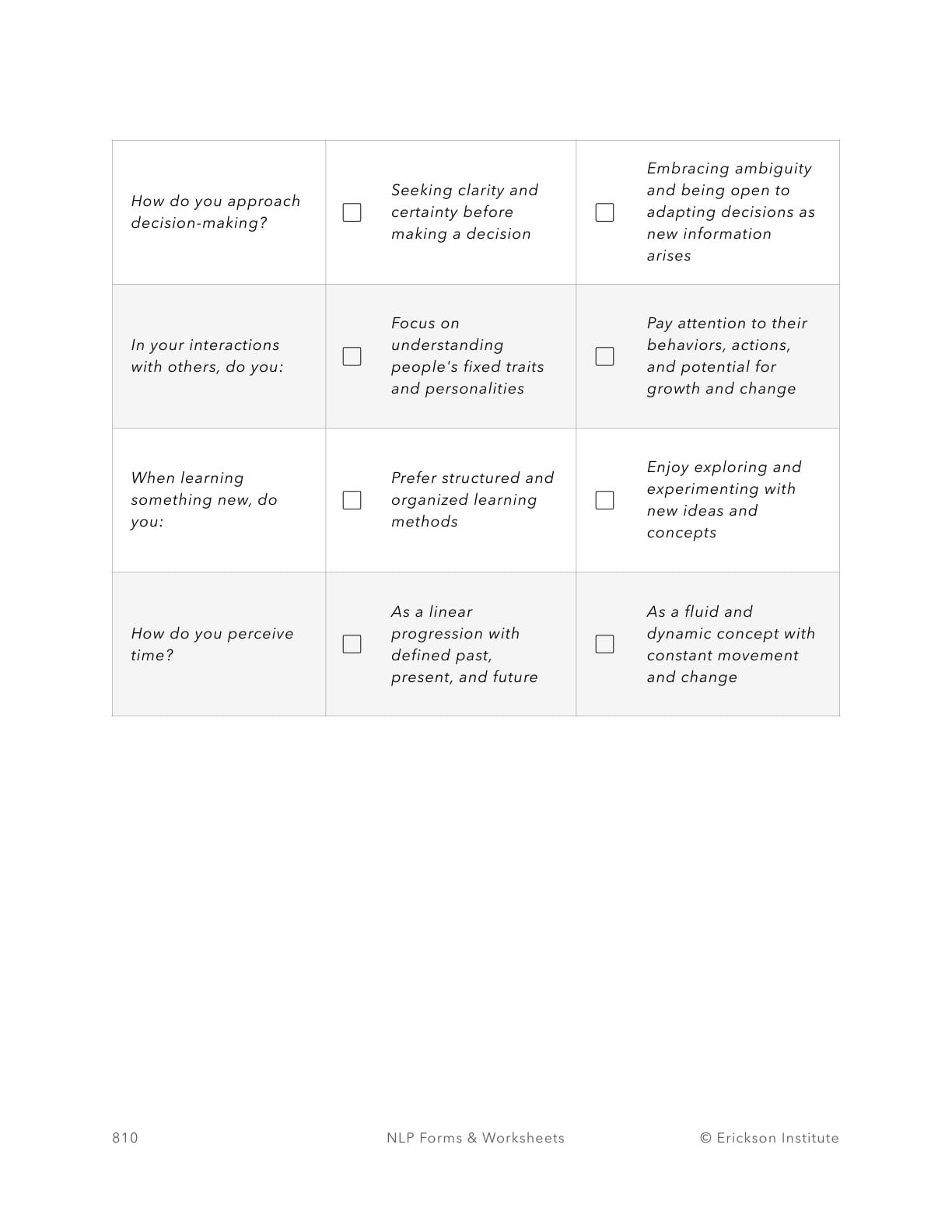
The goal of this questionnaire is to assess a person’s cognitive framework, specifically whether they prefer a static or process-oriented mindset.
Answering the questions reveals the client’s tendencies and inclinations, providing insights into how they perceive and interact with the world. The answers can be interpreted by therapists based on the client’s predominant choices.
If the client consistently prefers static responses (options that emphasize stability, labels, and fixed traits), this indicates a preference for a static cognitive framework.
If, on the other hand, the client prefers process-oriented responses (options that emphasize change, behaviors, and growth), this indicates a preference for a process-oriented cognitive framework.
Clients may exhibit a mix of static and process tendencies, and these preferences can change depending on the context and situation.
Therapists should interpret the results holistically, considering the overall pattern of responses as well as how these tendencies may impact the client’s thoughts, behaviors, decision-making, and interactions with others.
Therapists can use the interpretation to tailor their therapeutic approach, interventions, and strategies to better support the client’s cognitive framework and promote personal growth and well-being.
Worksheet #
Source #
Access the full suite of 500 therapy and coaching templates. This worksheet features in my book, available on Amazon:
500 Practical NLP Forms, Templates & Worksheets: For Therapy, Coaching & Training