Instructions #
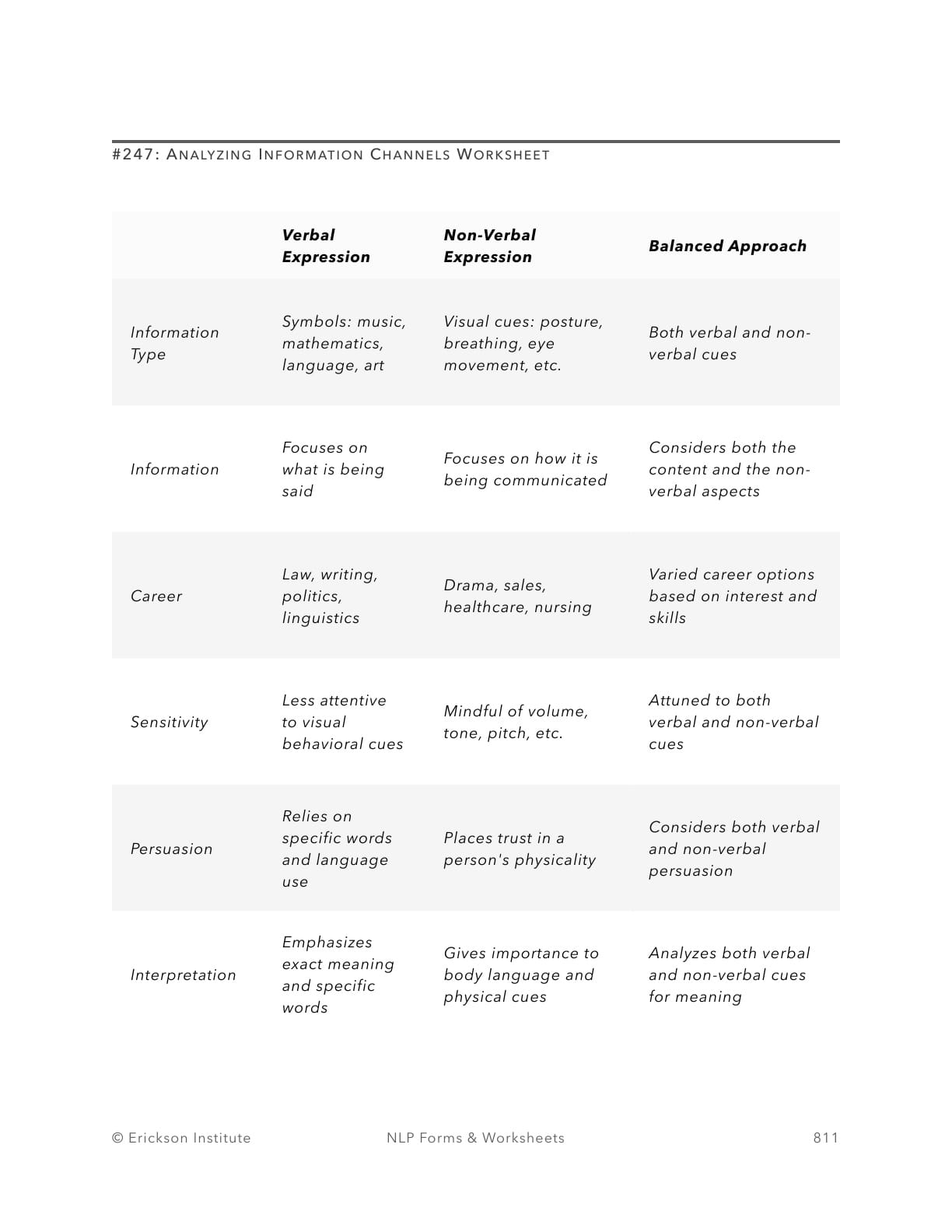
The central idea of this meta program is that people encounter and process information in two ways: verbal expression and nonverbal expression. Verbal expression is the use of symbols to convey meaning, such as language, music, mathematics, and art.
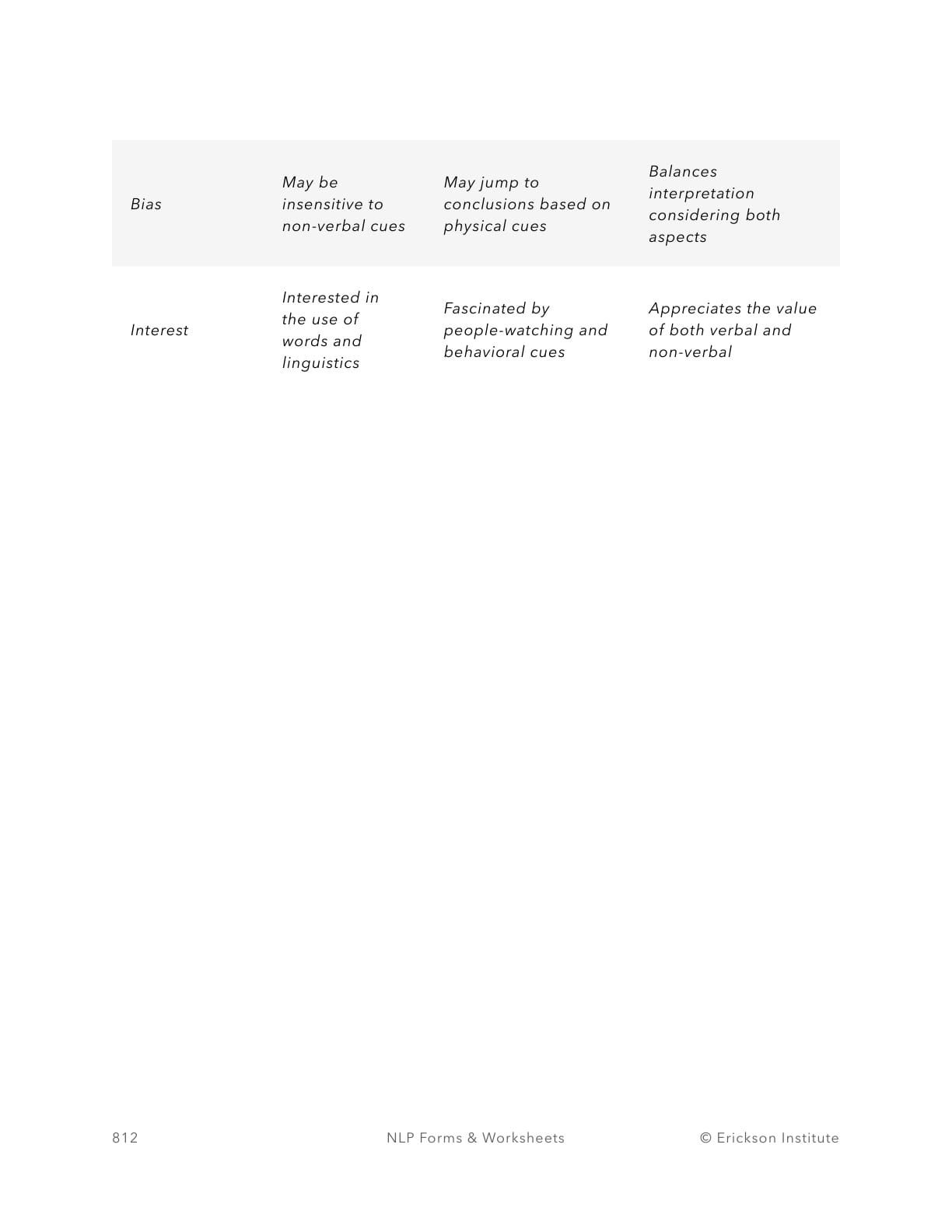
Nonverbal expression, on the other hand, is comprised of physical cues such as posture, breathing, tension, and eye movement. Based on their experiences and interactions, people tend to favor one of these forms over the others.
Some people pay close attention to the words used and excel in language-related careers, while others focus on nonverbal cues and excel in jobs that require understanding and interpreting physical behavior.
There are also people who take a balanced approach to information analysis and interpretation, taking into account both verbal and nonverbal cues.
The comparison table provides a thorough overview of the characteristics, tendencies, and biases associated with each preference, emphasizing the importance of recognizing and comprehending these various communication channels.
Worksheet #
Source #
Access the full suite of 500 therapy and coaching templates. This worksheet features in my book, available on Amazon:
500 Practical NLP Forms, Templates & Worksheets: For Therapy, Coaching & Training