Instructions #
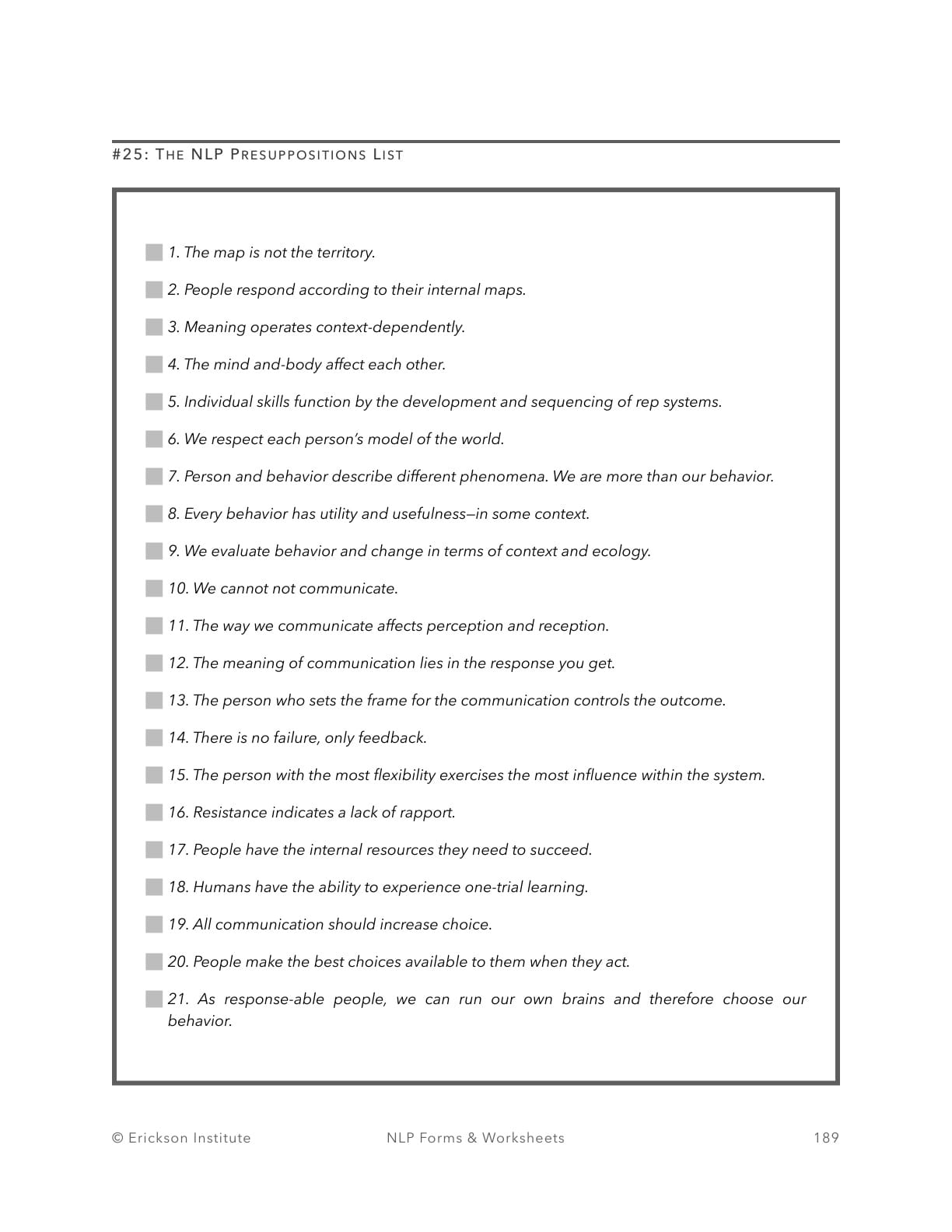
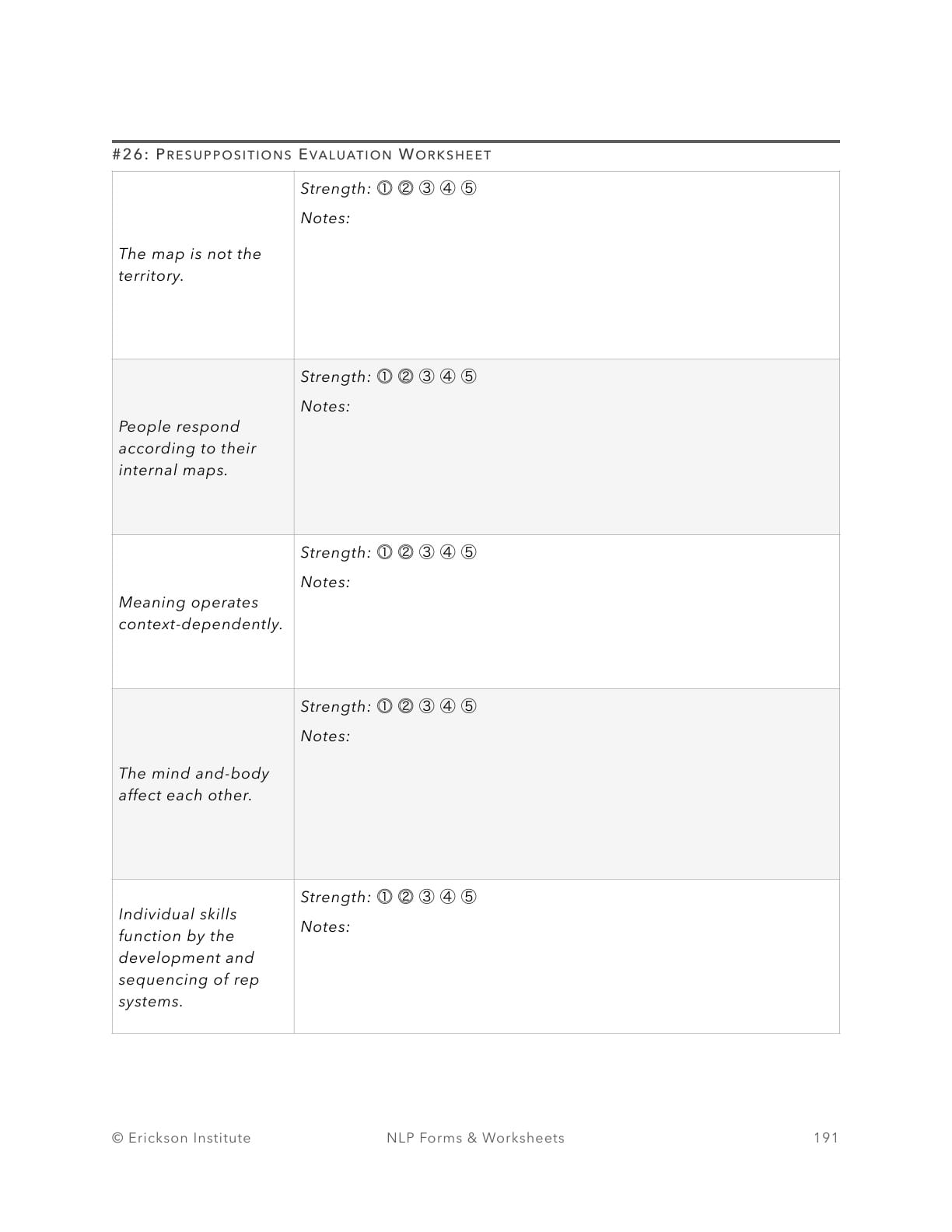
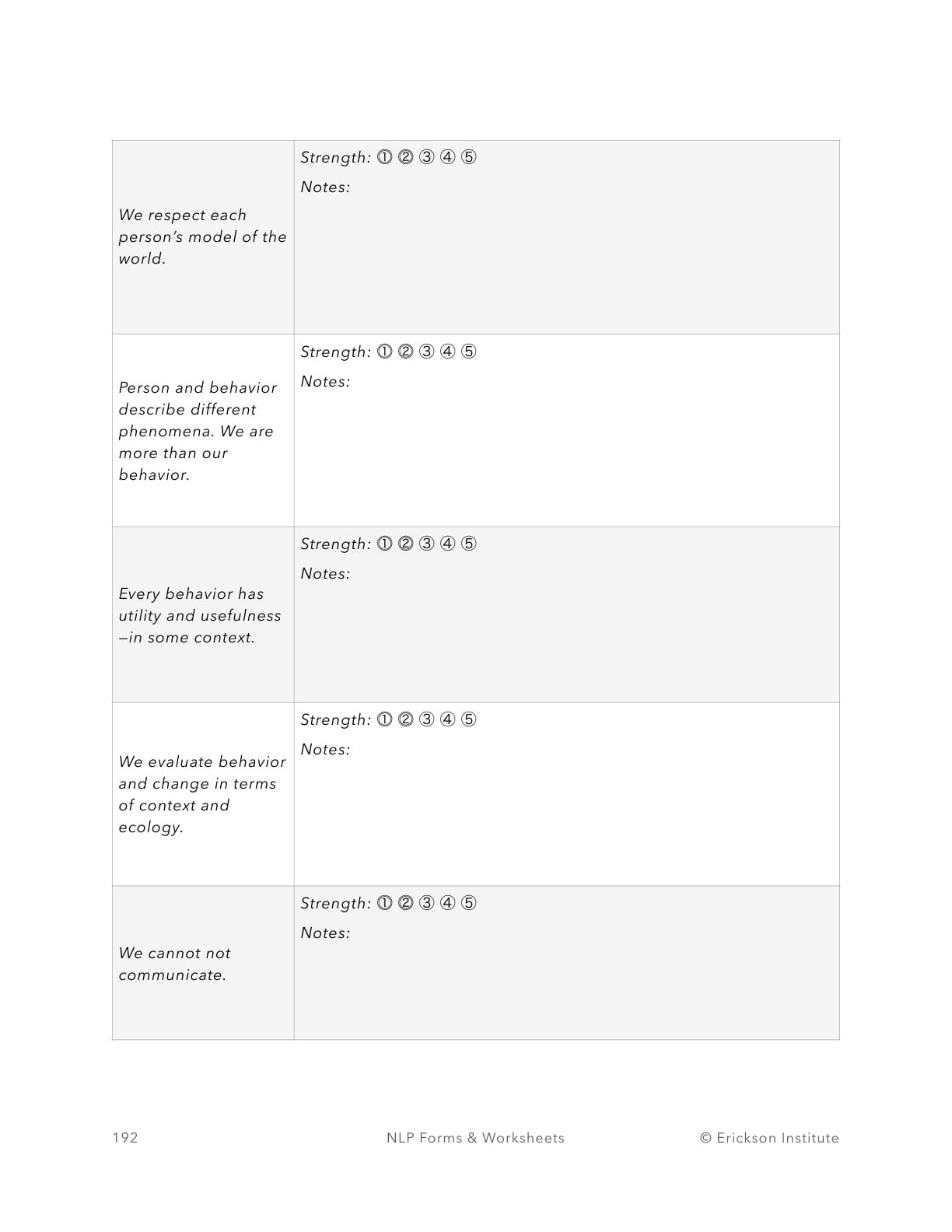
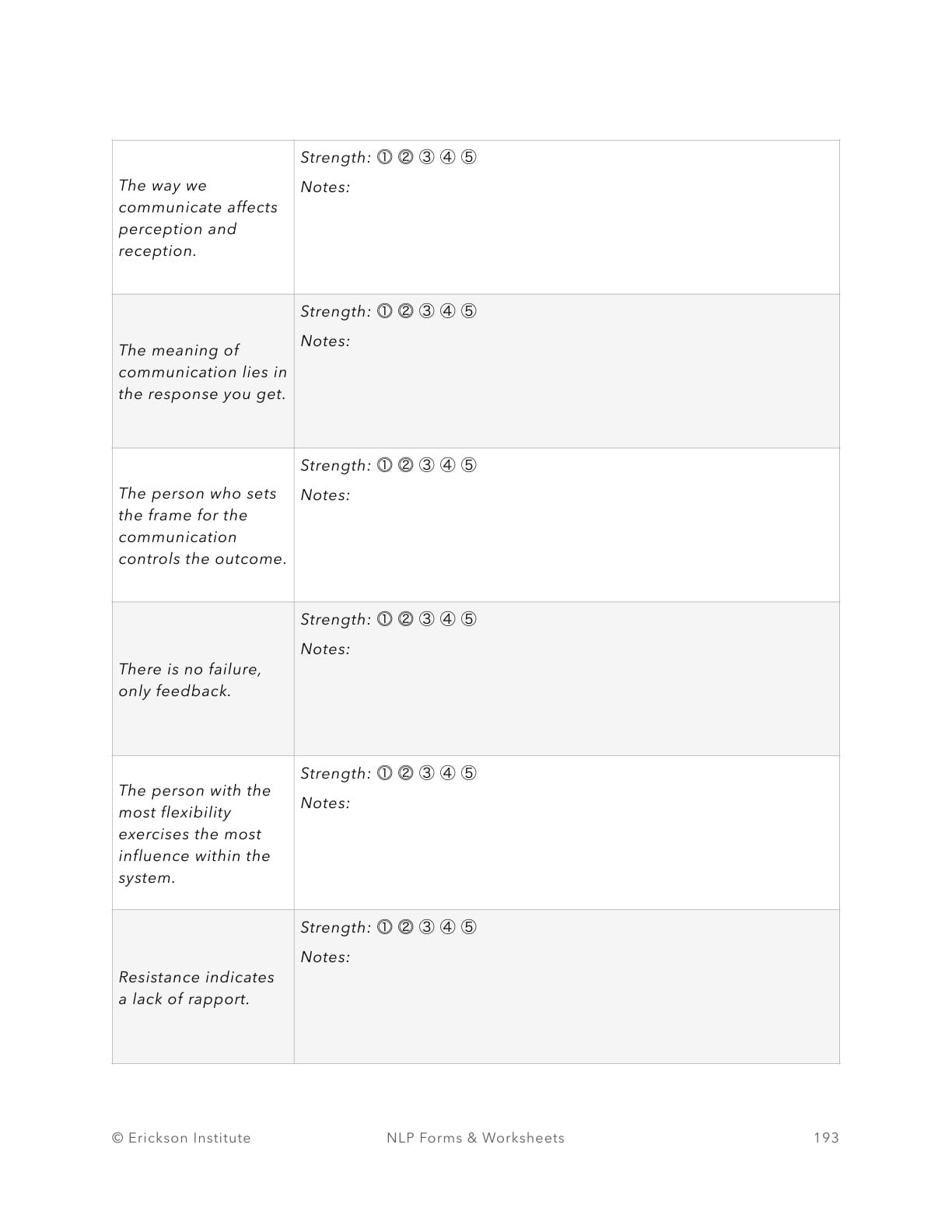
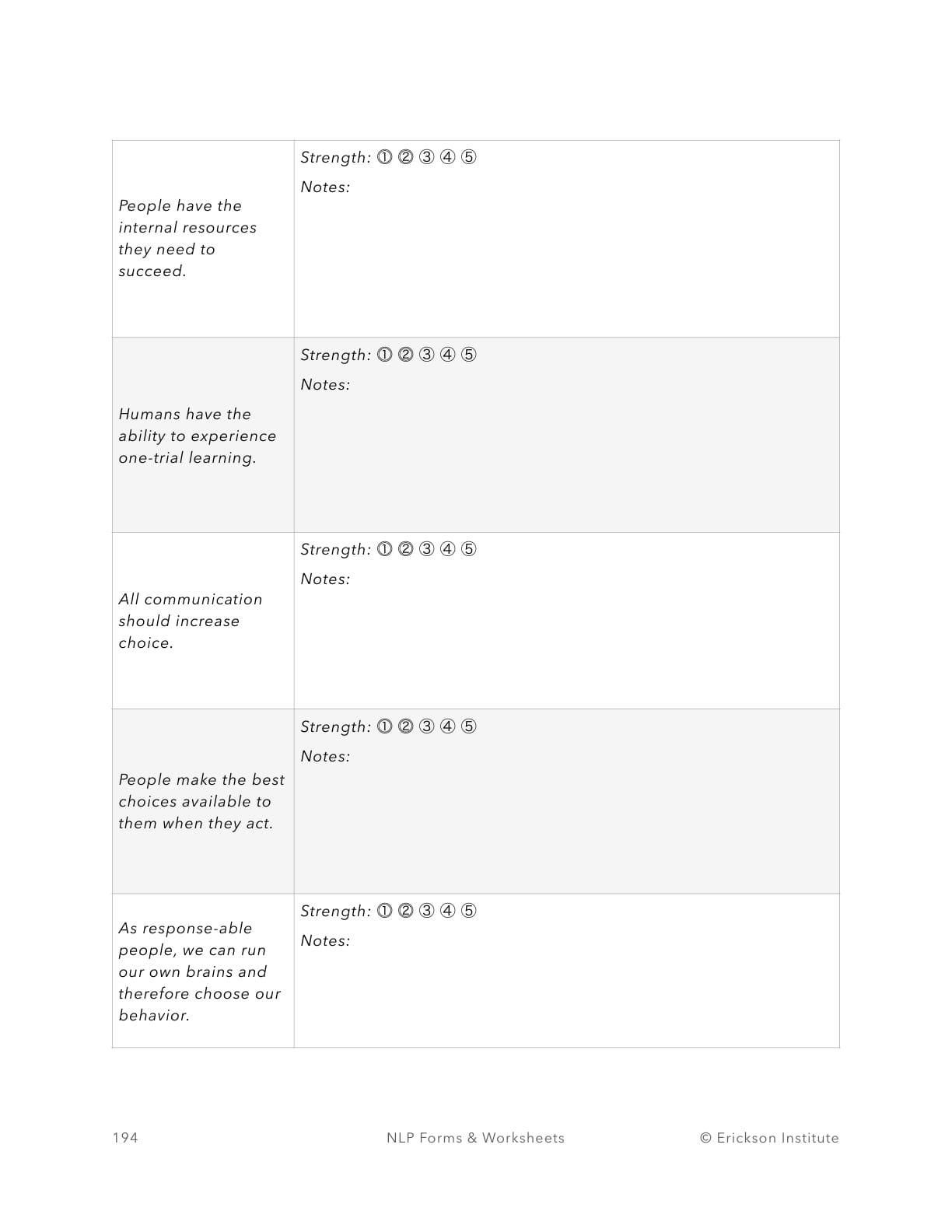
The 21 Presuppositions in NLP refer to empowering beliefs or assumptions about ourselves and the world that support positive change and effective communication.
Adopting empowering perspectives and mindsets that can positively shape our thoughts, emotions, and behaviors is made possible by incorporating presuppositions into our lives.
We can experience profound shifts in our perception of ourselves and the world around us by incorporating these presuppositions into our thinking patterns.
The importance of assumptions The ability to challenge and reframe limiting beliefs and perspectives is central to implementation. It encourages us to consider alternative points of view and possibilities, allowing us to gain new insights and broaden our horizons.
We can break free from self-imposed limitations and embrace more empowering and resourceful ways of thinking and being by deliberately practicing presuppositions. Furthermore, Presuppositions Implementation promotes effective communication and relationship building.
By accepting premises like “People have all the resources they need” or “There is no failure, only feedback,” we cultivate a mindset of curiosity, empathy, and flexibility.
This mindset improves our ability to connect with others, comprehend different points of view, and foster harmonious relationships. The significance of assumptions The ability of implementation to influence our emotional well-being is also important.
We can cultivate a positive and empowering inner state by adopting presuppositions that promote resourcefulness, resilience, and growth.
These assumptions serve as guiding principles that can shape our reactions to challenges and setbacks, cultivating a learning, adaptability, and self-empowerment mindset.
Worksheet #
Source #
Access the full suite of 500 therapy and coaching templates. This worksheet features in my book, available on Amazon:
500 Practical NLP Forms, Templates & Worksheets: For Therapy, Coaching & Training