Instructions #
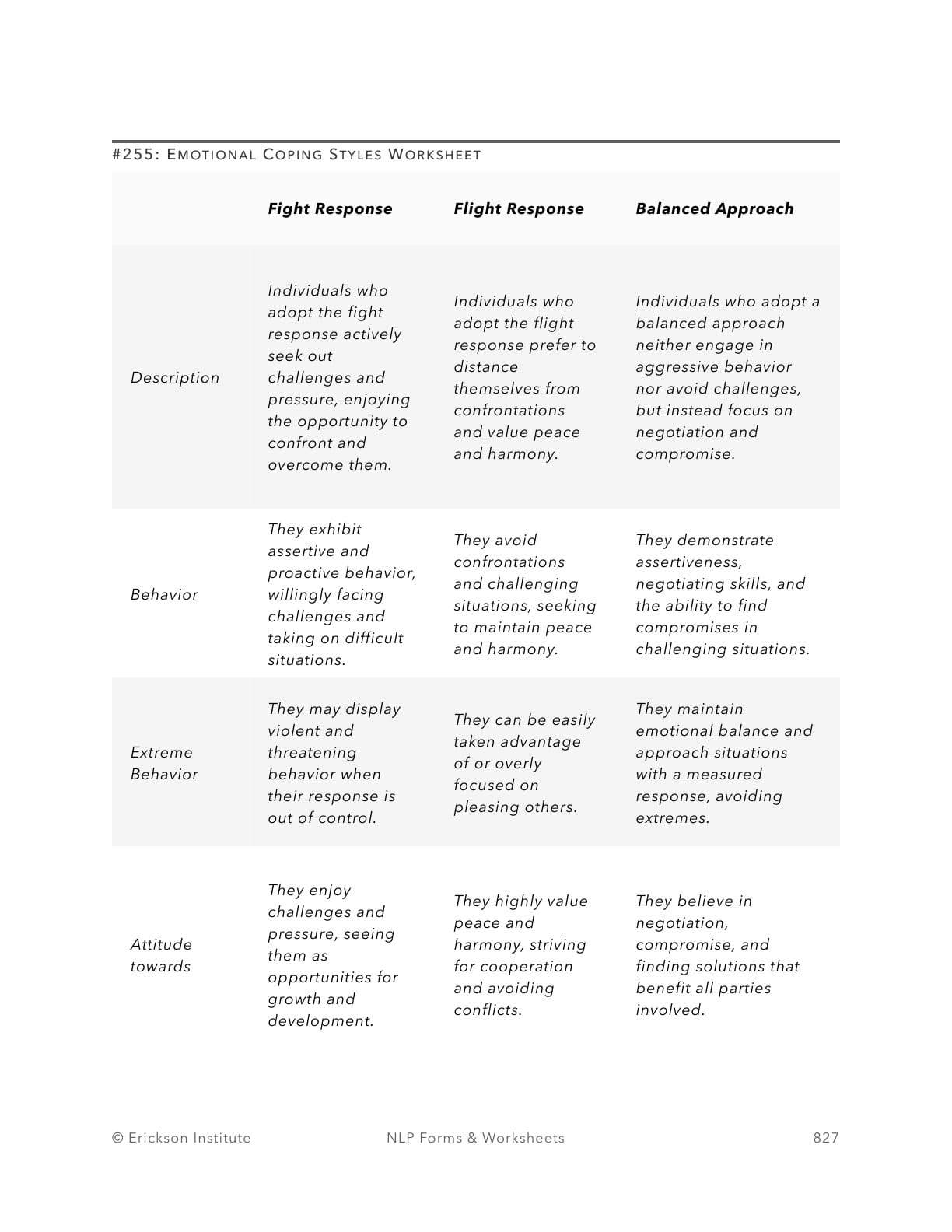
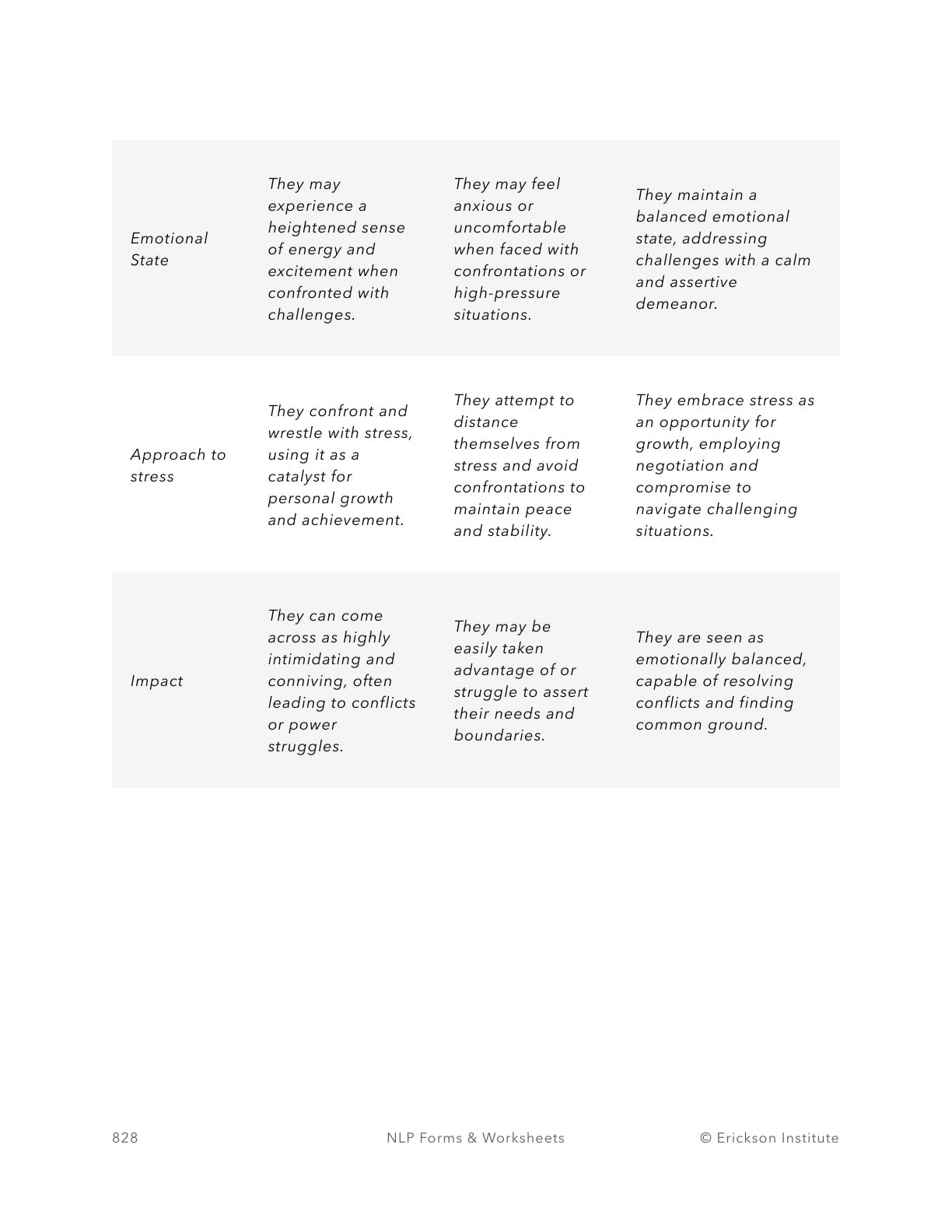
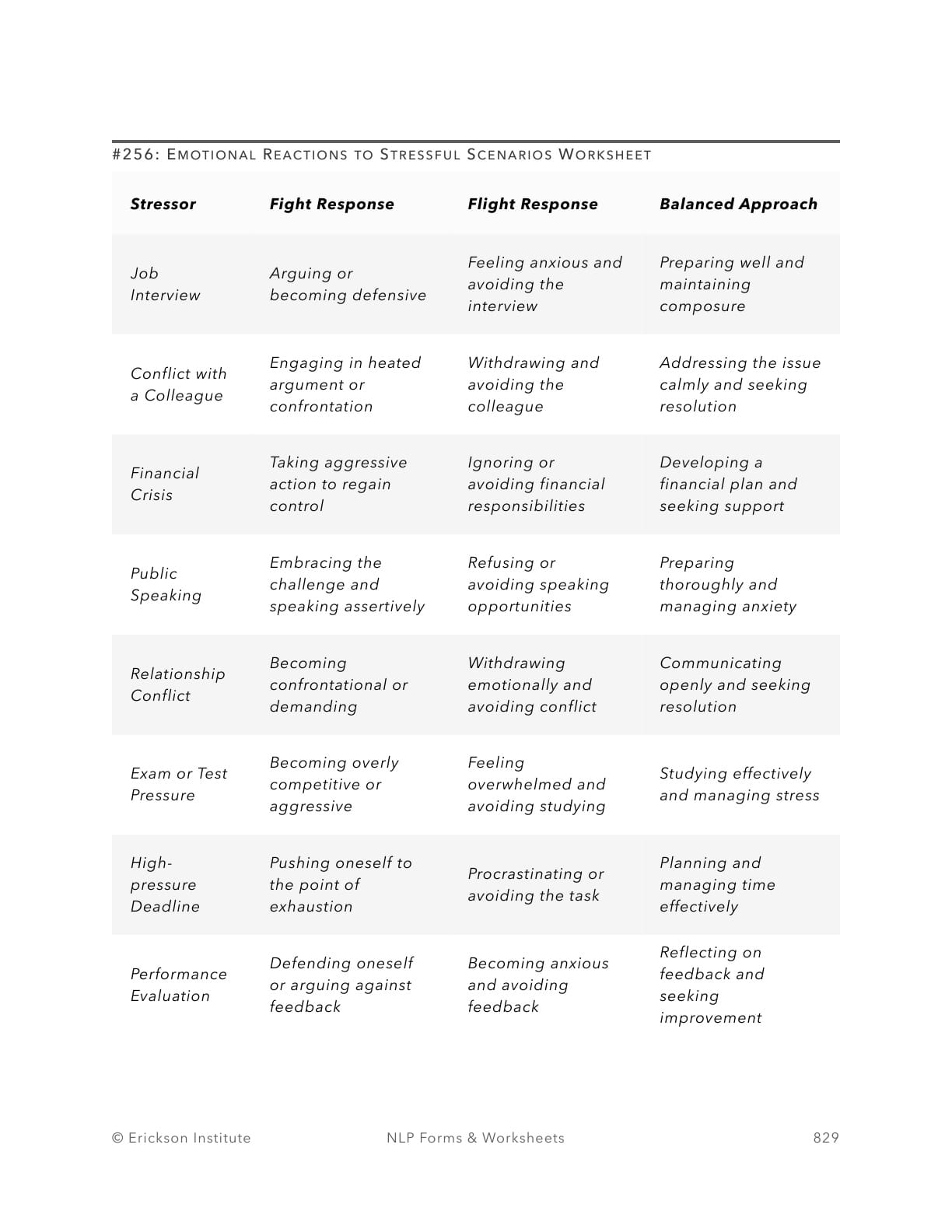
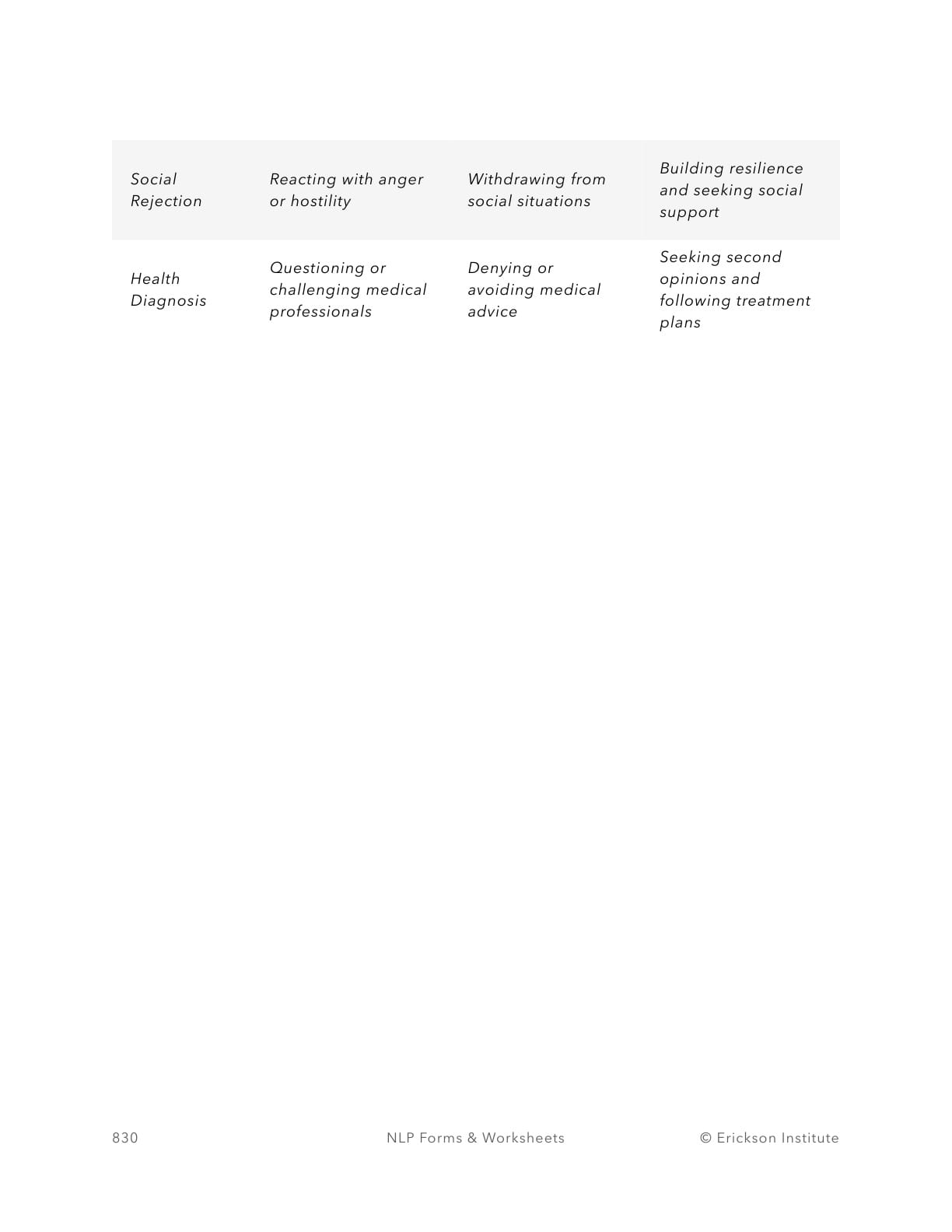
Emotional coping is concerned with how people respond to stress, whether it involves threats and dangers or overwhelming situations. This meta-program investigates the two primary reactions: fight and flight.
People who use the fight response actively seek out challenges, enjoy pressure, and face it head on. Those who use the flight response, on the other hand, prefer peace and harmony over confrontation.
Both reactions have extremes, with fight resulting in aggression and flight resulting in excessive people-pleasing or vulnerability. The balanced approach, on the other hand, represents people who have learned through experience not to fight or flee.
Instead, they value negotiation and compromise while displaying assertiveness and emotional balance. They seek resolution in difficult situations by finding common ground and responding calmly.
It is important to note that this meta-program investigates various coping styles and how people deal with stress.
Understanding these responses can assist clients in recognizing their own tendencies and developing strategies for more effective emotional coping, such as assertiveness, conflict resolution, or maintaining a balanced approach.
Worksheet #
Source #
Access the full suite of 500 therapy and coaching templates. This worksheet features in my book, available on Amazon:
500 Practical NLP Forms, Templates & Worksheets: For Therapy, Coaching & Training