Instructions #
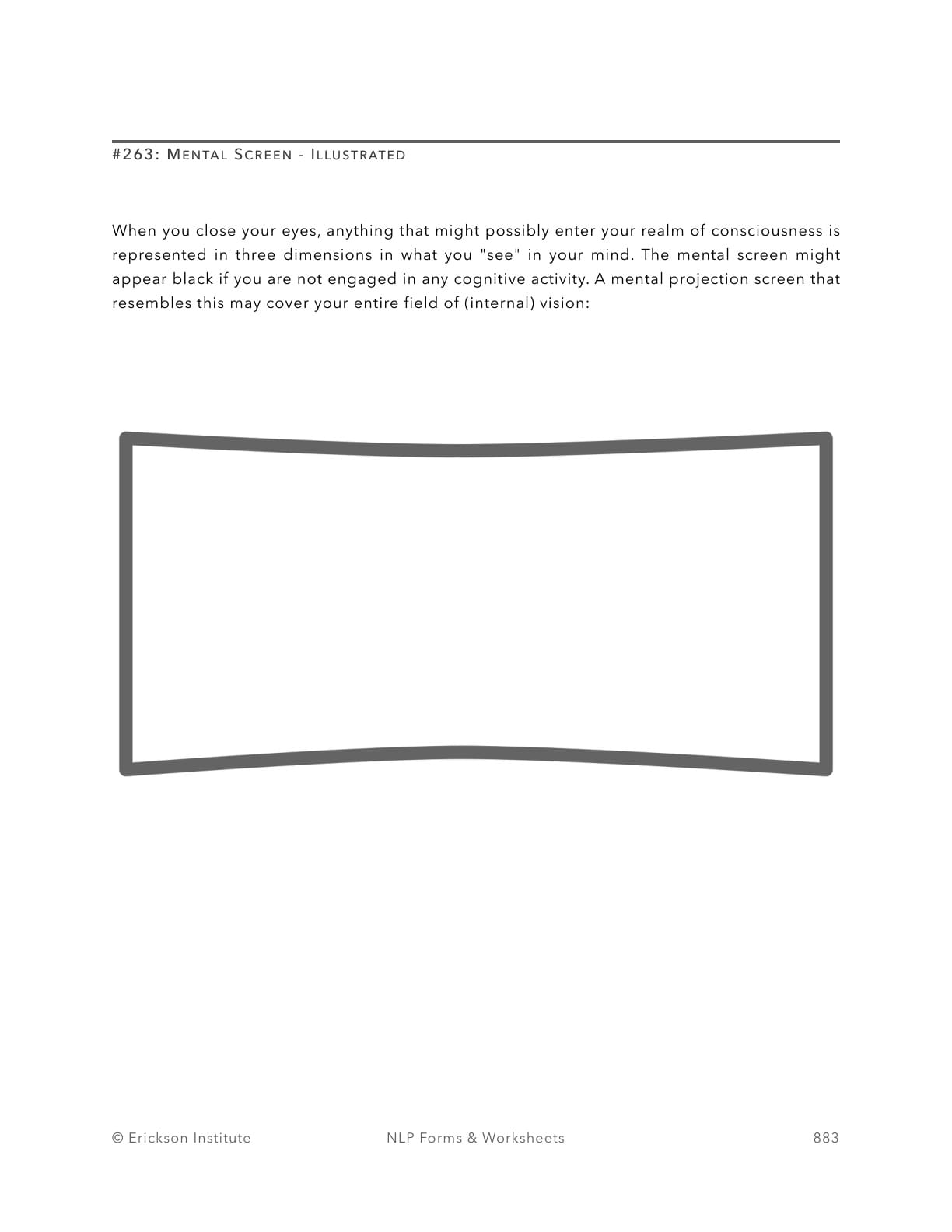
When we close our eyes, we reduce our perception of the outside world because we limit our input from the physical senses. However, we have the ability to generate internal representations of sensory experiences within our minds.
Internal representations are referred to as representational systems, and they include visual, auditory, and kinesthetic (sensory) modalities.
When we imagine or recall something with our eyes closed, we can still mentally see images, hear sounds, and feel sensations, despite the fact that they are not from the outside world.
This phenomenon is also known as the “mind’s eye” or “inner senses.” It’s as if our minds internally recreate sensory experiences, employing the same modalities that we use when our physical senses are actively perceiving the world.
When we think of a beautiful sunset, we may envision vibrant colors and the sun setting below the horizon. We might remember the sound of waves crashing or birds chirping, or we might feel the warmth of the sun on our skin.
These sensory experiences take place within our minds, independent of outside stimuli. This incredible aspect of human cognition is the ability to internally recreate sensory experiences. It enables us to recall past events, imagine future scenarios, and think creatively.
We can generate mental simulations, explore possibilities, and improve our cognitive processes by using our representational systems.
As a result, when we close our eyes, our mind’s eye takes over, and we can use our internal sensory modalities to create vivid and immersive mental experiences.
We can explore our imagination, memories, and subjective experiences through this internal sensory perception, enriching our understanding of the world and our own inner world.
Worksheet #
Source #
Access the full suite of 500 therapy and coaching templates. This worksheet features in my book, available on Amazon:
500 Practical NLP Forms, Templates & Worksheets: For Therapy, Coaching & Training