Instructions #
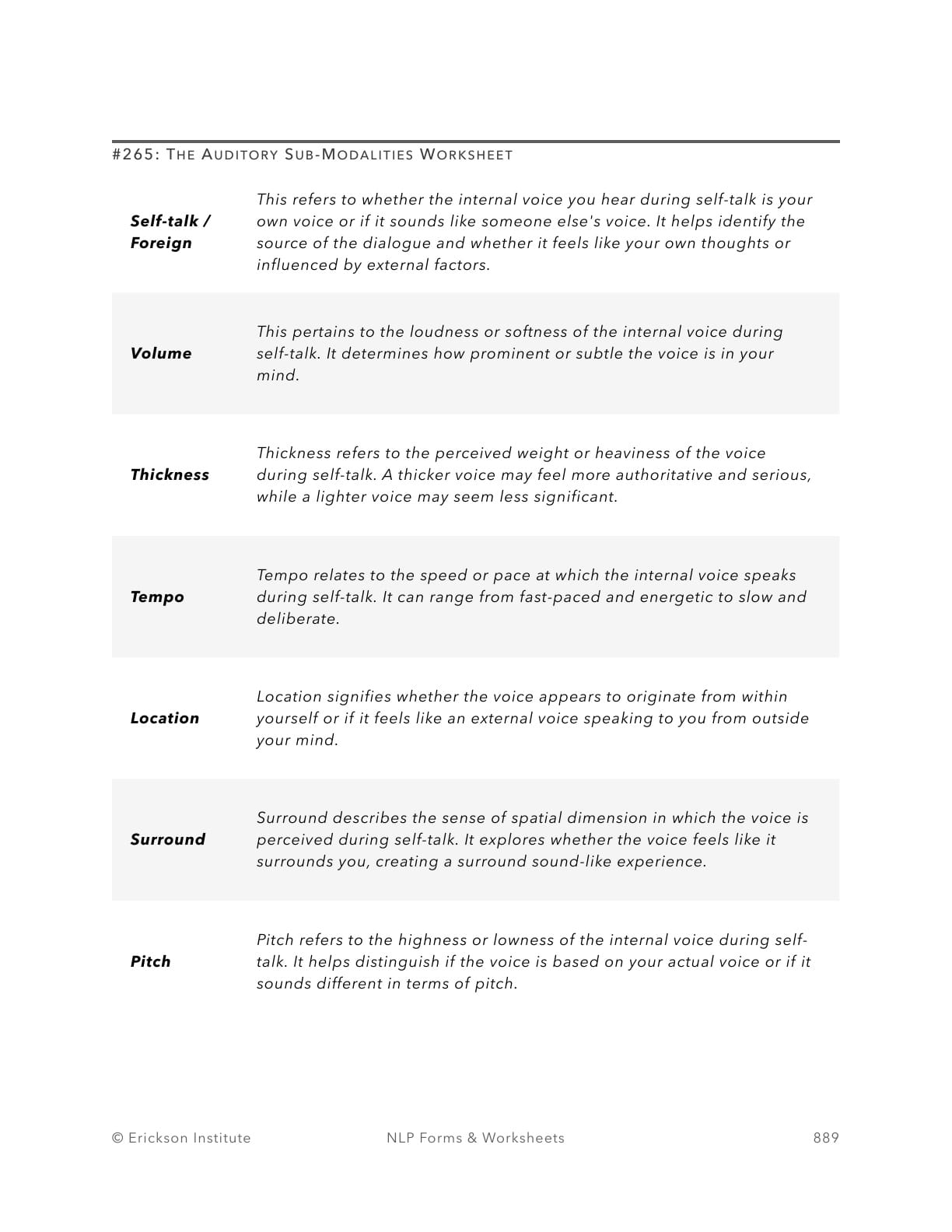
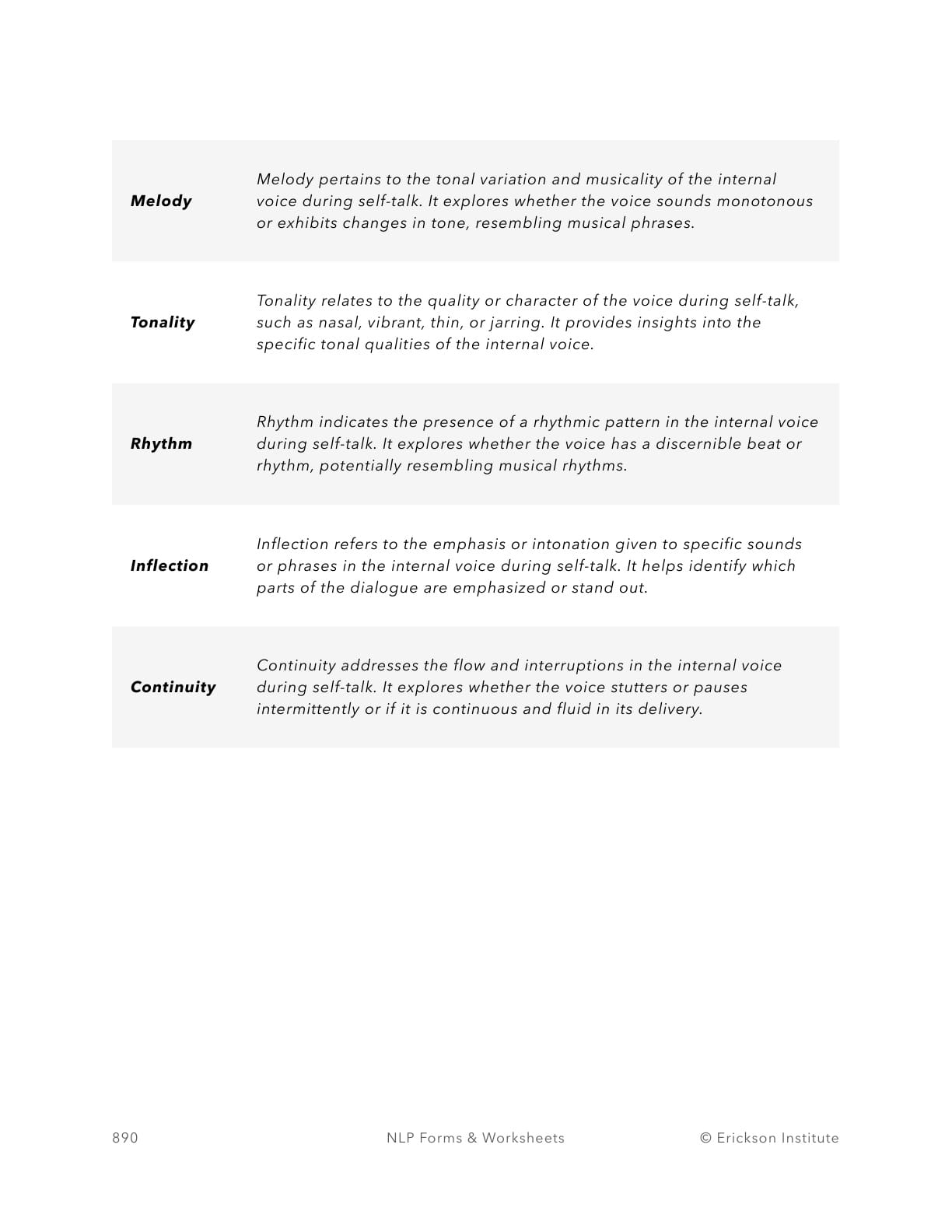
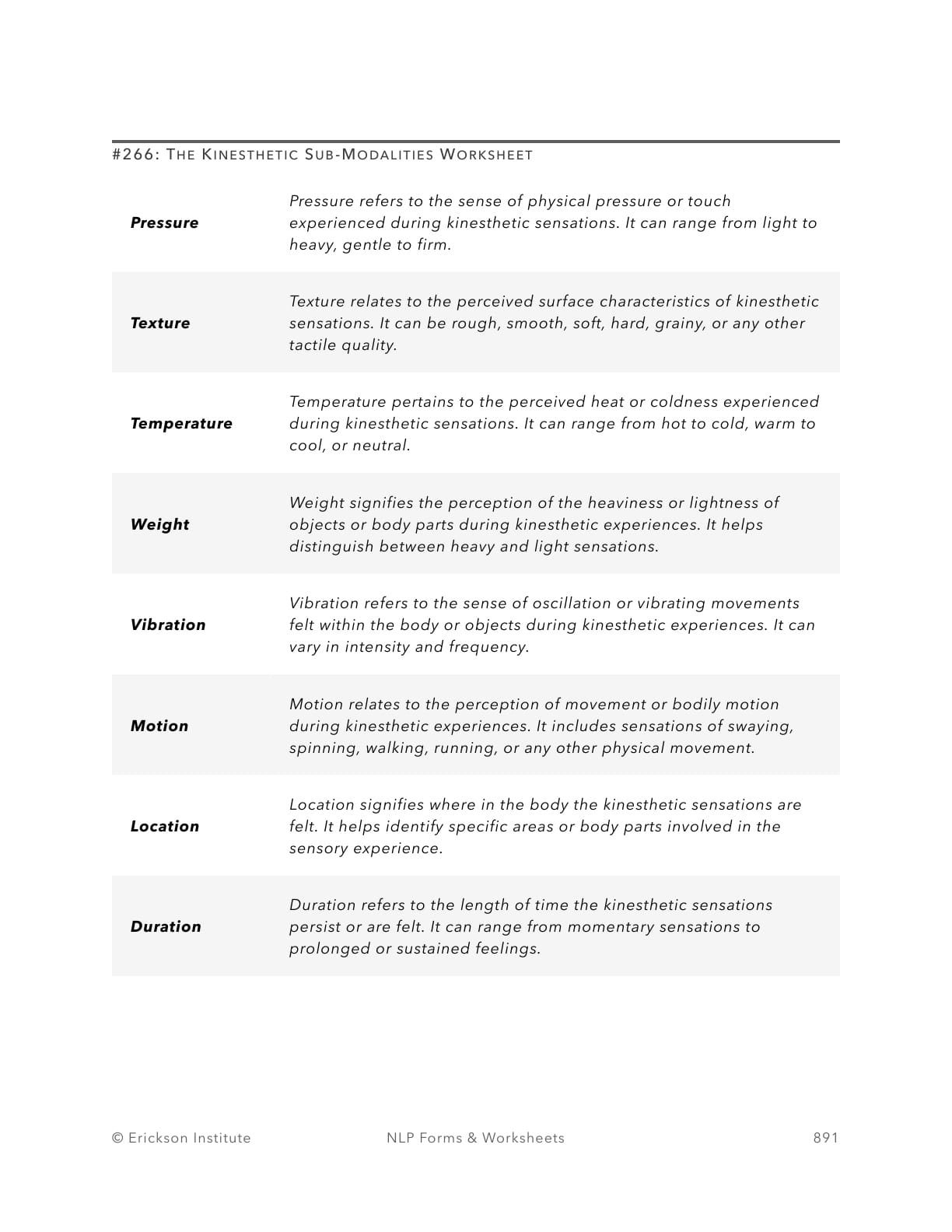
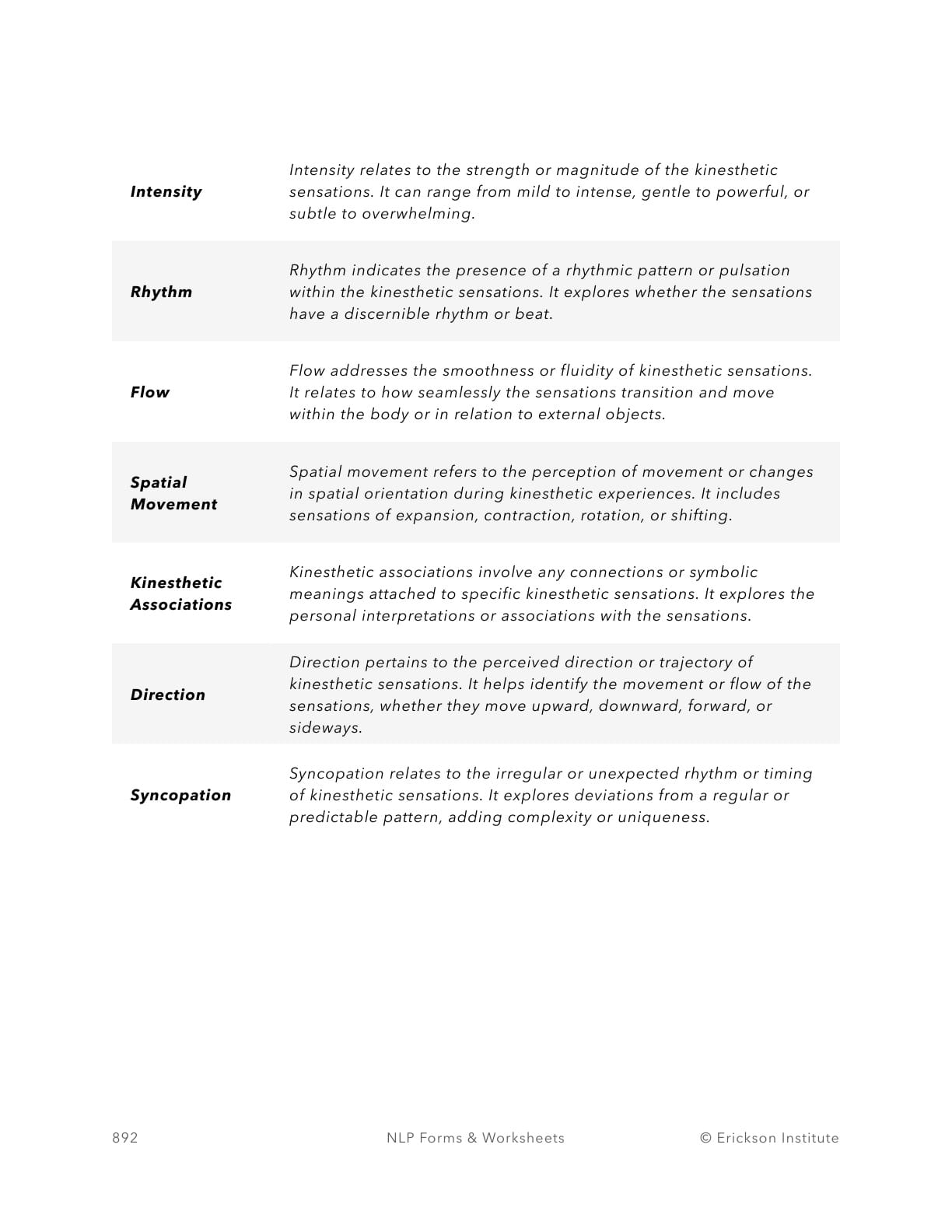
The finer distinctions and qualities within our sensory experiences are referred to as sub-modalities. They are the foundations of our subjective experience, and they play an important role in how we encode, interpret, and give meaning to our perceptions.
Visual imagery, auditory sounds, kinesthetic sensations, and other sensory modalities are examples of sub-modalities.
NLP practitioners can explore and manipulate the nuances of perception to influence thoughts, emotions, and behaviors by paying attention to the sub-modalities within these sensory experiences.
For example, changing sub-modalities within visual imagery such as brightness, size, or distance can cause changes in how we perceive and respond to the represented content.
Understanding and utilizing sub-modalities in NLP provides powerful tools for personal development, communication, and change work.
Worksheet #
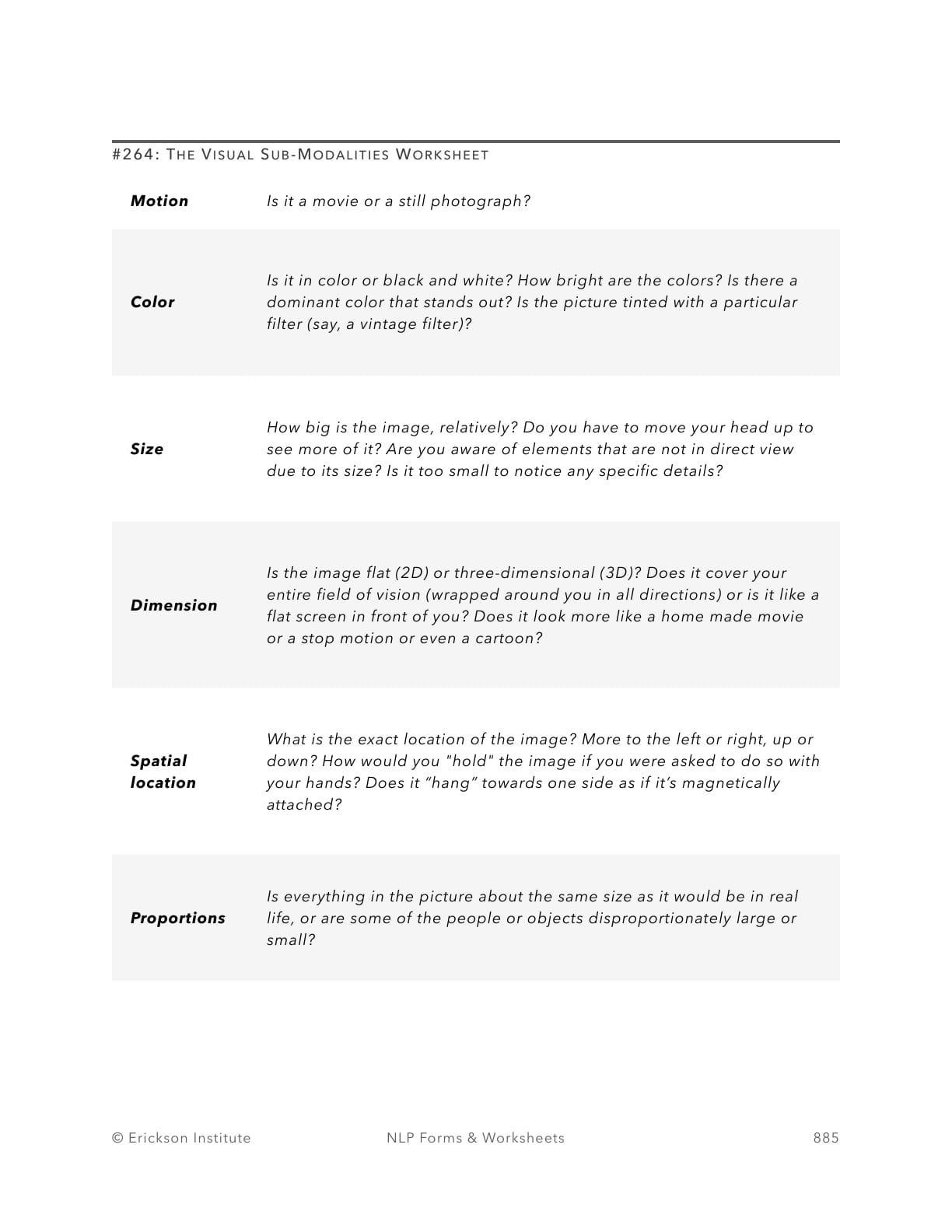
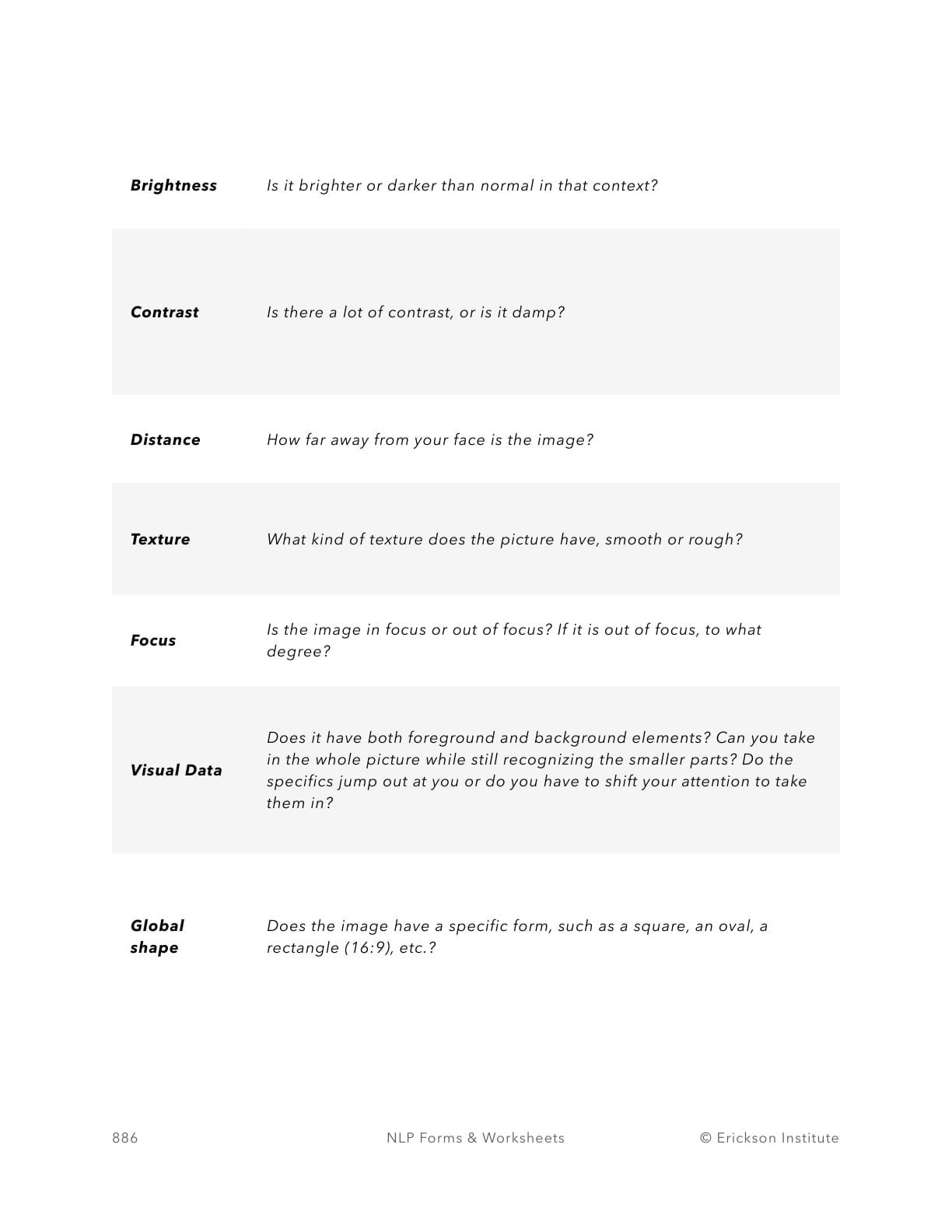
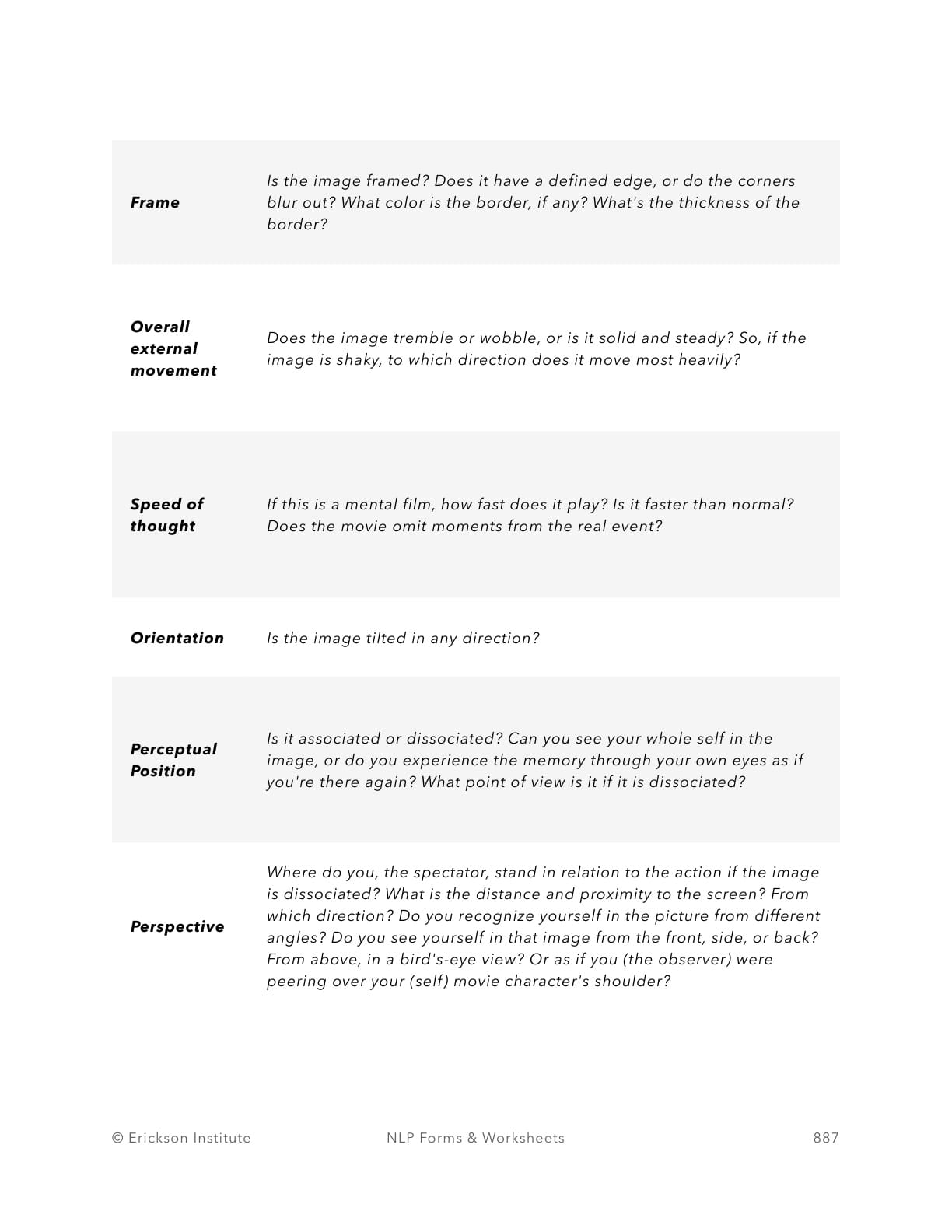
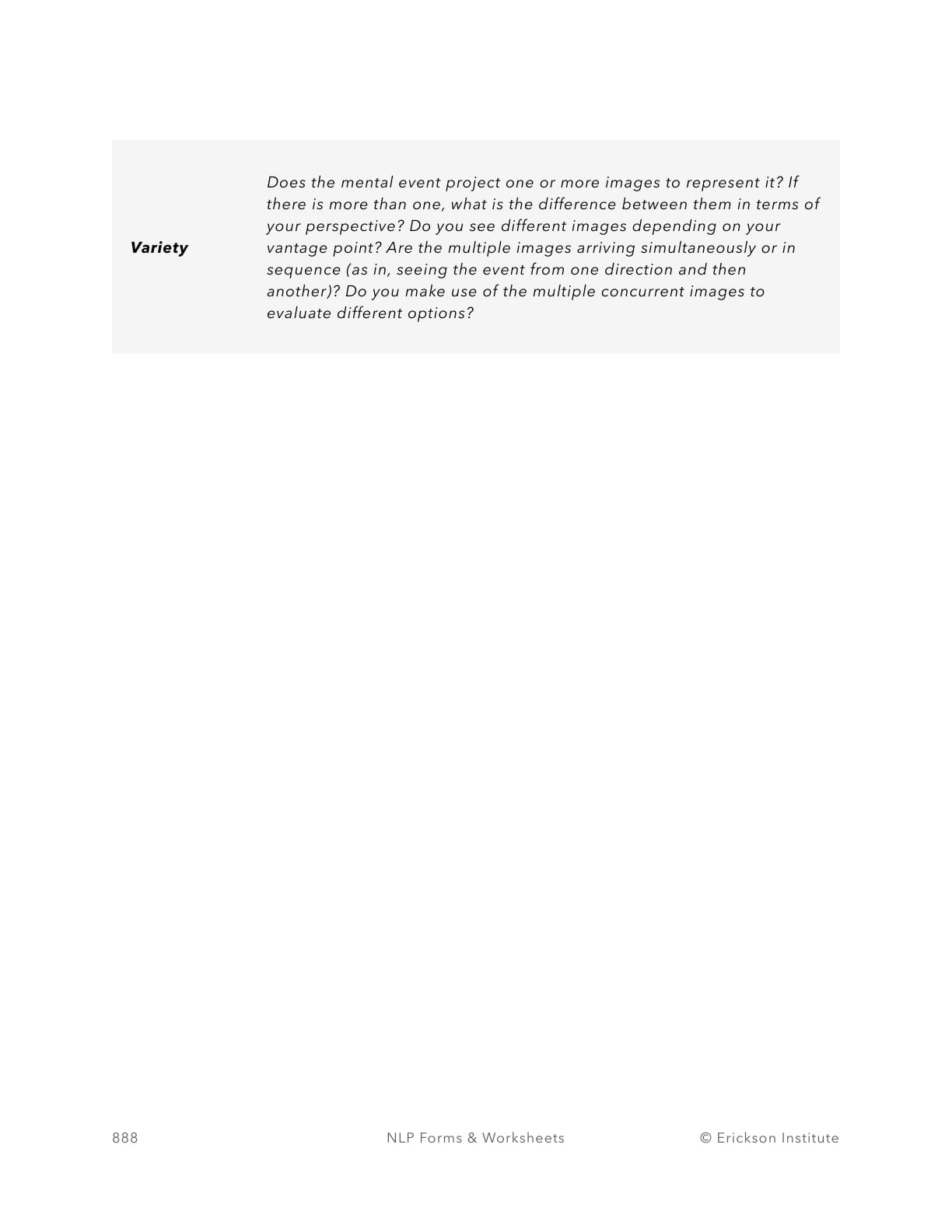
Source #
Access the full suite of 500 therapy and coaching templates. This worksheet features in my book, available on Amazon:
500 Practical NLP Forms, Templates & Worksheets: For Therapy, Coaching & Training