Instructions #
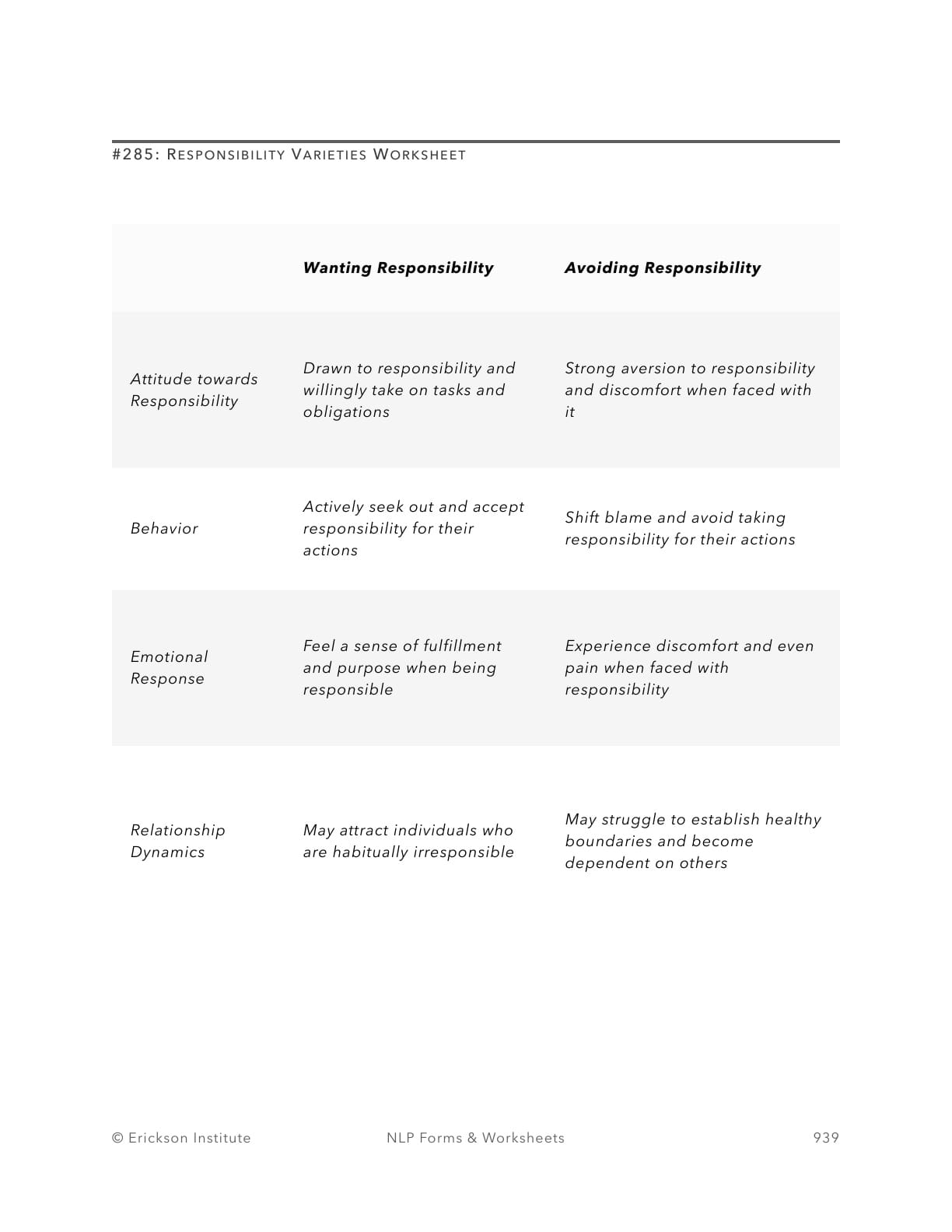
The meta-program of responsibility refers to how people think, act, and feel about taking on and completing obligations and tasks. It includes a range of attitudes toward responsibility, from actively seeking it to avoiding or even resenting it.
Understanding this meta-program can be beneficial in therapy because it illuminates clients’ underlying beliefs and patterns of behavior regarding responsibility.
Exploring the essence of this meta-program enables therapists to identify clients’ tendencies as well as how they navigate their roles and responsibilities in various domains of life.
Clients with a strong desire for responsibility may benefit from investigating the reasons for their desire and determining whether it leads to excessive self-imposed pressure or neglect of self-care.
Therapeutic interventions can help them strike a balance between taking on responsibilities and looking after their own well-being. Therapy can provide a safe space for clients who avoid responsibility to explore the sources of their discomfort and resistance.
Therapists can help clients gradually accept and take ownership of their actions and emotions by addressing underlying fears or insecurities. This process can promote personal development, self-sufficiency, and a greater sense of empowerment.
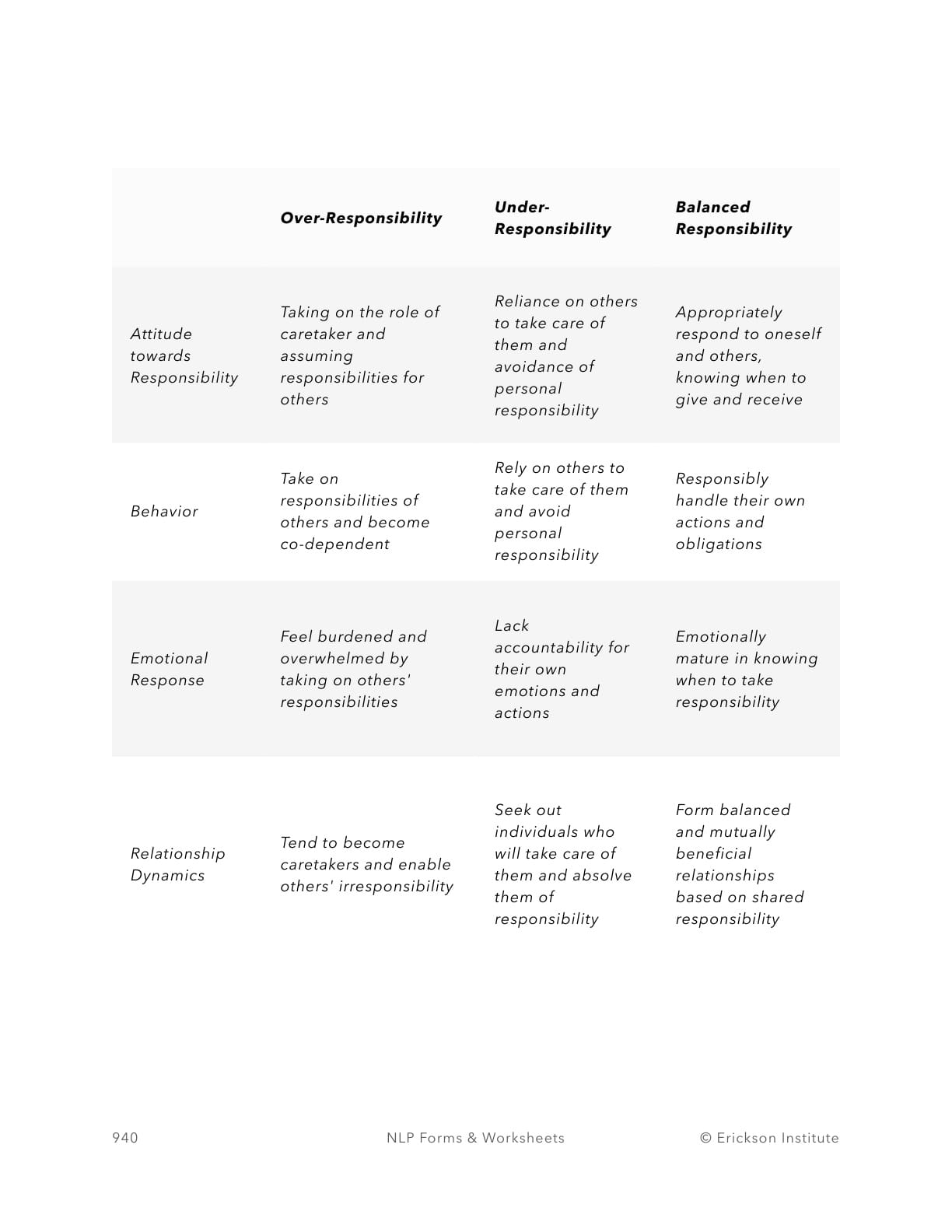
Therapy can help clients develop healthier boundaries, assertiveness, and effective communication skills when they exhibit imbalanced responsibility patterns, such as over-responsibility or under-responsibility.
Therapists can help clients recognize their own limitations, set realistic expectations, and foster a sense of accountability in their own lives, all while encouraging interdependence and shared responsibility in relationships.
Worksheet #
Source #
Access the full suite of 500 therapy and coaching templates. This worksheet features in my book, available on Amazon:
500 Practical NLP Forms, Templates & Worksheets: For Therapy, Coaching & Training