Instructions #
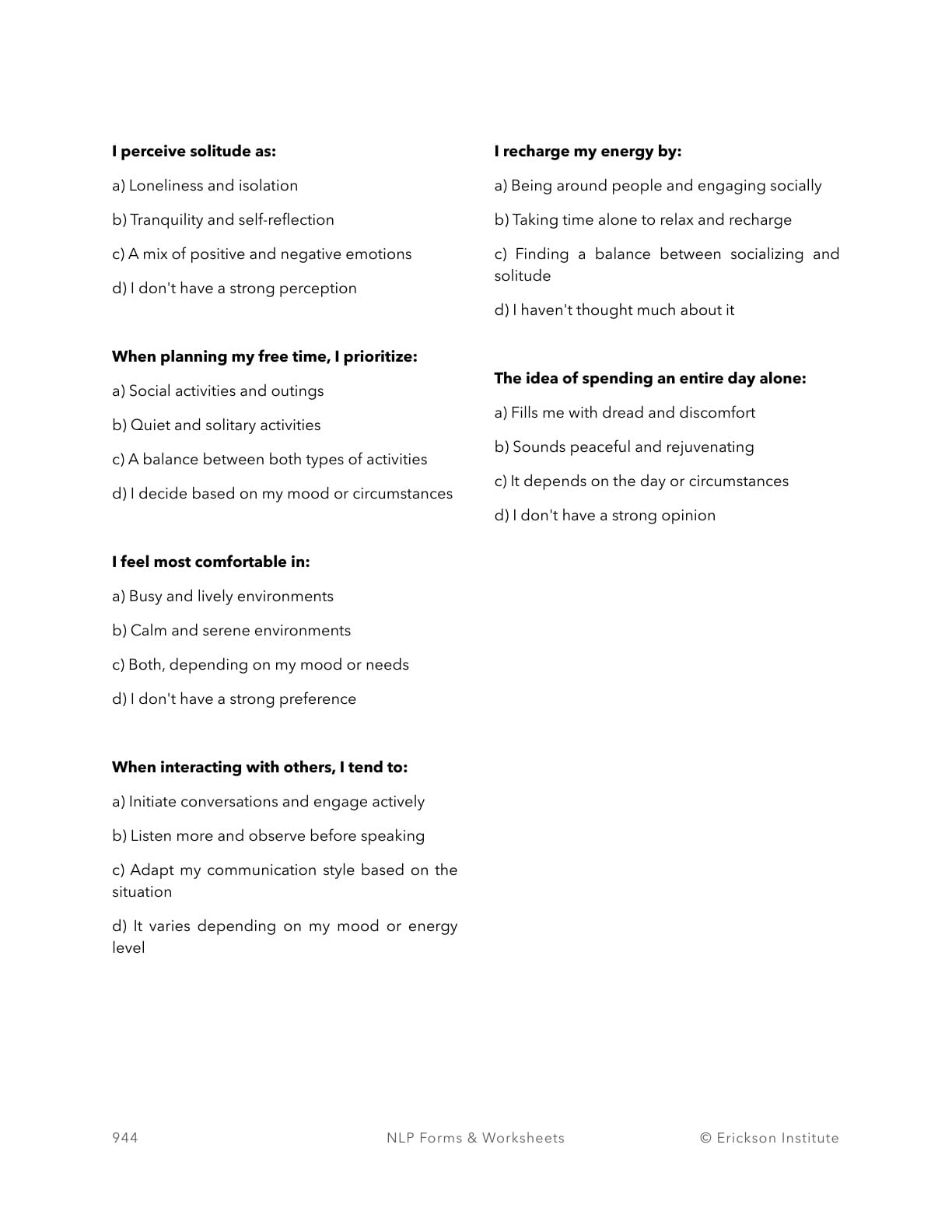
Use the client’s responses to guide therapeutic interventions. Focus on making social connections and providing opportunities for social engagement for extroverts. For introverts, prioritize self-care strategies and making time for solitude.
Explore ways for ambiverts to balance socializing and alone time based on their current needs and circumstances. When interpreting the results and designing therapeutic interventions, keep the client’s distinct personality and preferences in mind.
A strong preference for option “a” (seek the company of others) indicates a more extroverted tendency in seeking social renewal. A strong preference for option “b” (Find solitude and quiet) indicates a more introverted tendency in seeking social renewal.
A strong preference for option “c” (Choose based on the situation) indicates an ambivert tendency, in which the client adapts their approach to social renewal based on the specific context.
A strong preference for option “d” (It depends on my mood) indicates a variable preference or a lack of a clear pattern in seeking social renewal.
Worksheet #

Source #
Access the full suite of 500 therapy and coaching templates. This worksheet features in my book, available on Amazon:
500 Practical NLP Forms, Templates & Worksheets: For Therapy, Coaching & Training