Instructions #
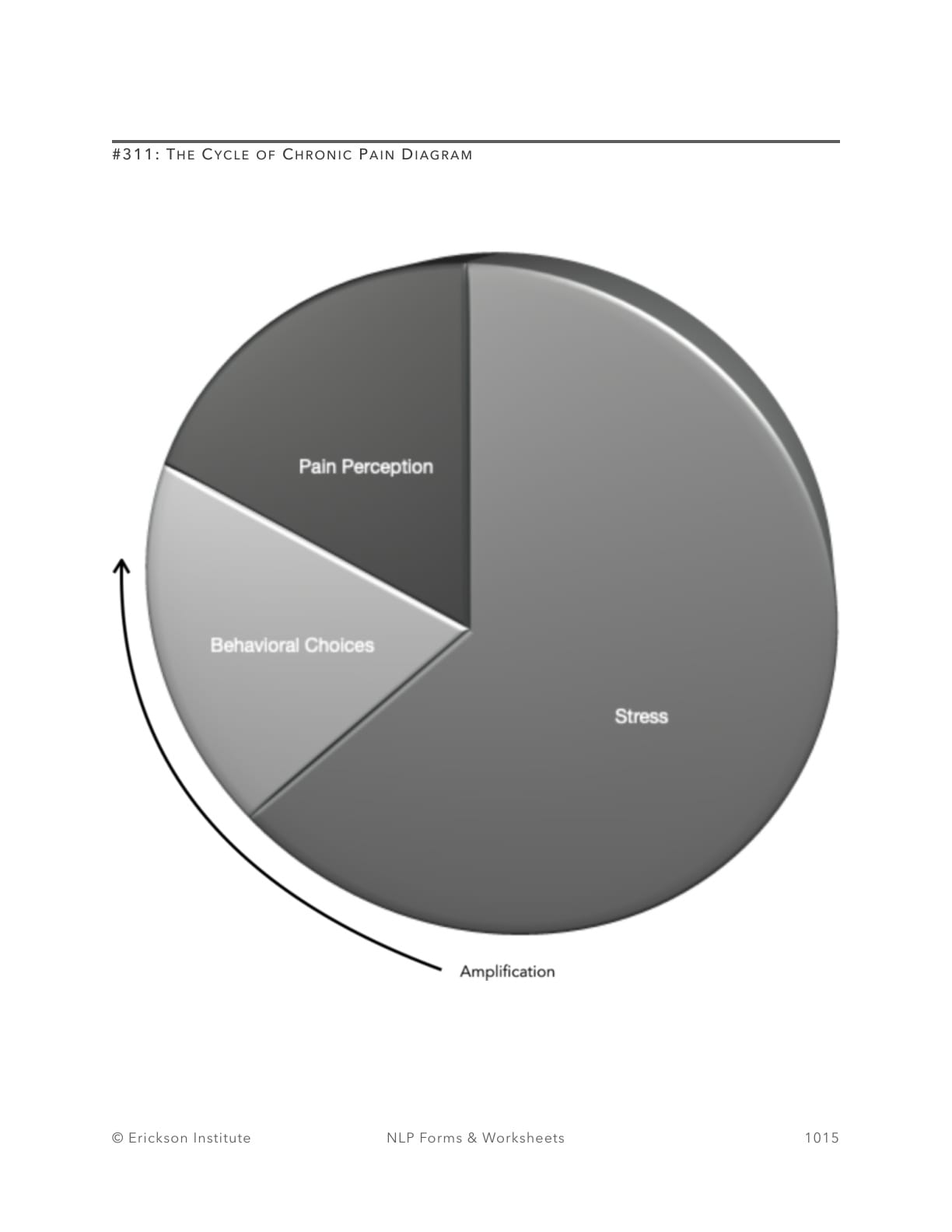
The chronic pain diagram depicts the complex interplay between perception, stress, behavioral choices, and individual pain intensification. It all starts with a perception of chronic pain, which can be caused by a variety of underlying factors or conditions.
This initial perception sets off a chain of events, particularly in terms of the client’s survival and well-being. Chronic pain frequently results in stress and anxiety.
Clients may become overwhelmed by the meaning and implications of their pain, leading to increased stress and emotional distress. Clients’ behavioral choices in response to their pain are influenced by this stress.
These choices, both physical and emotional, can be restrictive. Clients may limit their movements or avoid certain activities in order to avoid exacerbating their pain.
These restrictive behavioral choices, however, can inadvertently slow the body’s natural biological healing processes.
Clients who restrict their movement may obstruct the flow of nutrients and oxygen to the affected areas, impairing the body’s ability to repair and heal itself effectively.
Clients may experience an emotional overflow of stress hormones as a result of the constant state of stress and anxiety caused by chronic pain.
This cellular overflow of stress hormones can contribute to additional physiological and psychological issues, potentially exacerbating pain perception.
The chronic pain diagram depicts how the interaction of perception, stress, constricting behavioral choices, and intensified pain can result in a cycle that perpetuates the experience of chronic pain.
Understanding this cycle is critical to assisting clients in breaking free from its grip.
Therapists can help clients navigate this complex cycle and work toward improved well-being and pain management by addressing the underlying factors that contribute to stress, encouraging adaptive behavioral choices, and promoting holistic approaches to pain management.
Worksheet #
Source #
Access the full suite of 500 therapy and coaching templates. This worksheet features in my book, available on Amazon:
500 Practical NLP Forms, Templates & Worksheets: For Therapy, Coaching & Training