Instructions #
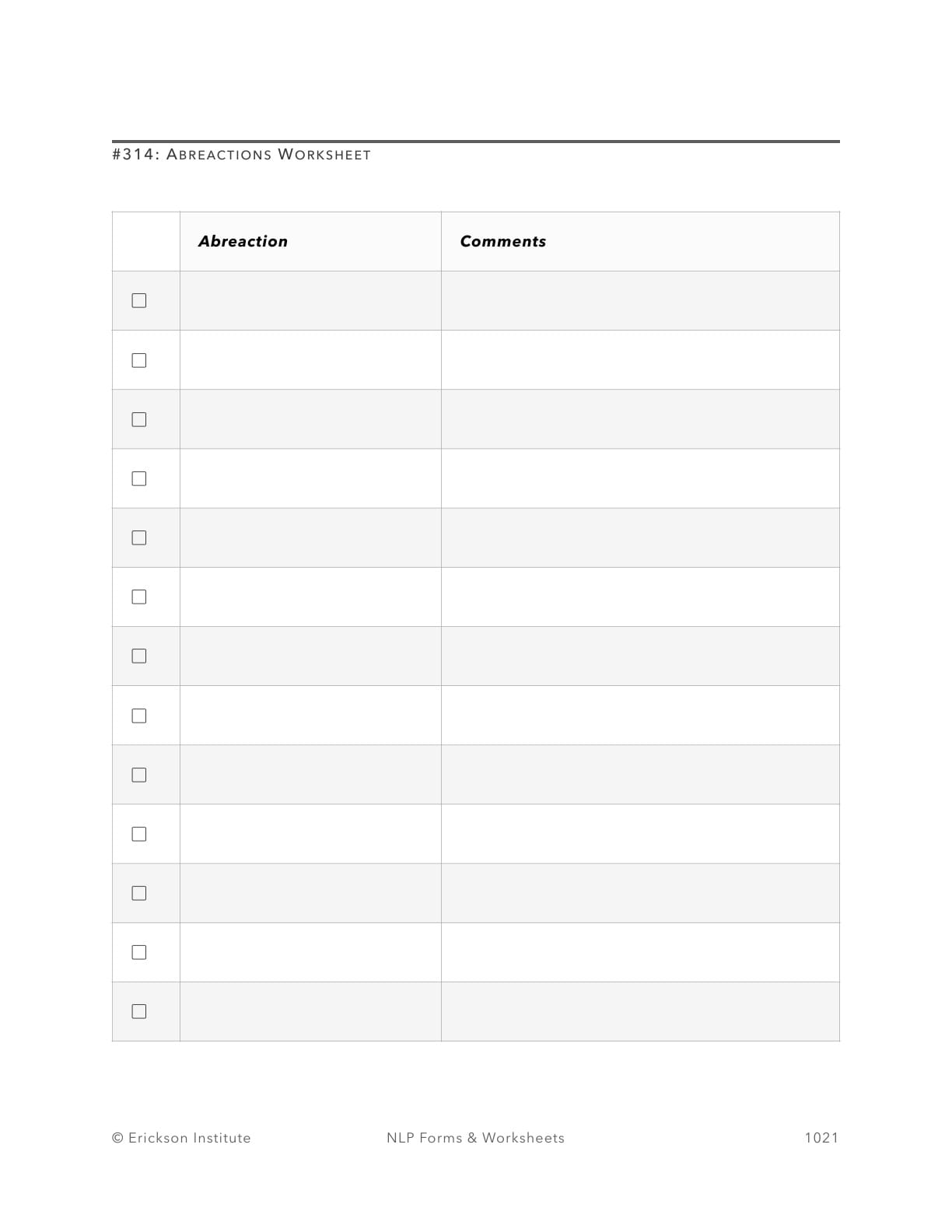
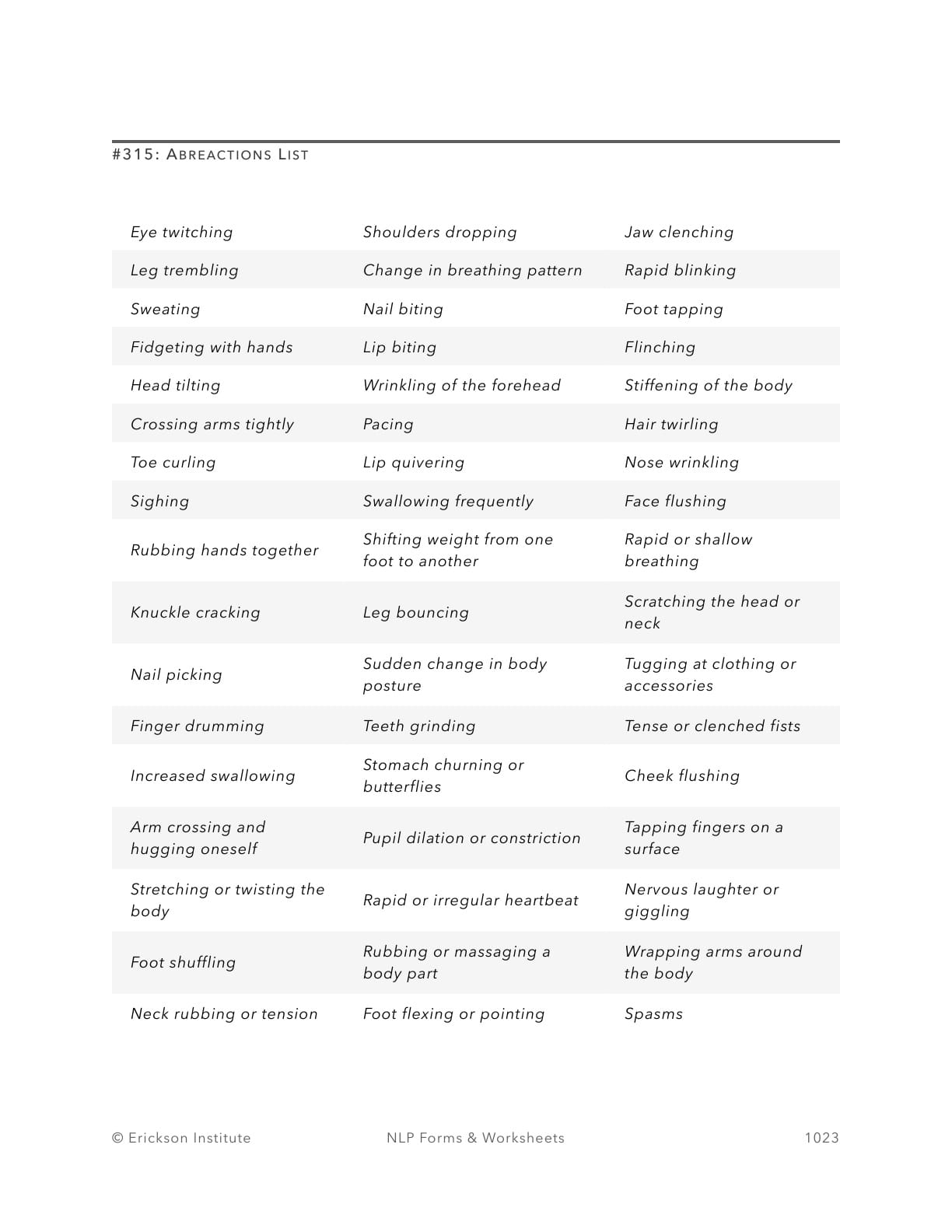
Abreactions are involuntary physical manifestations or reactions that a client may exhibit during a therapy session. These can range from minor twitches or spasms to more noticeable changes in posture, facial expressions, or body movements.
When you notice these abreactions as a therapist, you gain valuable information about the client’s internal experience and can provide insights into their emotional state, level of discomfort, or incongruence.
You can gain a better understanding of your client’s underlying emotions and reactions by paying attention to these physical manifestations. Abreactions are nonverbal cues that go beyond what words alone can communicate.
They provide insights into the client’s unconscious processes, revealing subtle signals that may not be expressed consciously. These physical reactions may indicate areas of tension, unresolved emotions, or inconsistencies in thoughts and beliefs.
Recognizing abreactions during interventions allows you to better tailor your approach and interventions. It allows for the exploration and resolution of underlying issues that may be contributing to the client’s distress or discomfort.
By recognizing and validating these physical reactions, you create a safe and supportive therapeutic environment in which the client feels understood and heard on multiple levels. Furthermore, abreactions can open the door to deeper investigation and therapeutic breakthroughs.
They can indicate intense emotional states or potential areas for catharsis and release. Working with abreactions skillfully can help your clients achieve a higher level of healing and resolution.
Worksheet #
Source #
Access the full suite of 500 therapy and coaching templates. This worksheet features in my book, available on Amazon:
500 Practical NLP Forms, Templates & Worksheets: For Therapy, Coaching & Training