Instructions #
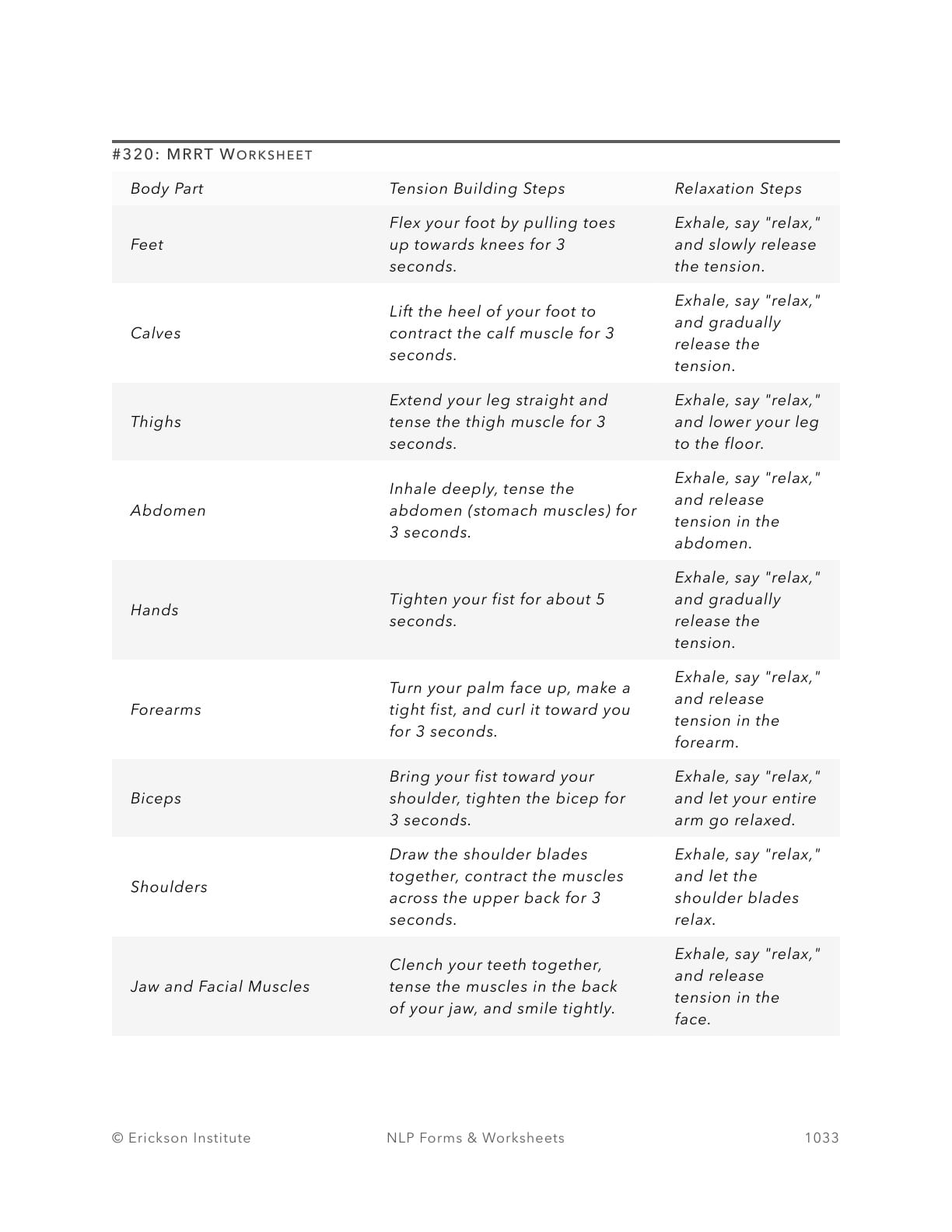
When working with clients experiencing chronic pain, the Muscle Release and Relaxation Technique (MRRT) can be a valuable tool to incorporate into therapy sessions. When introducing MRRT to a client, it is critical to explain the technique’s purpose and benefits.
Begin by emphasizing that MRRT aims to raise muscle tension awareness and promote relaxation before tension becomes overwhelming. It is important to emphasize that MRRT not only reduces muscle tension but also induces mental calm and deep physical relaxation.
Therapists can help clients develop the skills to recognize and release muscle tension by guiding them through the practice, resulting in better pain management and overall well-being.
Begin a therapy session by explaining the rationale for MRRT and its application to pain management. Discuss how chronic pain frequently causes increased muscle tension and how emotions such as anger, anxiety, frustration, and stress can contribute to this tension.
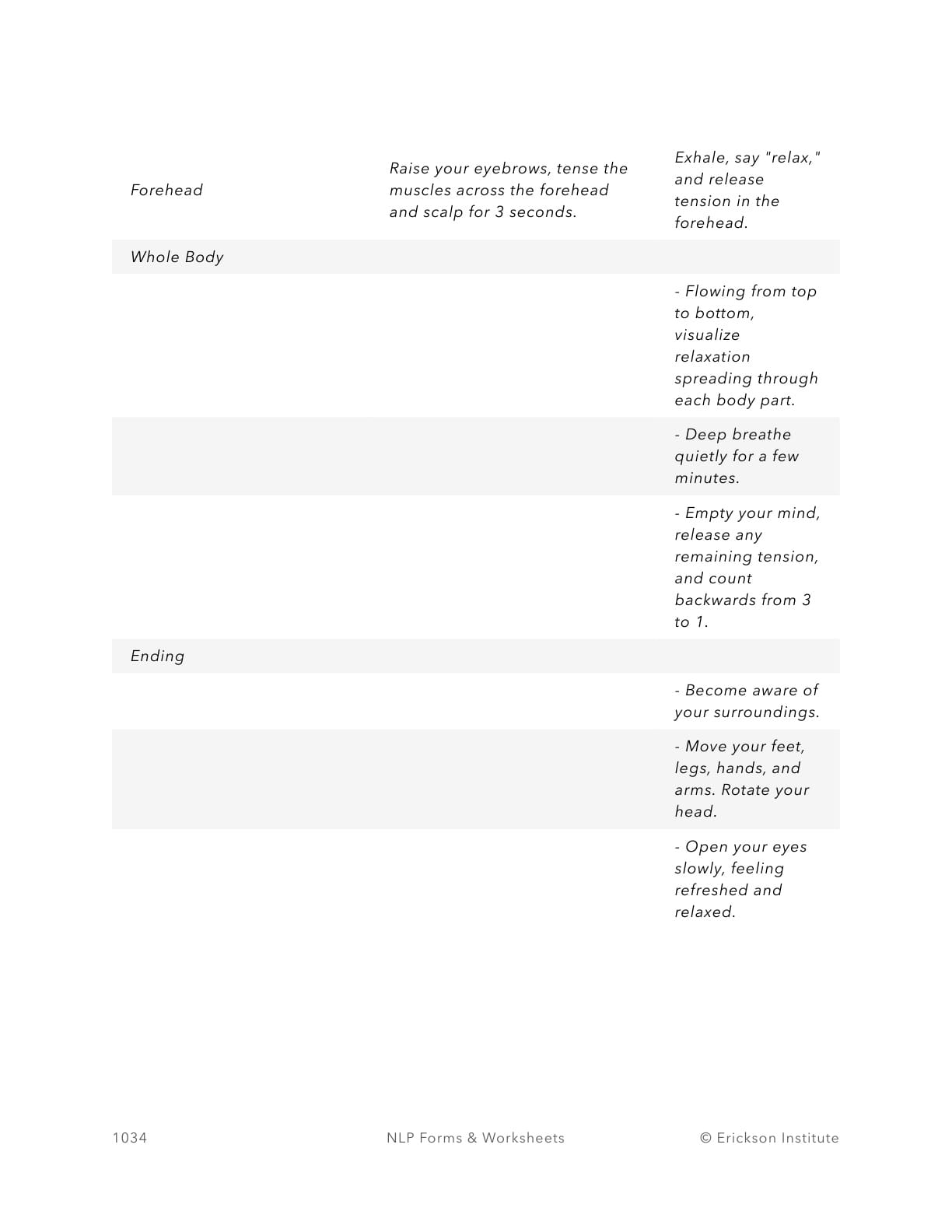
In particular, emphasize how MRRT can help clients become more aware of their muscles and learn to relax them effectively. Demonstrate the MRRT steps, guiding the client through the process of releasing and relaxing specific muscle groups.
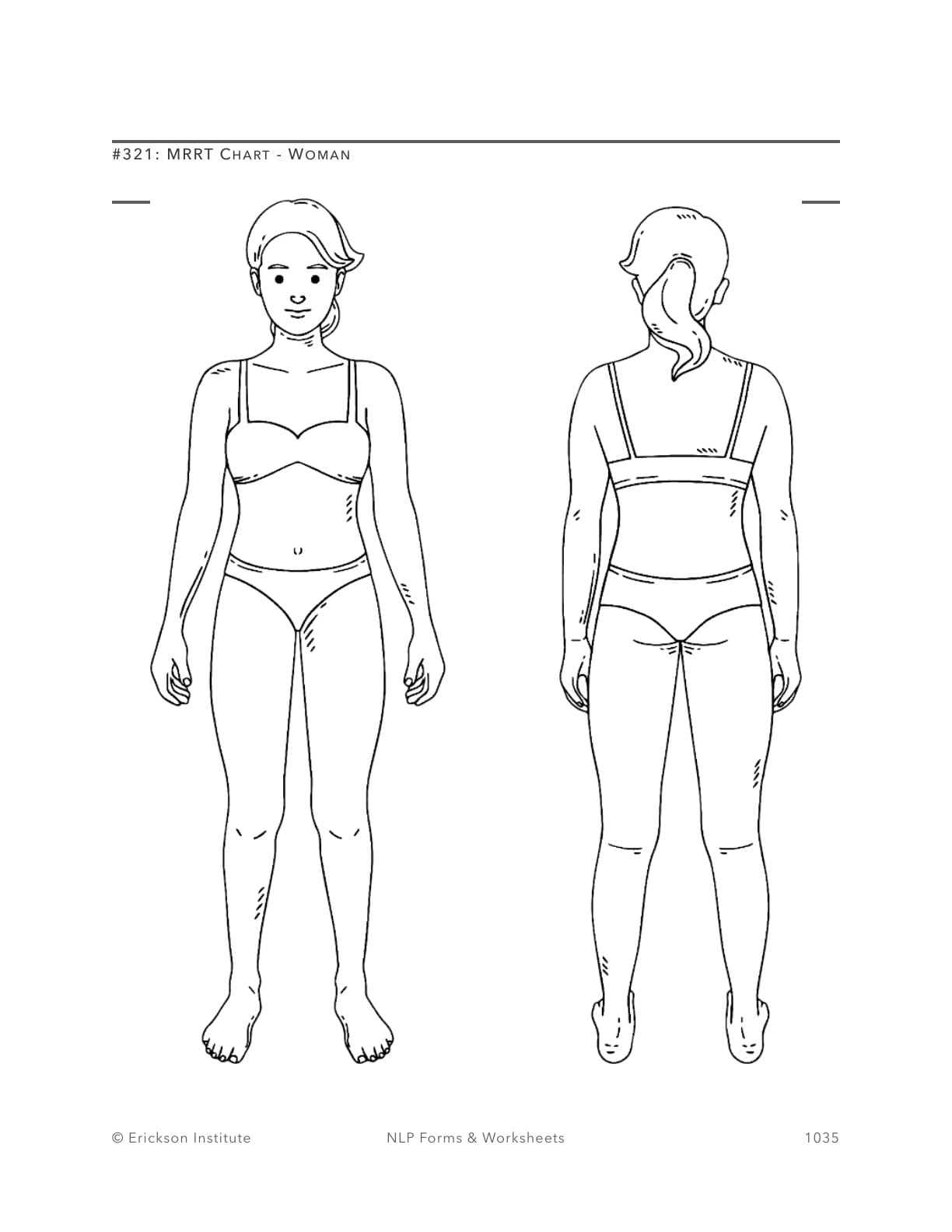
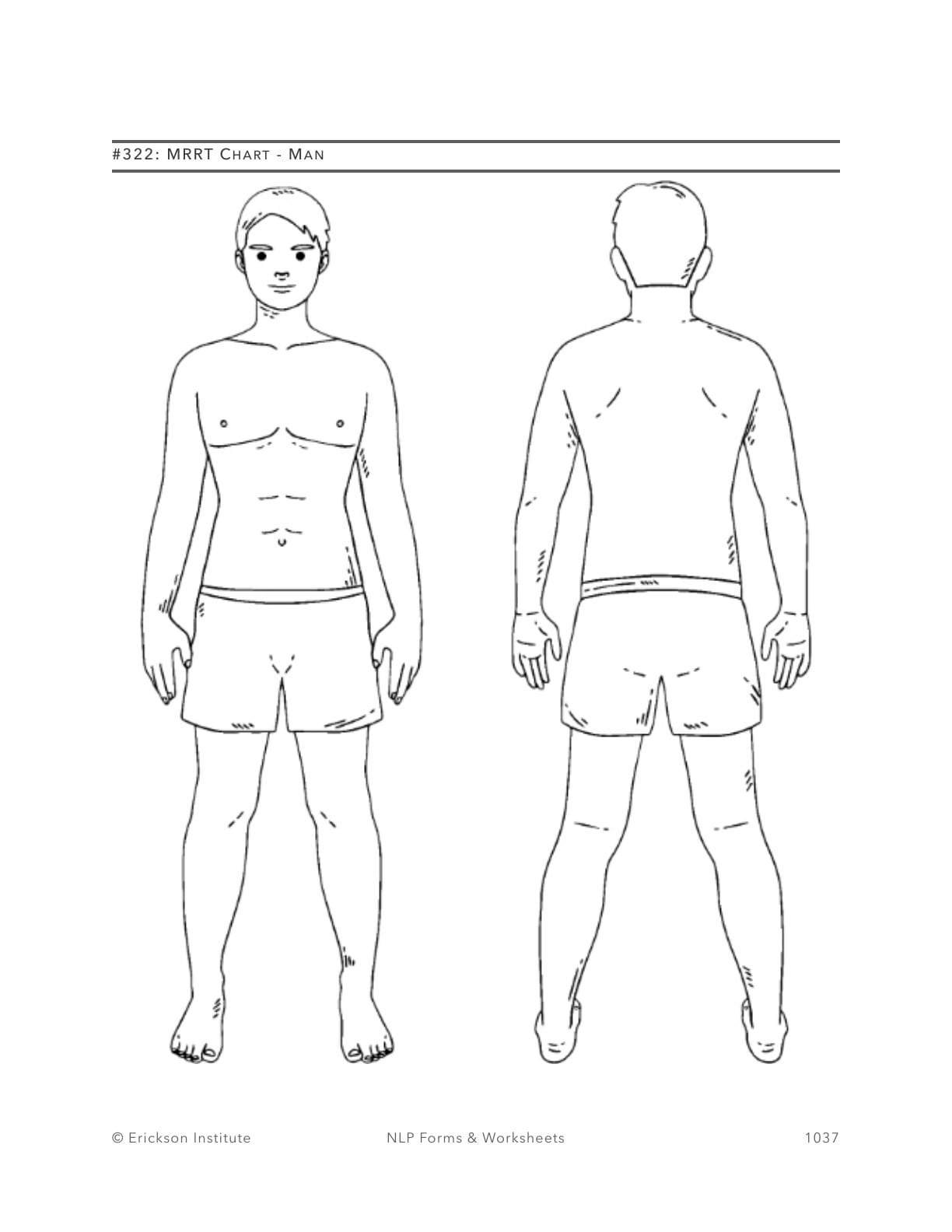
Encourage them to pay close attention to the sensations they feel while practicing. If your client’s facial expressions and body language show abreactions when you suggest they relax a particular area of their body, use the charts to mark the areas on their body.
Worksheet #
Source #
Access the full suite of 500 therapy and coaching templates. This worksheet features in my book, available on Amazon:
500 Practical NLP Forms, Templates & Worksheets: For Therapy, Coaching & Training