Instructions #
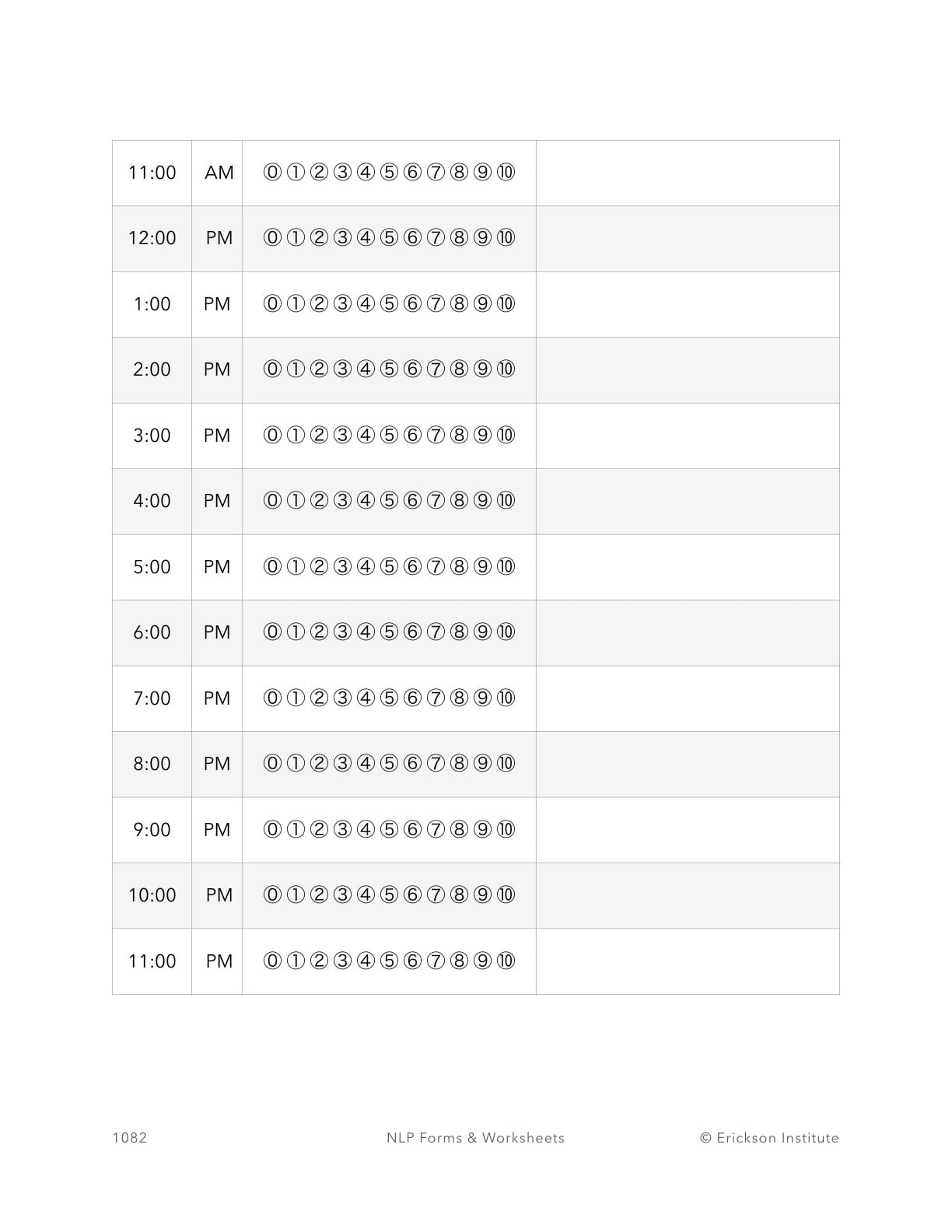
Understanding the significance of perceived pain and implementing a daily tracker can be extremely beneficial to clients suffering from chronic pain.
As a therapist, you must convey to your clients that how they perceive and interpret their pain has a significant impact on their overall experience.
Clients gain valuable insights into the context and specific situations in which their pain emerges by tracking their pain on a daily basis.
This tracking process enables them to identify patterns, triggers, and potential mitigating factors, giving them control over their pain management.
Encouraging clients to set aside a small amount of time each day to track their pain is a powerful tool for reducing the severity of their perceived pain.
By devoting this time, clients become more sensitive to their pain levels and gain a better understanding of how they change throughout the day.
Furthermore, it assists clients in realizing that chronic pain does not have to consume their entire lives; rather, it can be effectively addressed through focused and purposeful efforts.
This realization instills hope and resilience in clients as they begin to see their pain in context and develop strategies to overcome it.
Finally, the daily tracker proves to be a valuable ally in their journey to lessen the impact of chronic pain and reclaim control over their lives.
Worksheet #

Source #
Access the full suite of 500 therapy and coaching templates. This worksheet features in my book, available on Amazon:
500 Practical NLP Forms, Templates & Worksheets: For Therapy, Coaching & Training