Instructions #
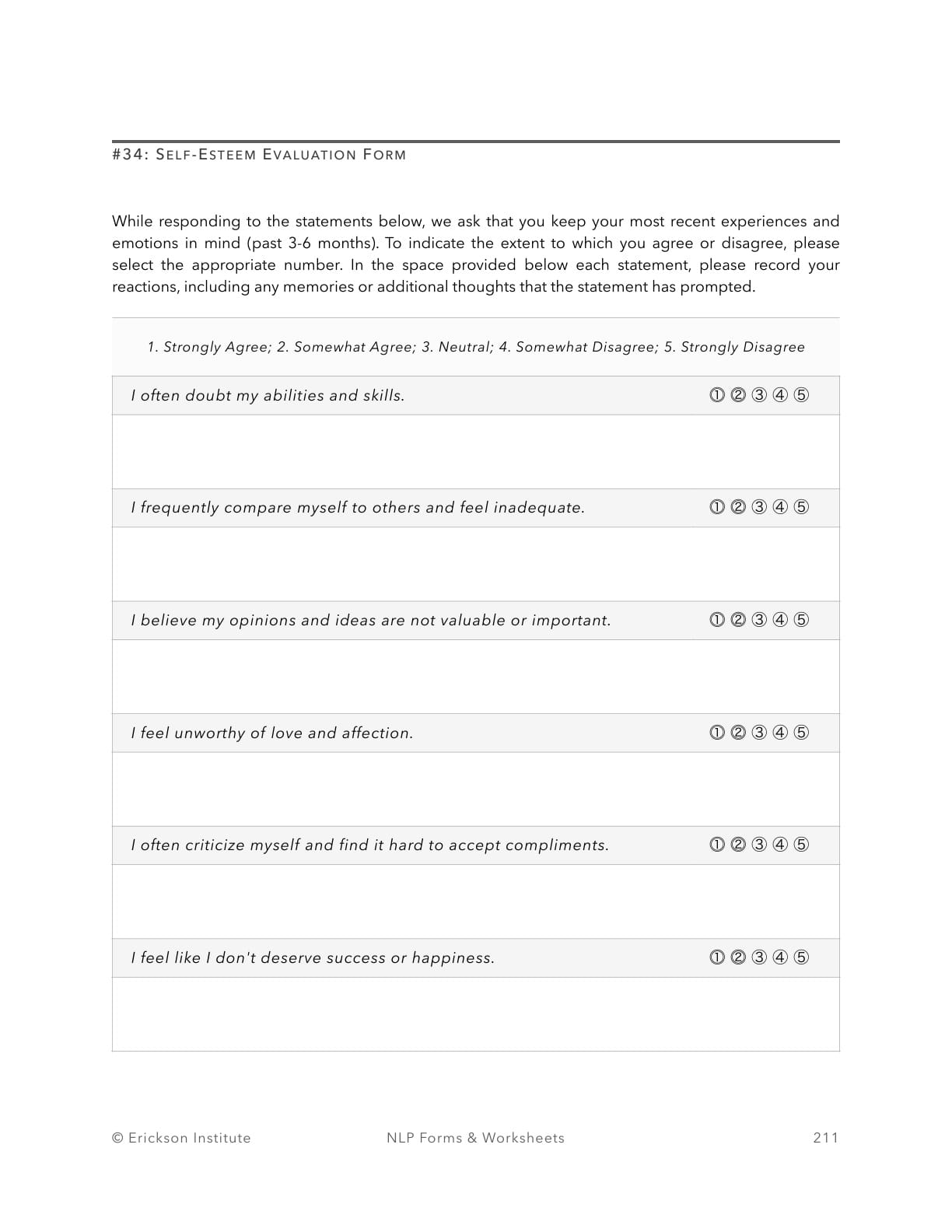
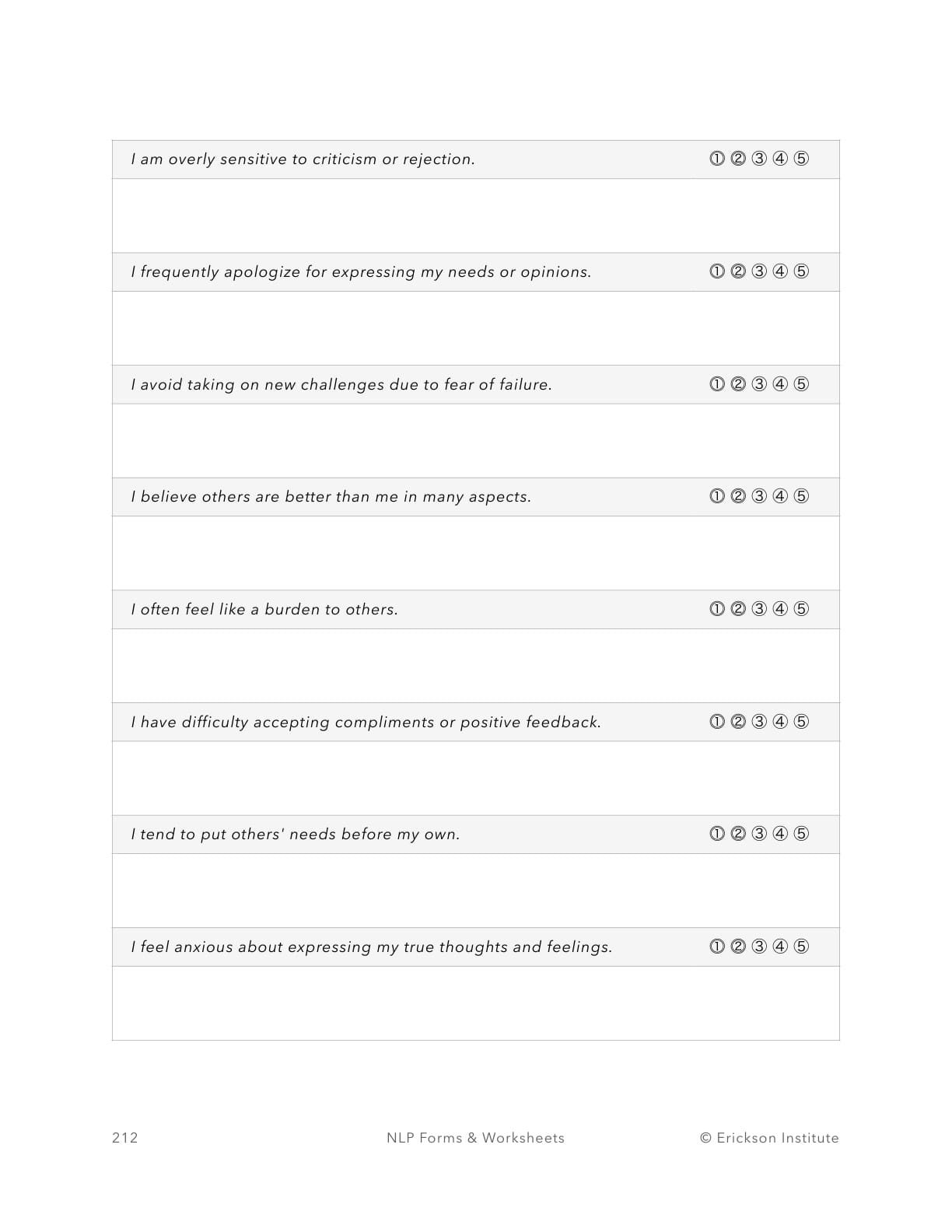
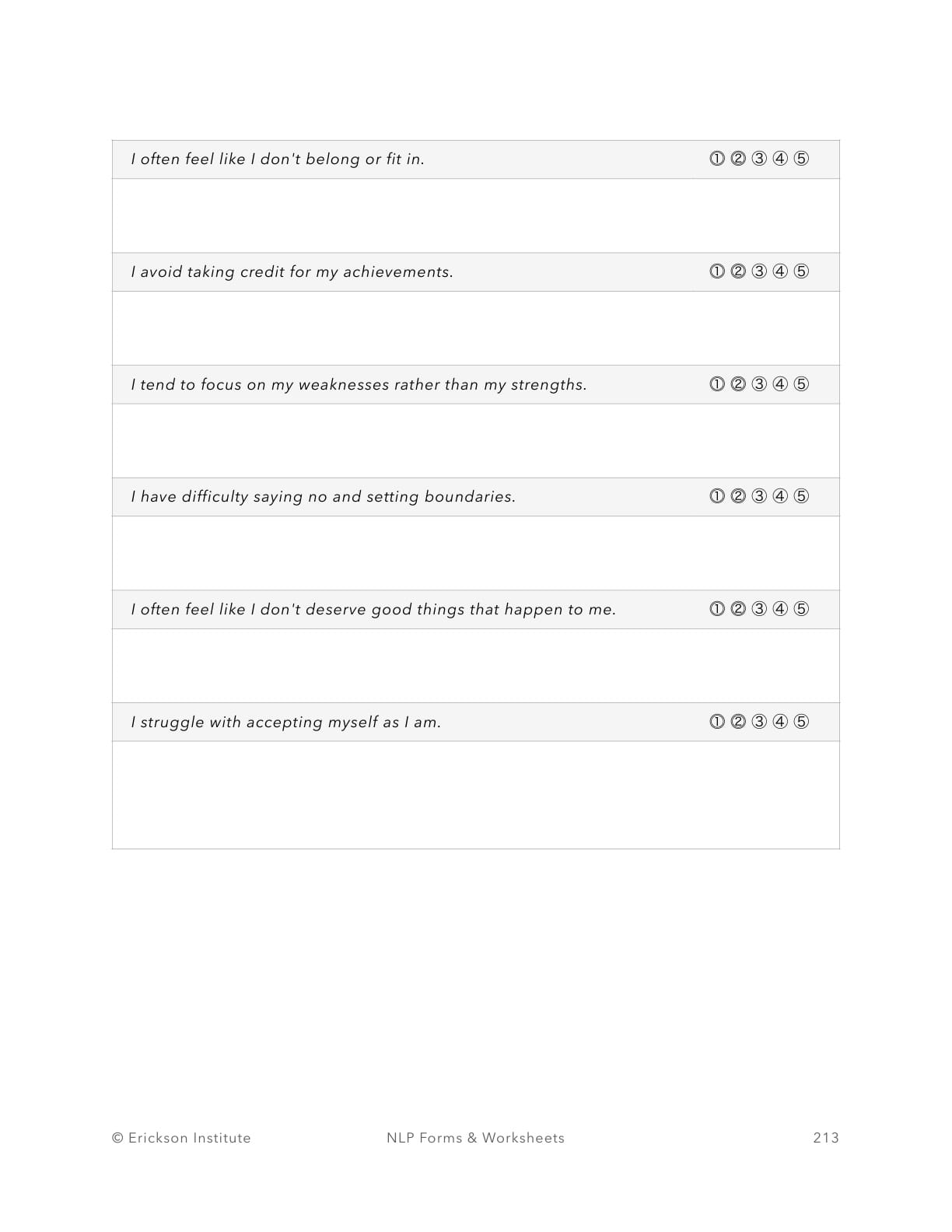
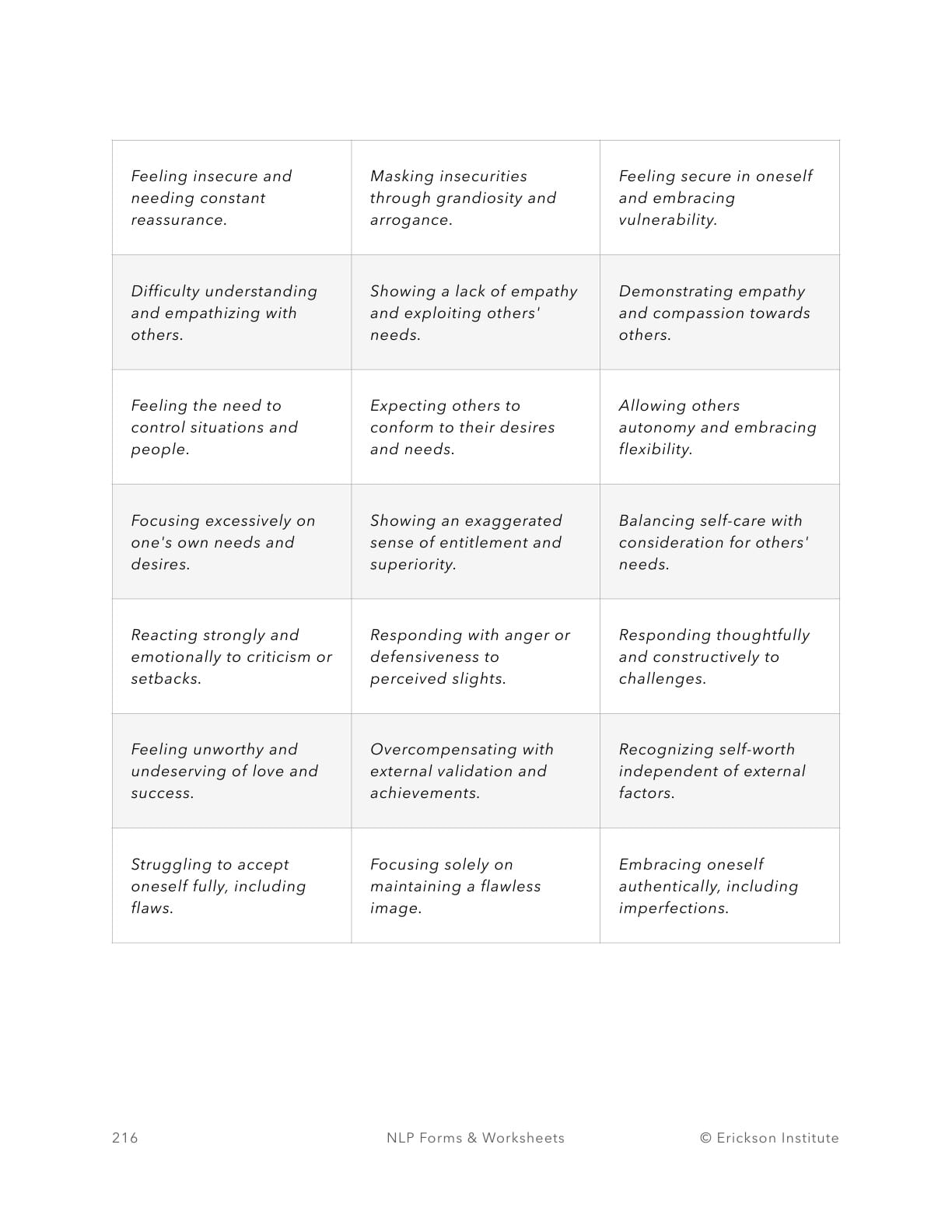
Self-esteem is a person’s overall assessment and perception of their own worth and value. It is a subjective and internalized evaluation that shapes how a person perceives themselves, their abilities, and their place in the world.
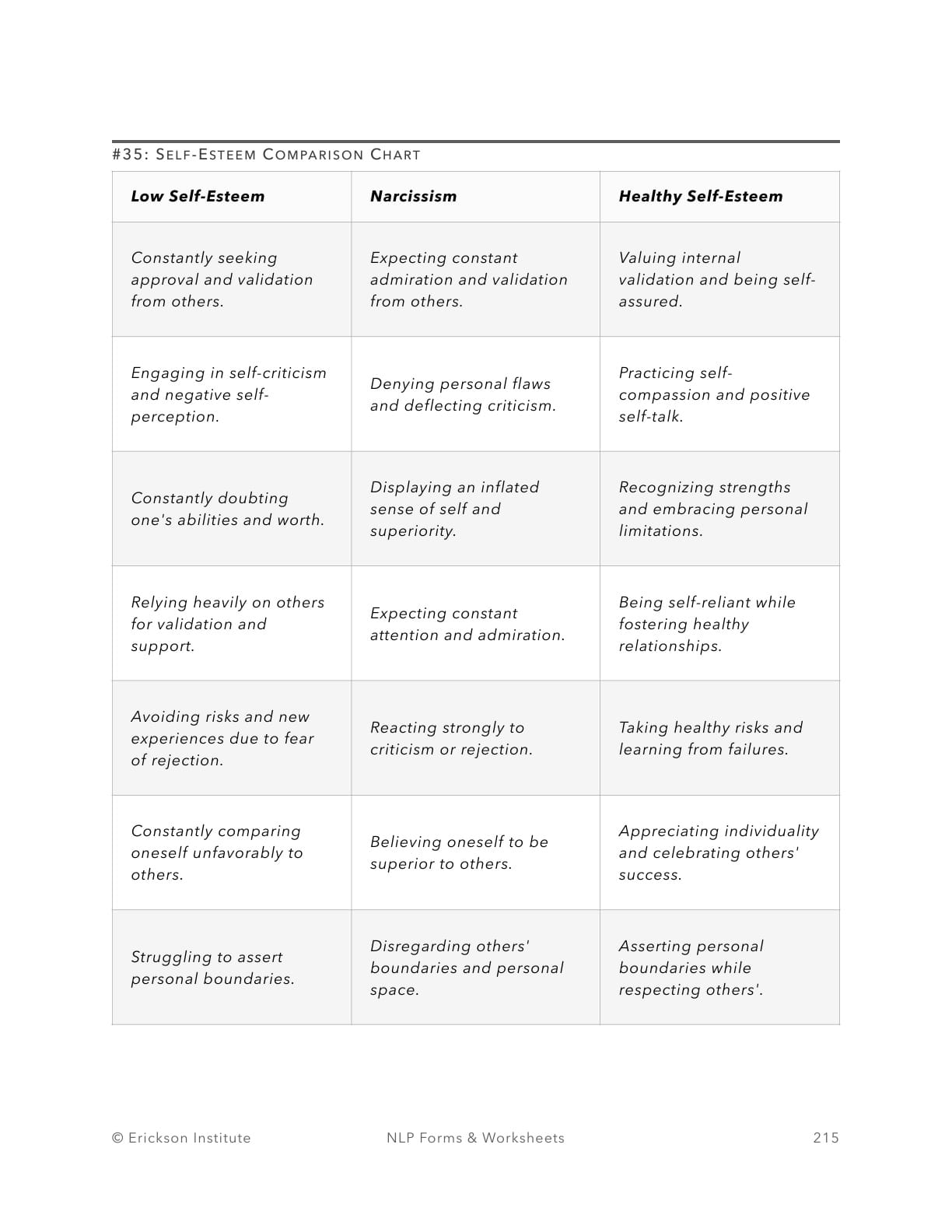
Self-esteem is important in shaping one’s emotions, thoughts, and behaviors. A person with healthy self-esteem has a positive self-image, is confident in their abilities, and believes in their intrinsic worth.
They are more likely to use positive self-talk, accept challenges, and maintain a positive attitude in the face of adversity.
As it improves personal relationships, academic or professional pursuits, and overall mental well-being, healthy self-esteem serves as a foundation for a fulfilling and satisfying life.
Low self-esteem, on the other hand, can be harmful, leading to self-doubt, negative self-perception, and a proclivity to engage in self-sabotaging behaviors.
It can stifle personal development, create roadblocks to success, and contribute to mental health issues like anxiety and depression.
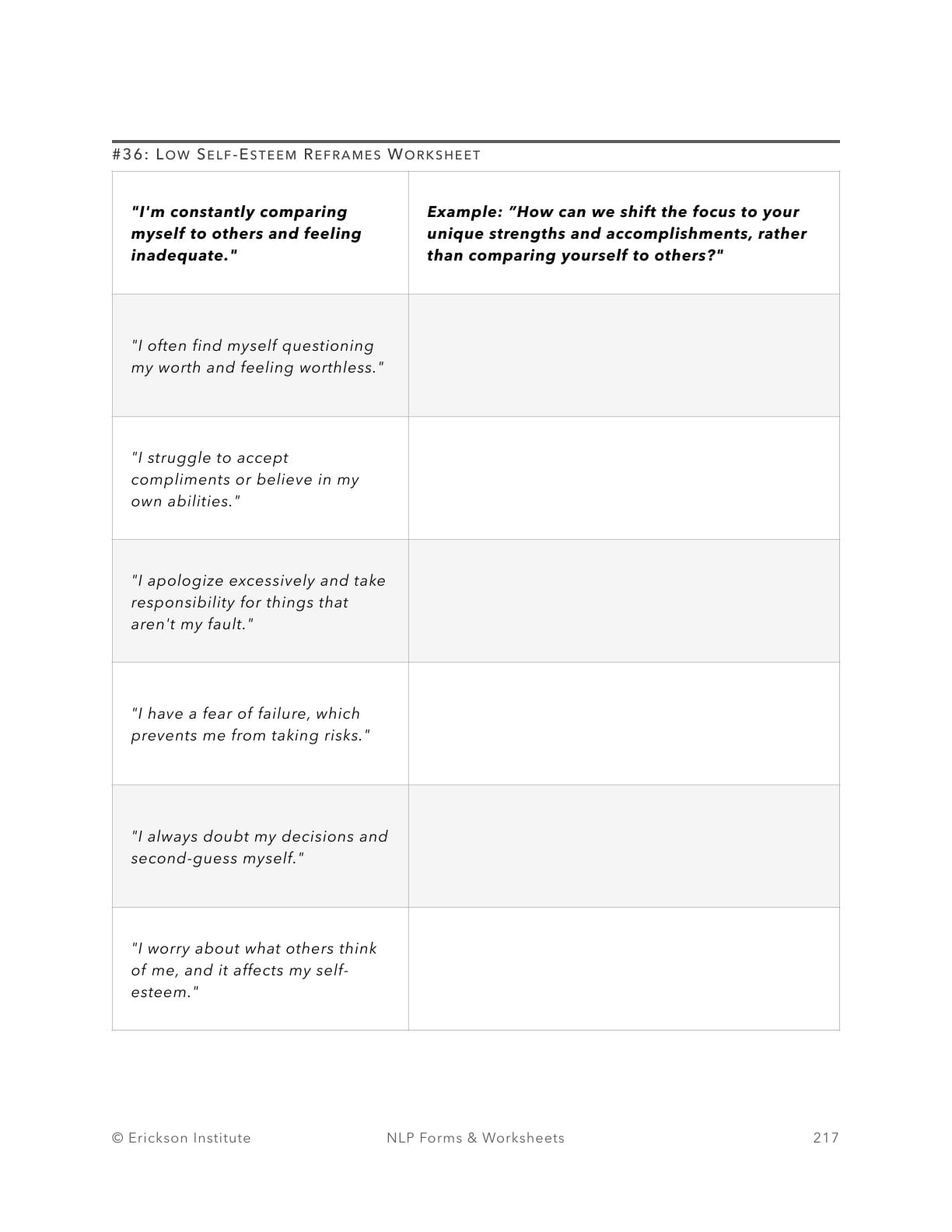
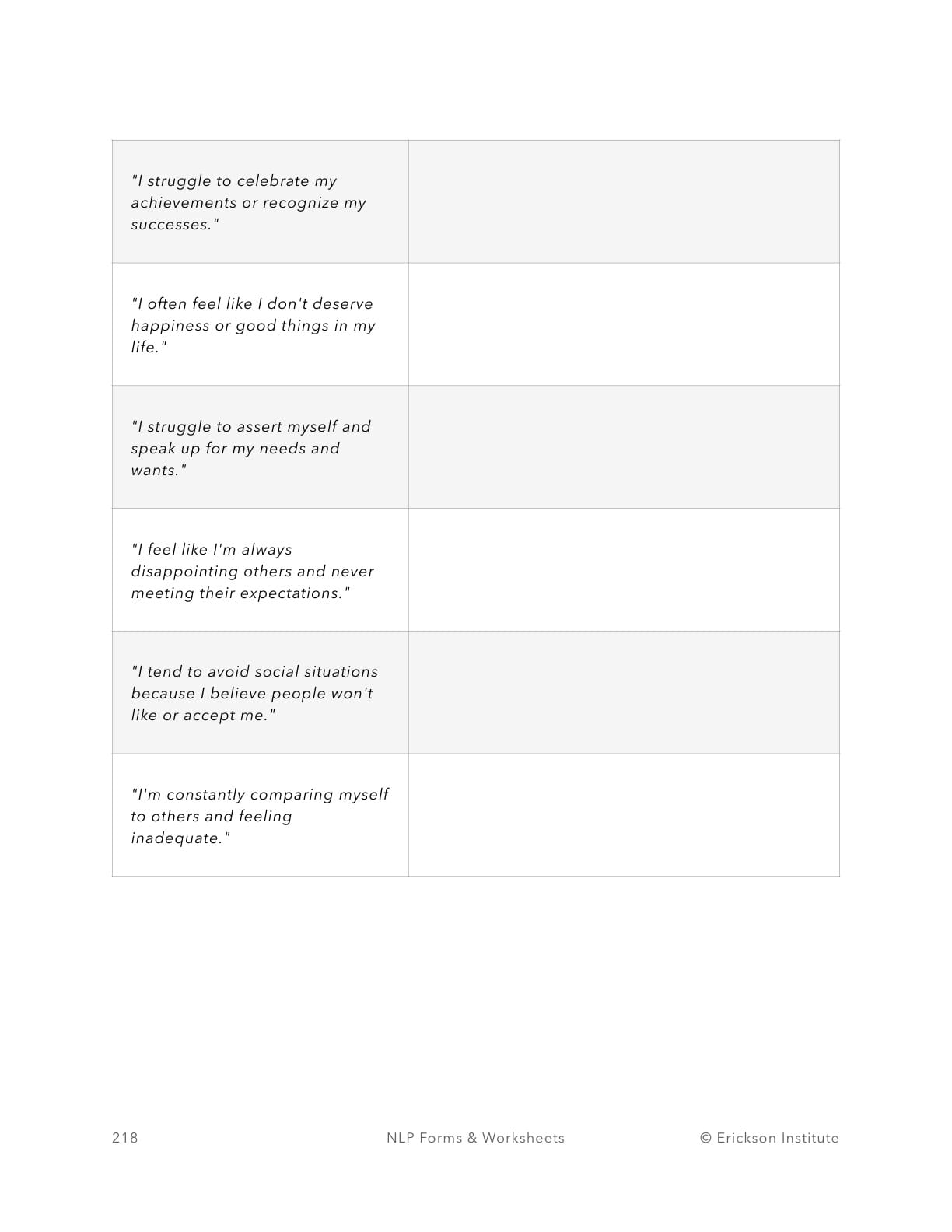
Building and maintaining healthy self-esteem entails developing self-compassion, accepting one’s own strengths and weaknesses, setting realistic goals, and surrounding oneself with supportive and positive influences.
Worksheet #
Source #
Access the full suite of 500 therapy and coaching templates. This worksheet features in my book, available on Amazon:
500 Practical NLP Forms, Templates & Worksheets: For Therapy, Coaching & Training