Instructions #
It is critical to assist your clients in investigating their distinct communication styles and the impact they have on their relationships and personal well-being.
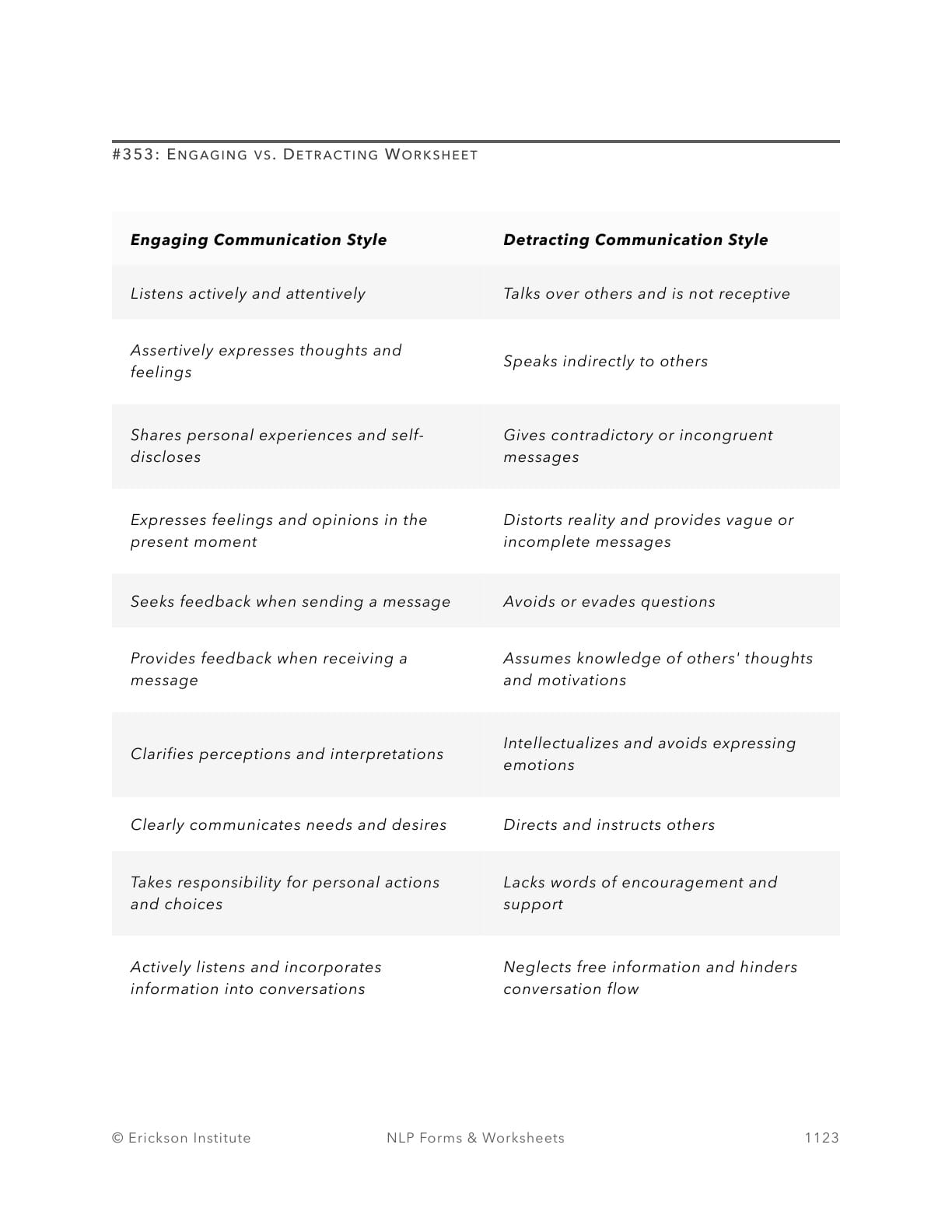
The engaging communication style, which includes active listening, assertive expression, and open self-disclosure, is one important aspect.
You create an environment of mutual understanding and constructive dialogue when you actively listen to others, express yourself assertively, and openly share your thoughts and feelings.
This communication style enables you to effectively communicate your ideas, emotions, and needs, promoting healthy and harmonious communication dynamics in your relationships.
In contrast, you may exhibit a detracting communication style, which includes behaviors that obstruct effective communication. This style includes talking over others, sending contradictory or indirect messages, and distorting reality.
You can understand the potential barriers to communication by becoming aware of these distracting patterns.
You can discover new ways of expressing yourself, foster personal growth, deepen your understanding of others, and strengthen interpersonal connections through exploration and reflection.
You can learn about your dominant communication style and how it affects your interactions by using this communication style comparison.
You can empower yourself to develop effective communication skills through therapeutic interventions, fostering growth, empathy, and stronger connections with others.
Worksheet #
Source #
Access the full suite of 500 therapy and coaching templates. This worksheet features in my book, available on Amazon:
500 Practical NLP Forms, Templates & Worksheets: For Therapy, Coaching & Training