Instructions #
It is not uncommon for clients to present stories in therapy that serve as justifications for their behavior or emotions. As therapists, we must avoid becoming entangled in these stories and working within their constraints.
Instead, we focus on reframing and establishing a new system, a different dynamic, in which the old story loses its power and influence. By doing so, we lay the groundwork for long-term change in the client’s behavior and emotions.
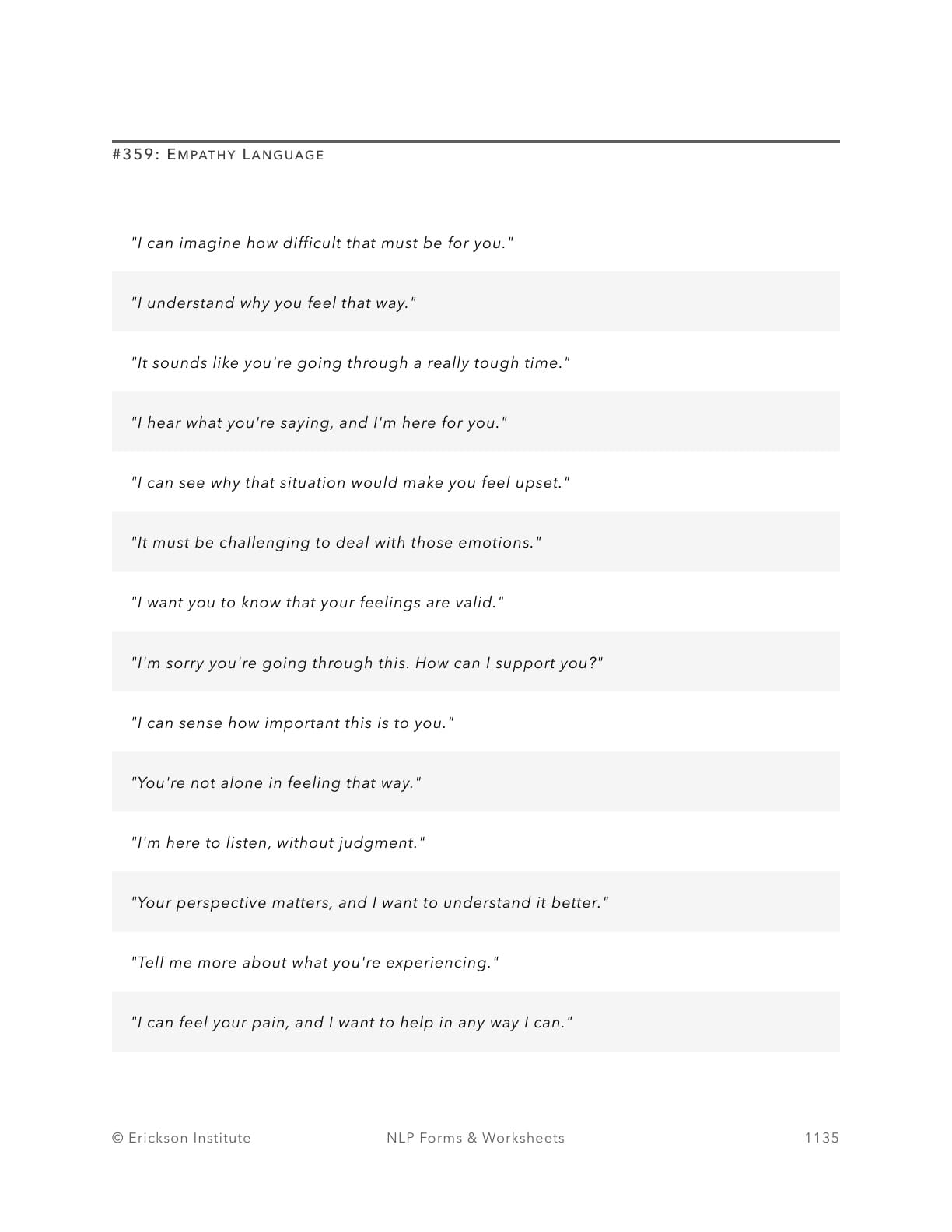
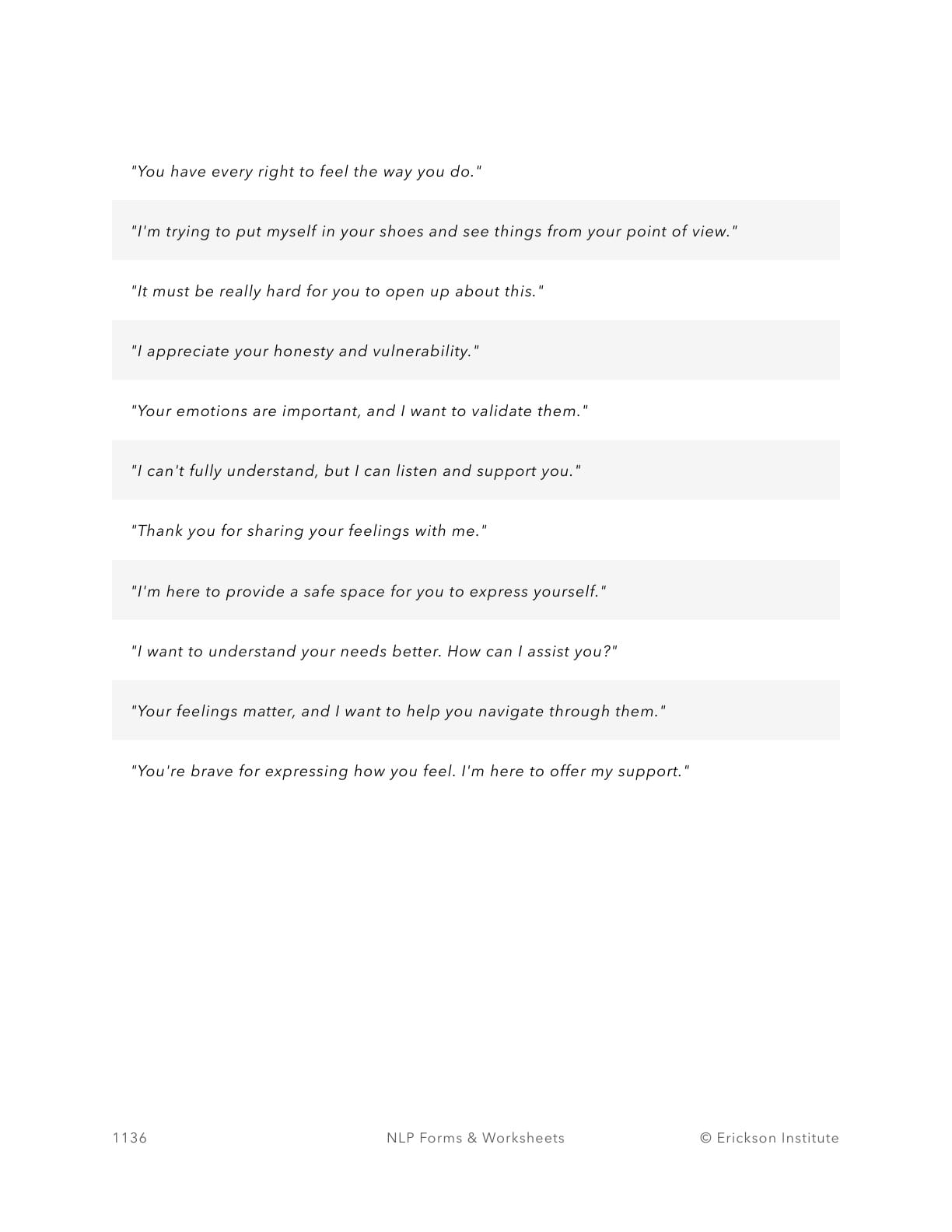
Empathy phrases are one of the most important tools we use to help us navigate this process. These phrases allow us to stay engaged with the client without becoming distracted by the details of their story.
Empathy phrases show that you understand and validate the client’s experience while gently guiding them to new perspectives and possibilities.
We show the client that we hear and acknowledge their emotions by expressing empathy, while gently challenging the underlying assumptions and beliefs that support their current story.
We create a therapeutic space by using empathy phrases, which encourages the client to explore alternative narratives and question their own justifications.
It allows them to see beyond the confines of their current story, allowing them to gain new insights, grow, and experience positive change. Rather than reinforcing the old story, we help to create a new and empowering narrative that pave the way for transformative progress.
Worksheet #
Source #
Access the full suite of 500 therapy and coaching templates. This worksheet features in my book, available on Amazon:
500 Practical NLP Forms, Templates & Worksheets: For Therapy, Coaching & Training