Instructions #
Recognizing and calibrating client desperation is critical not only for their own well-being but also for the well-being of those around them, particularly family members.
Desperation can consume people and drive them to extremes, which has an impact on their relationships and general functioning. It is critical for therapists to approach such clients with empathy and sensitivity.
It is preferable to offer indirect support and assistance rather than directly labeling or confronting them about their despair. Creating a safe and nonjudgmental environment allows clients to open up and freely share their struggles.
Therapists can help clients regain hope and explore healthier coping strategies by listening attentively, validating their emotions, and providing practical guidance.
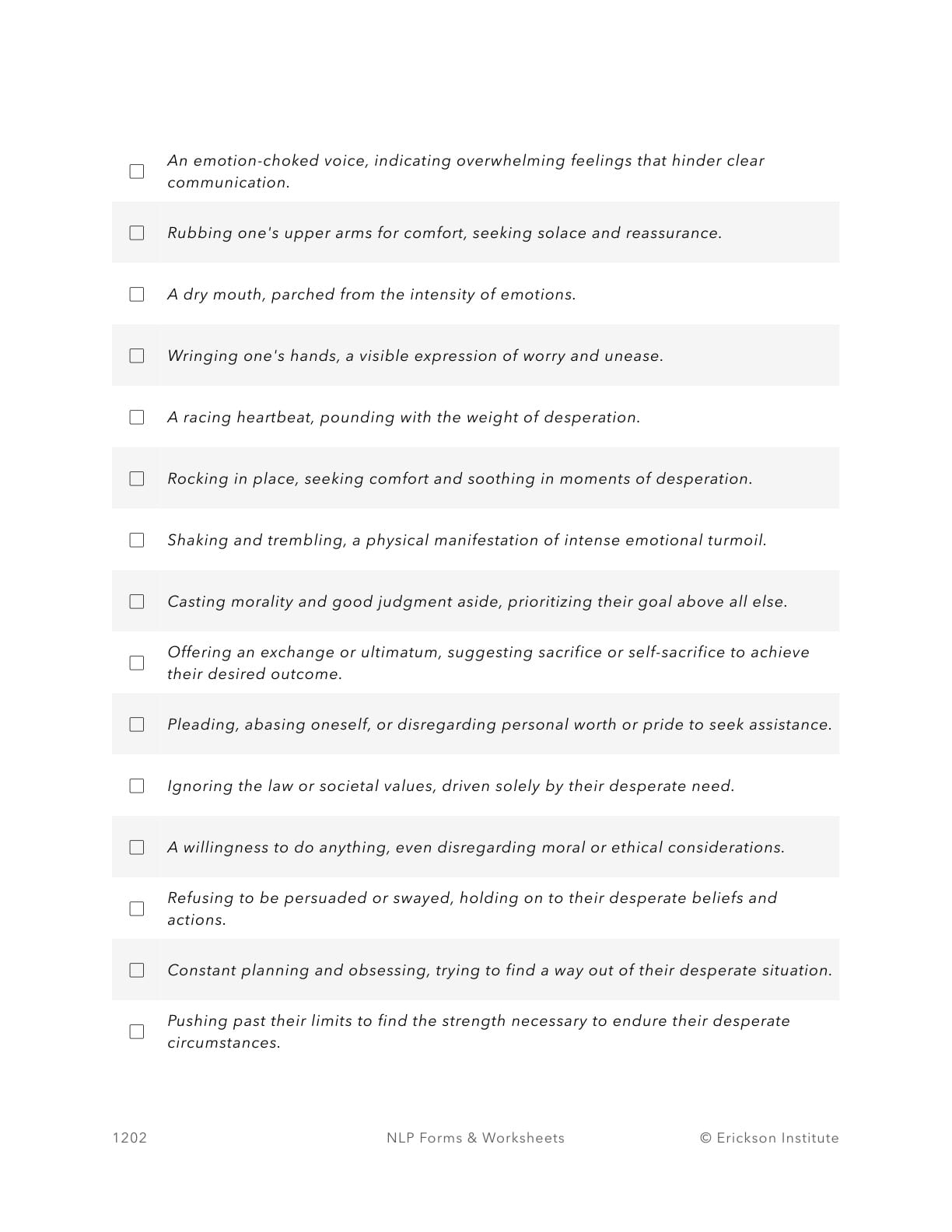
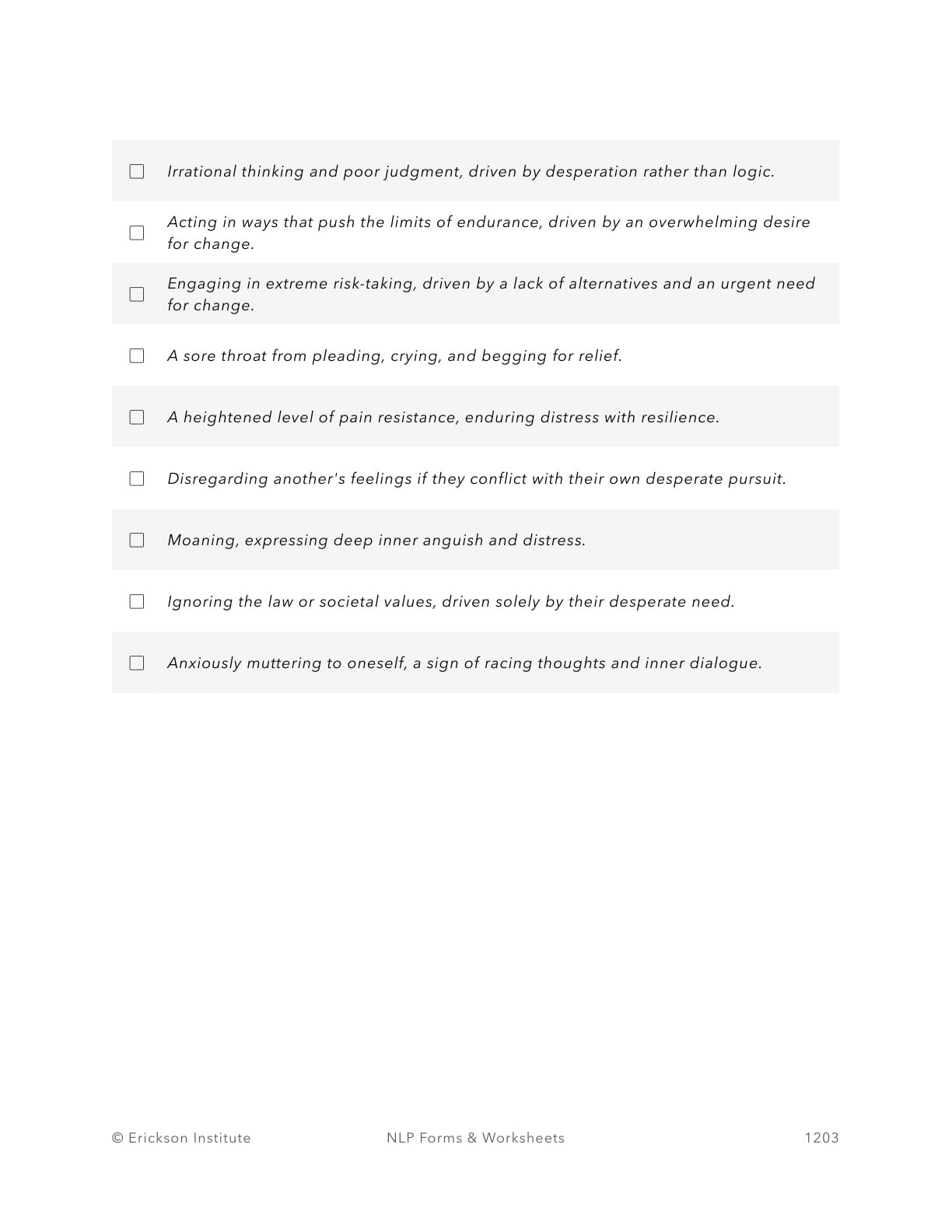
Calibrating desperation necessitates sensitivity to nonverbal cues and communication, such as behavioral changes, intense emotional displays, or withdrawal from social interactions.
Therapists can tailor interventions that address their specific needs and promote healing by understanding the depth of their distress.
With compassion and respect, assisting clients in navigating their desperate feelings can foster a therapeutic alliance based on trust, allowing for meaningful progress and the restoration of well-being.
Worksheet #

Source #
Access the full suite of 500 therapy and coaching templates. This worksheet features in my book, available on Amazon:
500 Practical NLP Forms, Templates & Worksheets: For Therapy, Coaching & Training