Instructions #
The shadow self refers to aspects of our personalities that we tend to repress, deny, or dislike. It includes characteristics, tendencies, or behaviors that we consider unacceptable or contrary to our self-image.
The shadow self represents our hidden and often unconscious aspects that we try to avoid because they are unattractive or undesirable. Exploring the shadow self in therapy can be a powerful tool for self-discovery and personal growth.
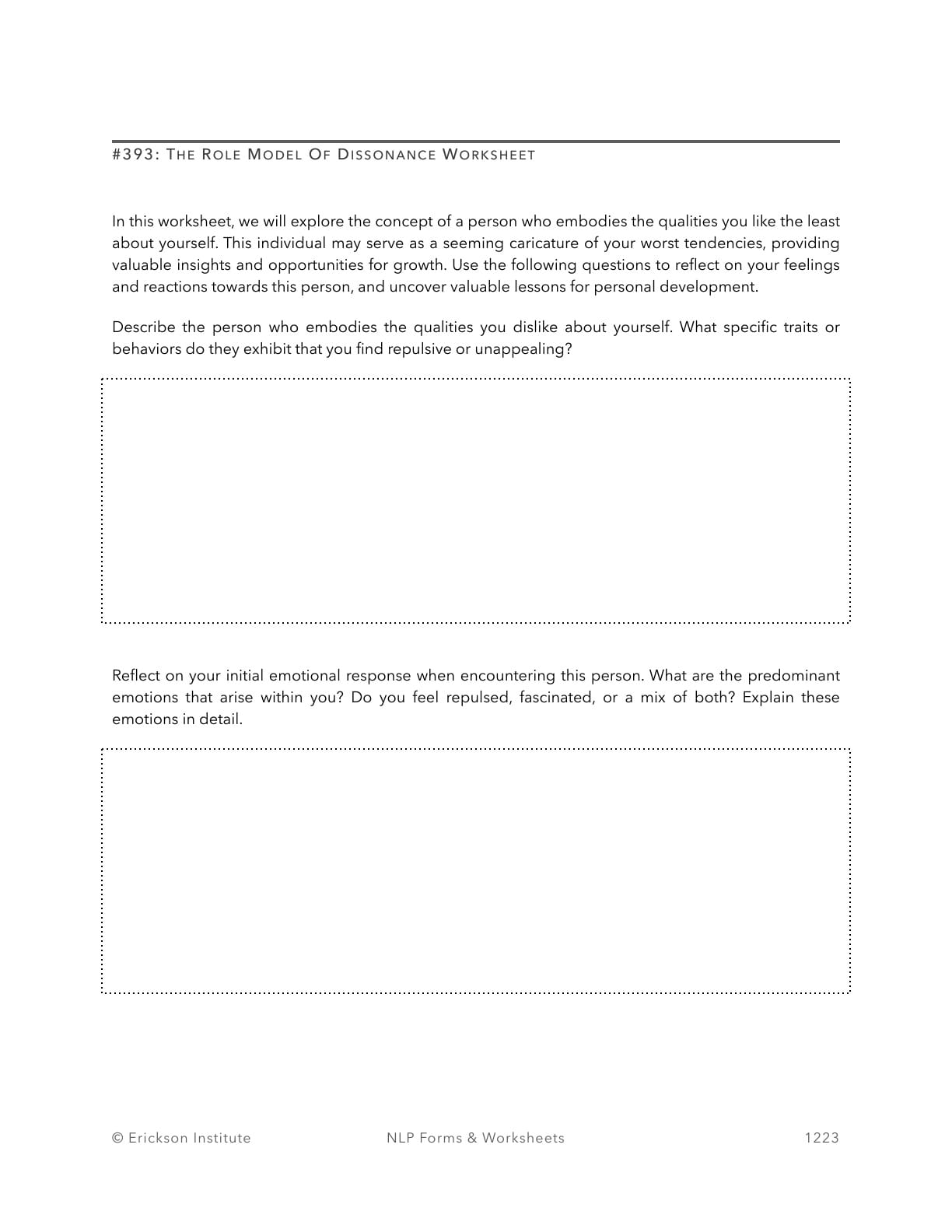
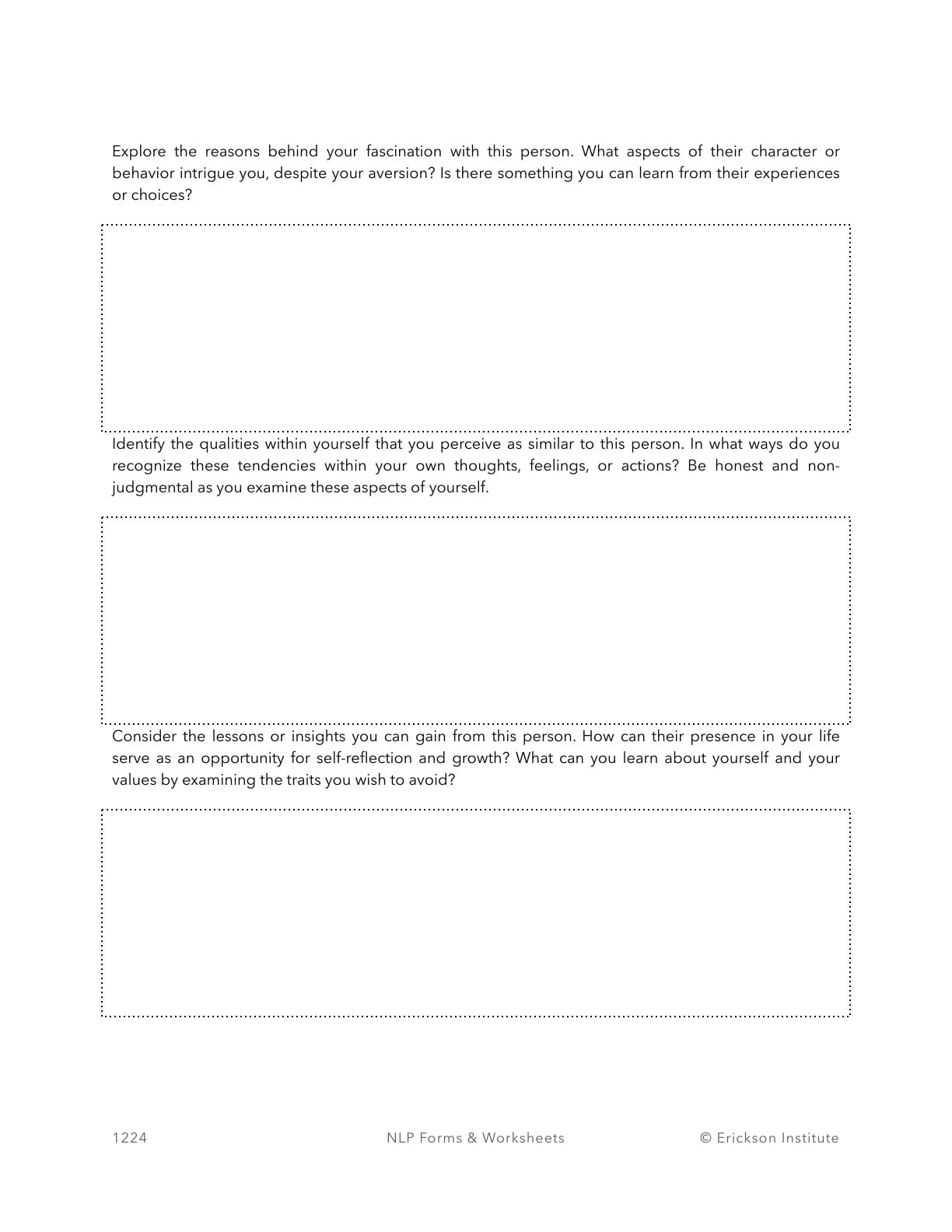
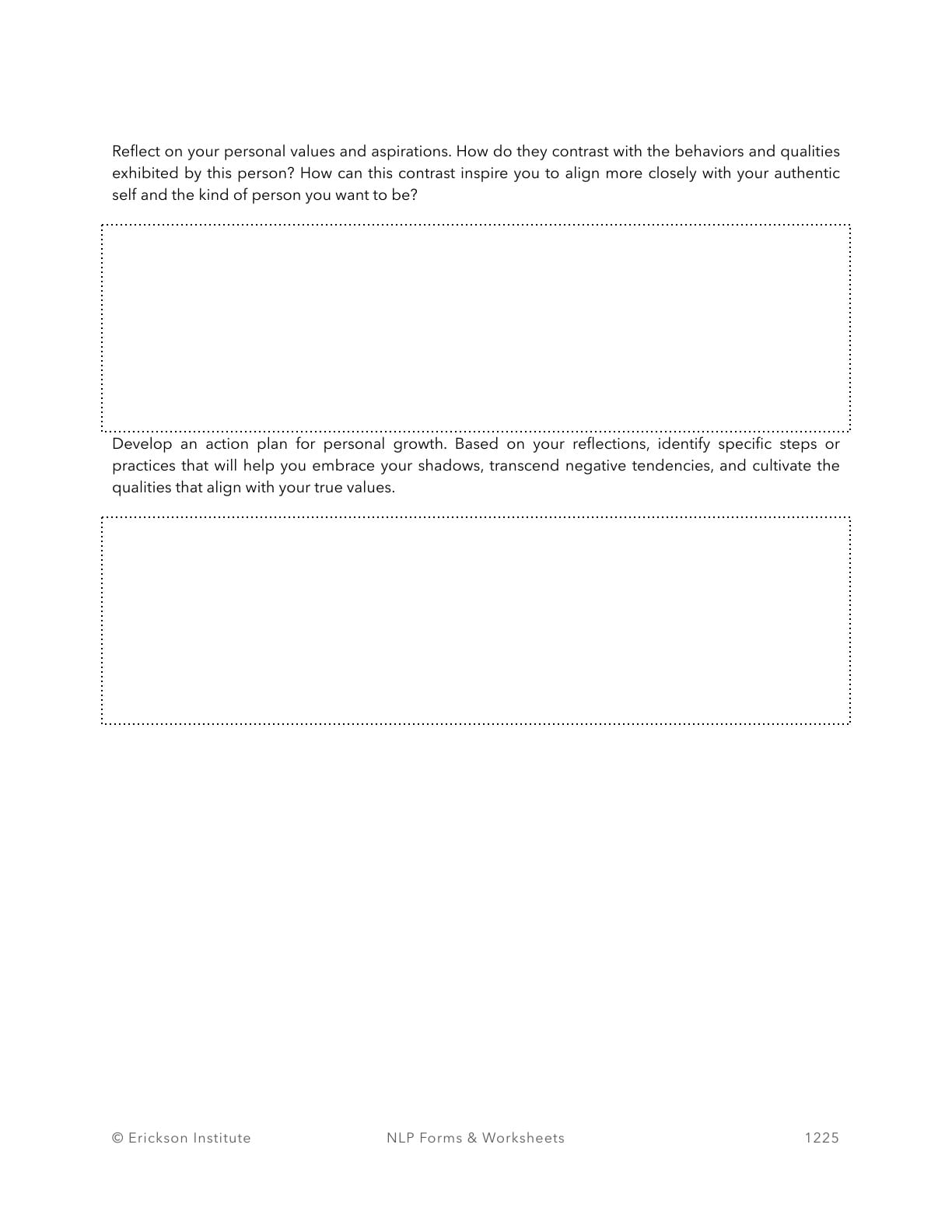
The “Role Model of Dissonance” worksheet is intended to facilitate this exploration by leading clients through an examination of a person who embodies the traits they dislike the most about themselves.
This person appears to be a caricature of themselves, reflecting their worst tendencies and acting as a contrast to their desired self. The worksheet begins by asking the client to identify the qualities in themselves that they dislike or wish to change.
They gain clarity on these aspects and the impact they have on their lives through reflection and introspection. The next step is to find a role model or someone who embodies these undesirable traits.
This person acts as a mirror, reflecting the client’s disowned aspects back to them. Engaging with a dissonance role model can elicit both repulsion and fascination in the client.
They gain a better understanding of themselves by examining the characteristics they dislike in others. This process brings these aspects to the forefront of consciousness, allowing for self-acceptance and integration.
The worksheet encourages clients to investigate the sources of their aversion and fascination, revealing the underlying beliefs, fears, or experiences that contribute to their disowned characteristics.
This exploration assists clients in developing empathy and compassion for themselves, recognizing that these undesirable characteristics are frequently rooted in pain, conditioning, or unmet needs.
This process allows you to guide clients through a journey of self-exploration and acceptance. It assists them in accepting their shadow selves, thereby promoting self-integration and personal growth.
Clients can develop greater self-awareness, self-compassion, and the ability to consciously choose their responses and behaviors by confronting and understanding their unwanted characteristics.
Working with the shadow self allows clients to transform their relationship with these aspects, viewing them as opportunities for growth and self-development rather than flaws.
Clients can experience a greater sense of wholeness, authenticity, and emotional well-being by integrating their shadow selves. Remember, the goal of this worksheet is to facilitate a process of self-discovery and empowerment, not to dwell on negativity or self-criticism.
Encourage your clients to approach it with openness, curiosity, and a willingness to embrace the entirety of their being.
Worksheet #
Source #
Access the full suite of 500 therapy and coaching templates. This worksheet features in my book, available on Amazon:
500 Practical NLP Forms, Templates & Worksheets: For Therapy, Coaching & Training