Instructions #
Self-defeating behavior is defined as a pattern of actions, thoughts, or choices that impede personal growth, well-being, and overall life satisfaction.
As a therapist, you may come across clients who engage in self-defeating behaviors that stymie their progress and perpetuate negative cycles.
These behaviors frequently emerge as maladaptive coping mechanisms in which people unknowingly undermine their own goals, values, and happiness. Self-defeating behavior stems from a distorted view of oneself and the world.
It entails taking actions that, despite conscious intentions, contradict personal desires, values, or long-term goals. These behaviors can take many forms, including self-sabotage, avoidance, procrastination, and engaging in harmful habits.
They can be misguided attempts to protect oneself, gain control, or avoid perceived dangers or discomfort.
Self-defeating behaviors can become deeply ingrained and reinforced over time, and they are frequently the result of underlying beliefs of unworthiness, fear of failure, or a lack of self-confidence.
These behaviors can set off a vicious cycle in which negative thoughts and actions reinforce each other, perpetuating feelings of unhappiness, frustration, and immobility.
Your role as a therapist is to assist clients in identifying, comprehending, and challenging these self-defeating behaviors.
Clients can gain insight into their self-sabotage patterns by fostering self-awareness and exploring the underlying beliefs and emotions driving these behaviors.
You can help clients develop healthier coping mechanisms, cultivate positive self-beliefs, and empower them to make choices that are consistent with their values and aspirations by guiding them through therapy.
Finally, the goal is to help clients break free from self-defeating behaviors, foster personal growth, and live a more fulfilling and authentic life.
Worksheet #
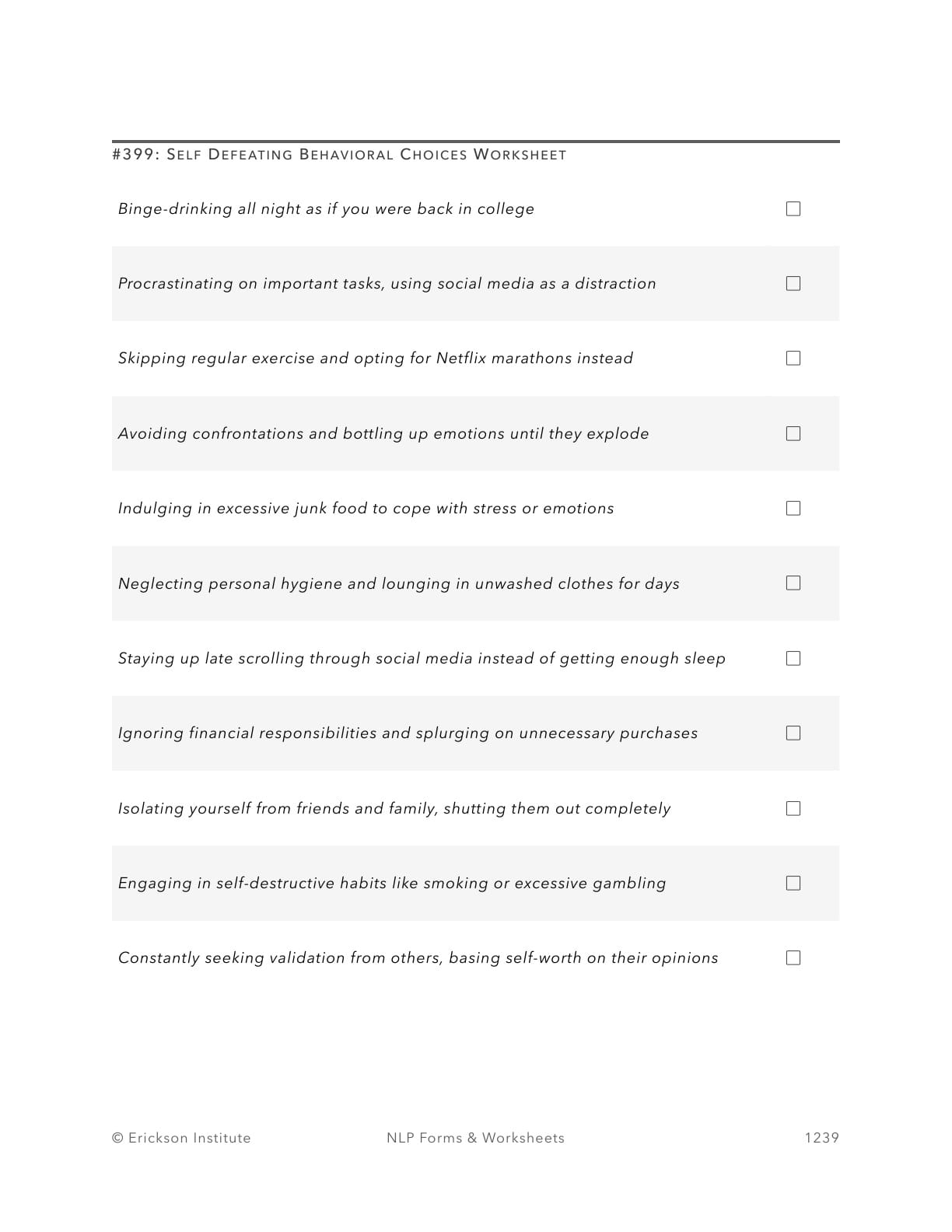


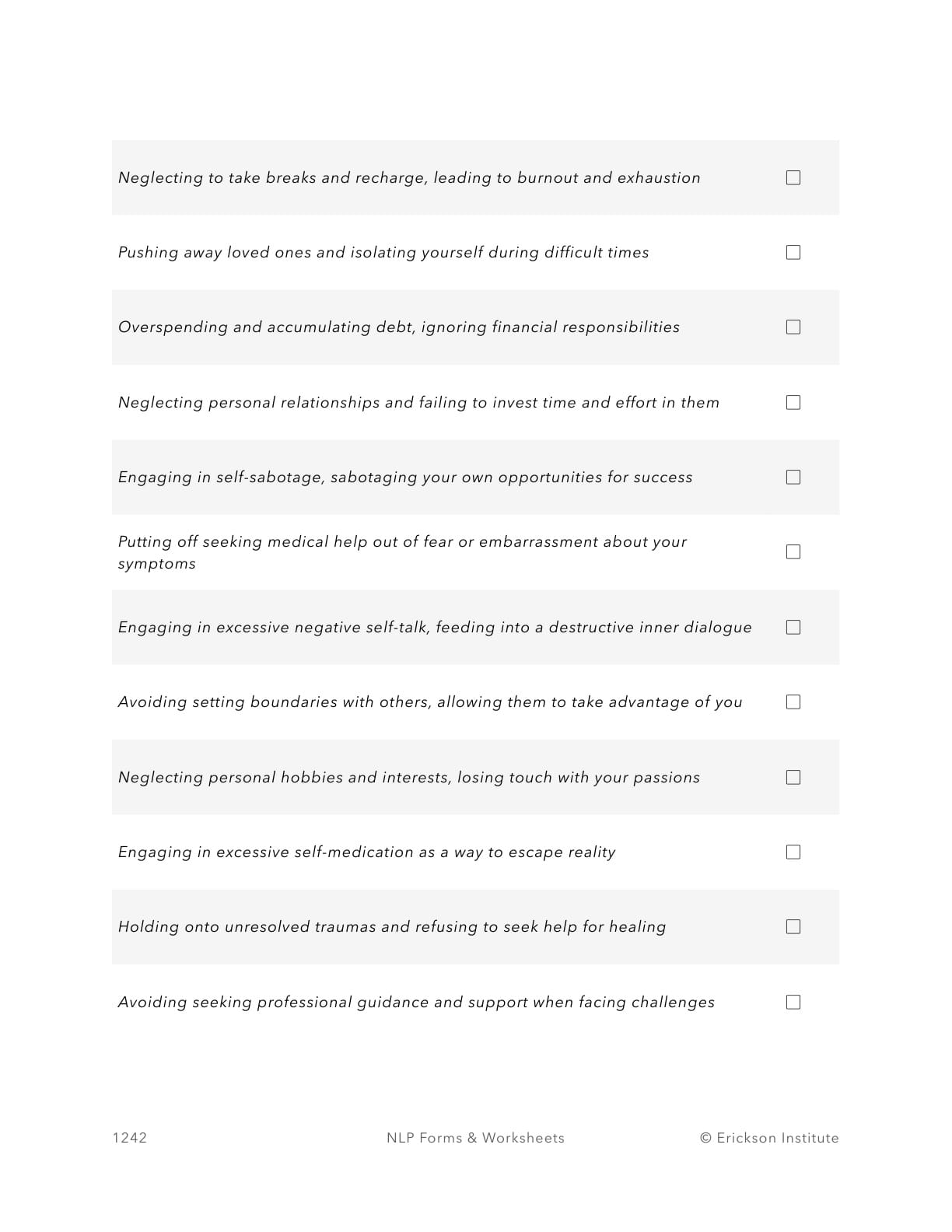
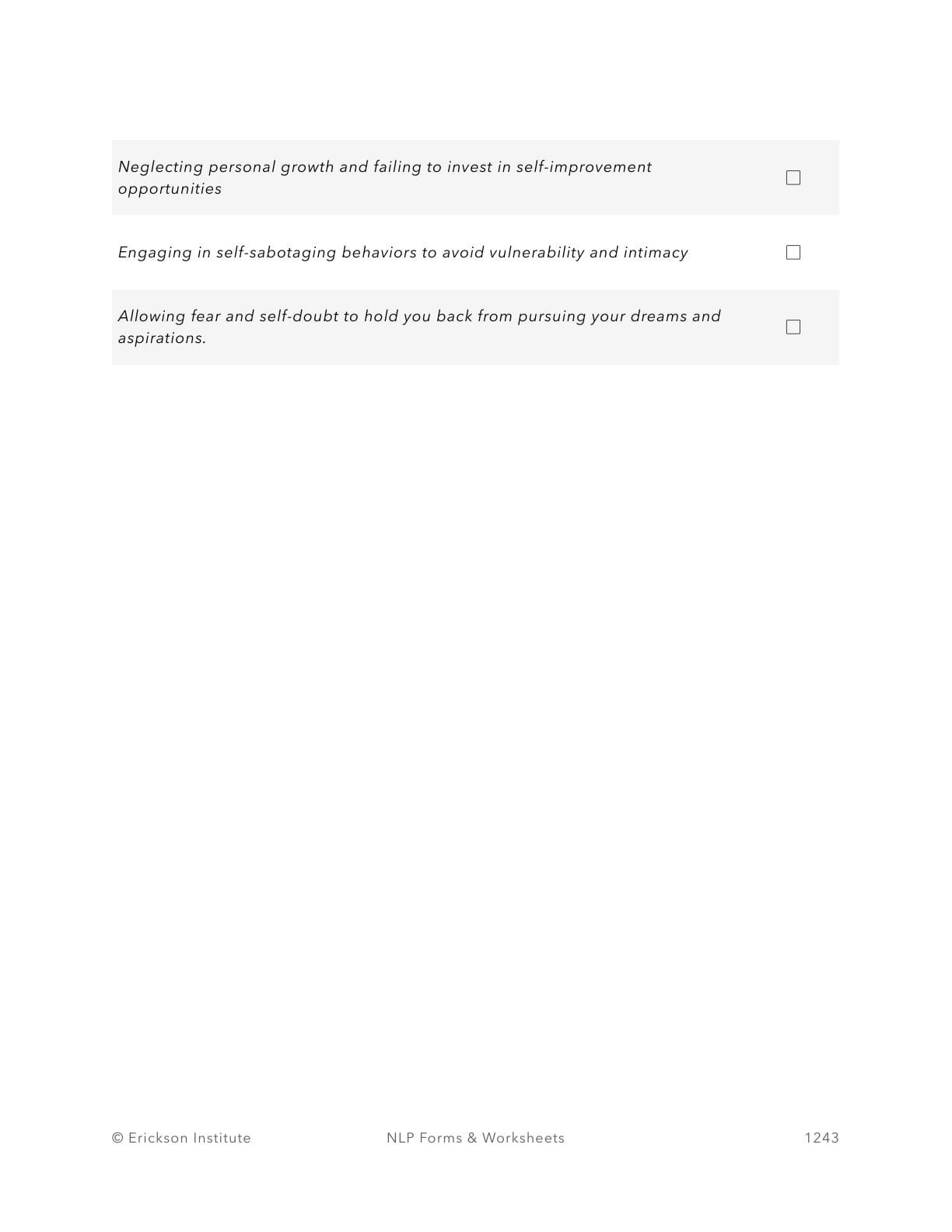
Source #
Access the full suite of 500 therapy and coaching templates. This worksheet features in my book, available on Amazon:
500 Practical NLP Forms, Templates & Worksheets: For Therapy, Coaching & Training