Instructions #
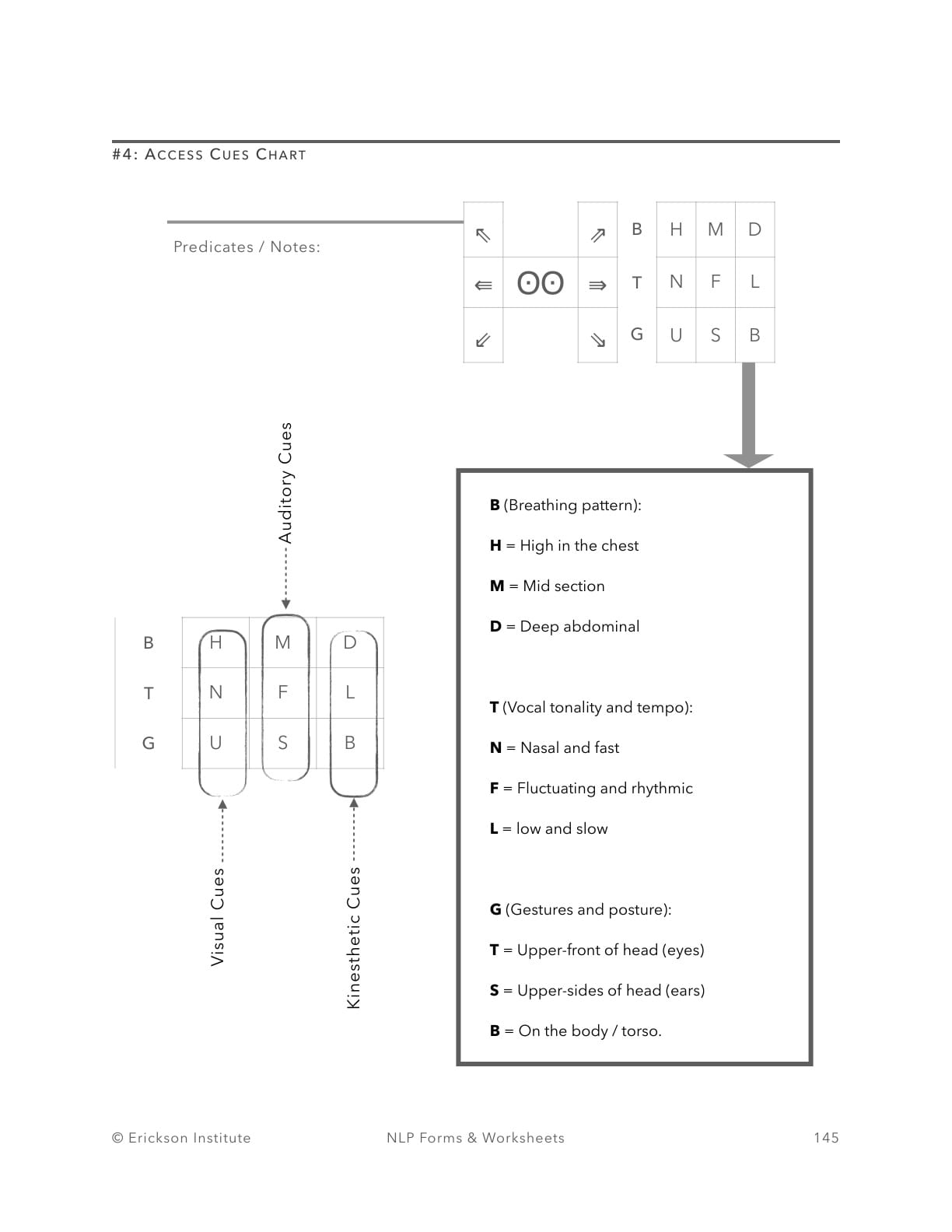
Access cues are subtle signals or clues that clients exhibit that provide insights into their preferred sensory representational systems in Neuro Linguistic Programming (NLP).
Visual (sight), auditory (sound), kinesthetic (feelings and sensations), olfactory (smell), and gustatory (taste) representational systems are the ways in which we perceive and process information through our senses.
Language patterns, eye movements, body posture, breathing patterns, and other nonverbal cues can all serve as access cues. NLP practitioners can learn a lot about how people internally represent and process their experiences by observing and recognizing these cues.
For example, frequent use of visual language, such as “I see what you mean” or “I have a clear vision of it,” indicates a preference for the visual representational system.
Similarly, if someone moves their eyes upward on a regular basis, it can indicate visual thinking or recall.
NLP practitioners can tailor their communication and interventions to an individual’s preferred representational system by identifying access cues, resulting in better understanding, rapport, and effective change work.
Worksheet #
Source #
Access the full suite of 500 therapy and coaching templates. This worksheet features in my book, available on Amazon:
500 Practical NLP Forms, Templates & Worksheets: For Therapy, Coaching & Training