Instructions #
As a therapist, it is crucial to acknowledge that trauma can impact an individual’s psyche, even if the event may appear insignificant when viewed outside of its context and timing.
The impact of a traumatic experience on an individual is not solely determined by the objective severity of the event but rather by the subjective interpretation and emotional response of the person who experienced it.
Minor occurrences that may seem insignificant to some can significantly impact a person’s mental and emotional state. Trauma can manifest in different ways, including isolated distressing events or persistent, long-term stressors.
It is important to acknowledge that trauma is a subjective experience that varies from person to person. An event that may seem minor to one person can cause intense emotional reactions and have a profound effect on another.
As a therapist, it is crucial to practice empathy and refrain from downplaying or disregarding your clients’ experiences based on your personal viewpoint.
By recognizing that trauma may have various manifestations and appreciating the significance of personal interpretation, you can establish a secure and affirming environment for clients to examine and deal with their experiences.
As a therapist, your responsibility is to actively listen, acknowledge their feelings, and assist them in managing their recovery journey. By adopting a compassionate and non-judgmental approach, you can assist your clients in their pursuit of recovery and resilience.
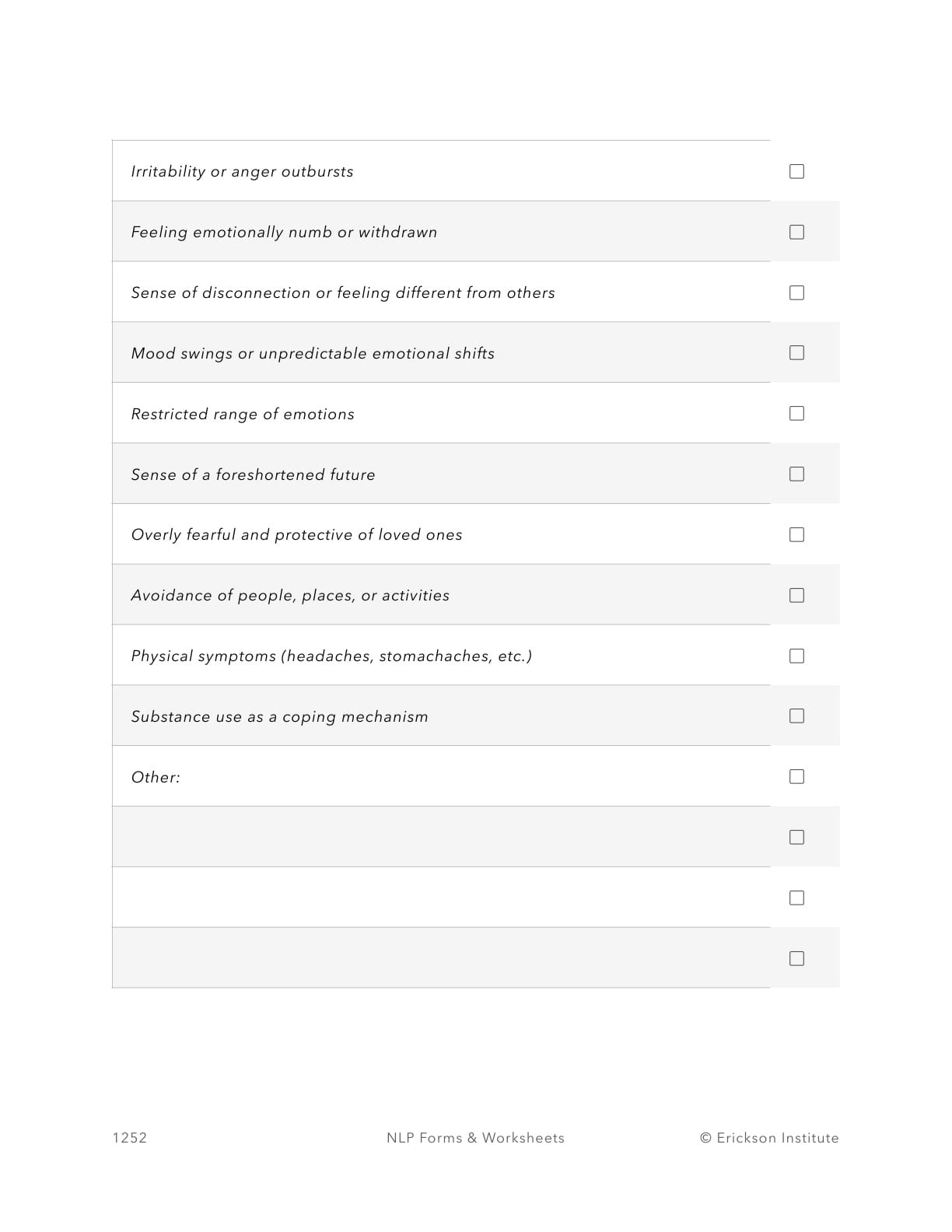
Worksheet #

Source #
Access the full suite of 500 therapy and coaching templates. This worksheet features in my book, available on Amazon:
500 Practical NLP Forms, Templates & Worksheets: For Therapy, Coaching & Training