Instructions #
It is natural to have emotional reactions, including depressive thoughts, when confronted with objective events in our lives. These thoughts are frequently the result of ingrained patterns of negative thinking and self-perception.
It is important to recognize, however, that these thoughts may not accurately reflect reality and can contribute to the worsening of depressive symptoms.
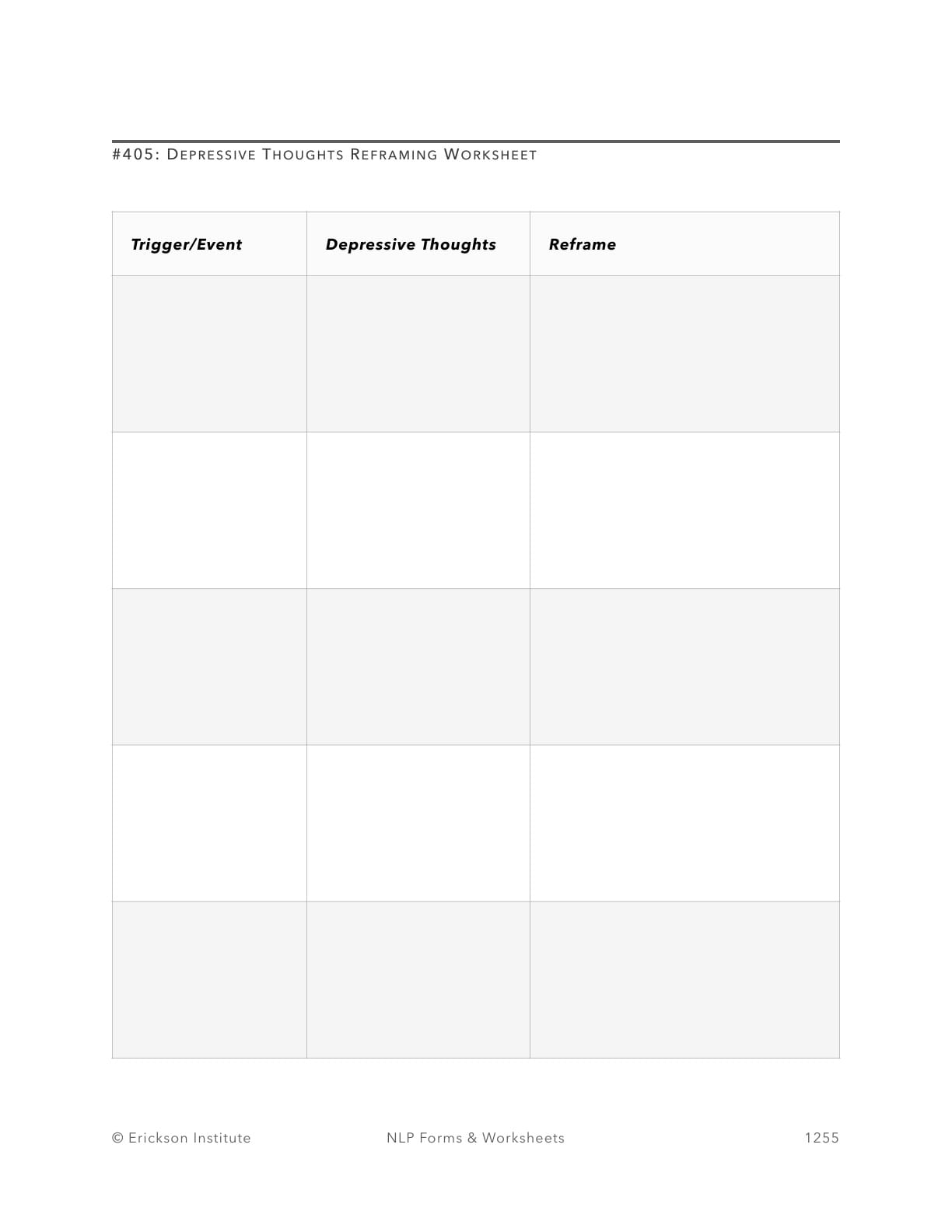
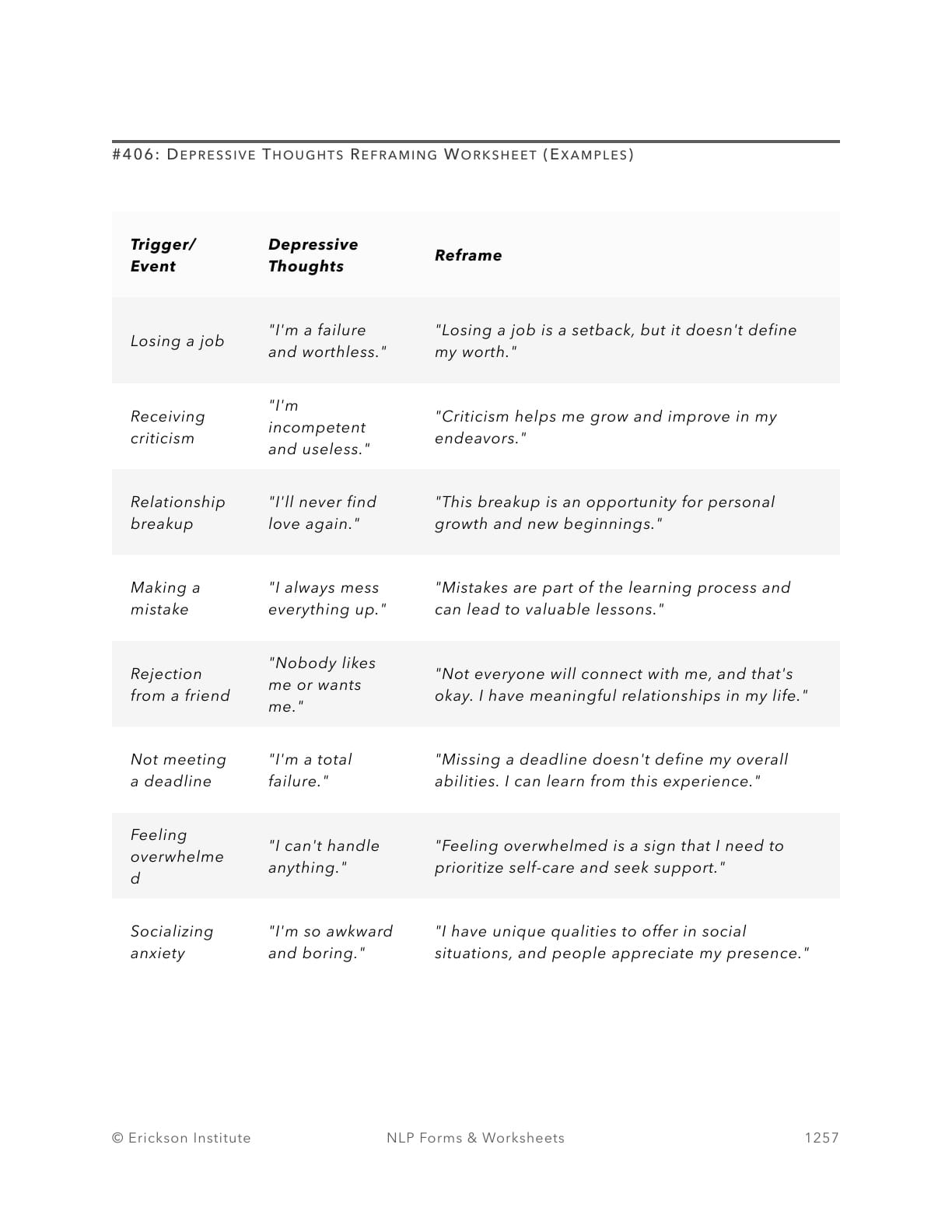
The purpose of this form is to assist you, the client, in becoming aware of the triggers or events that elicit depressive thoughts and to guide you in reframing them.
You can gain insight into the underlying patterns and beliefs that influence your emotional responses by identifying the specific triggers or events that lead to depressive thoughts. With the help of your therapist, you will be able to challenge and reframe these thoughts.
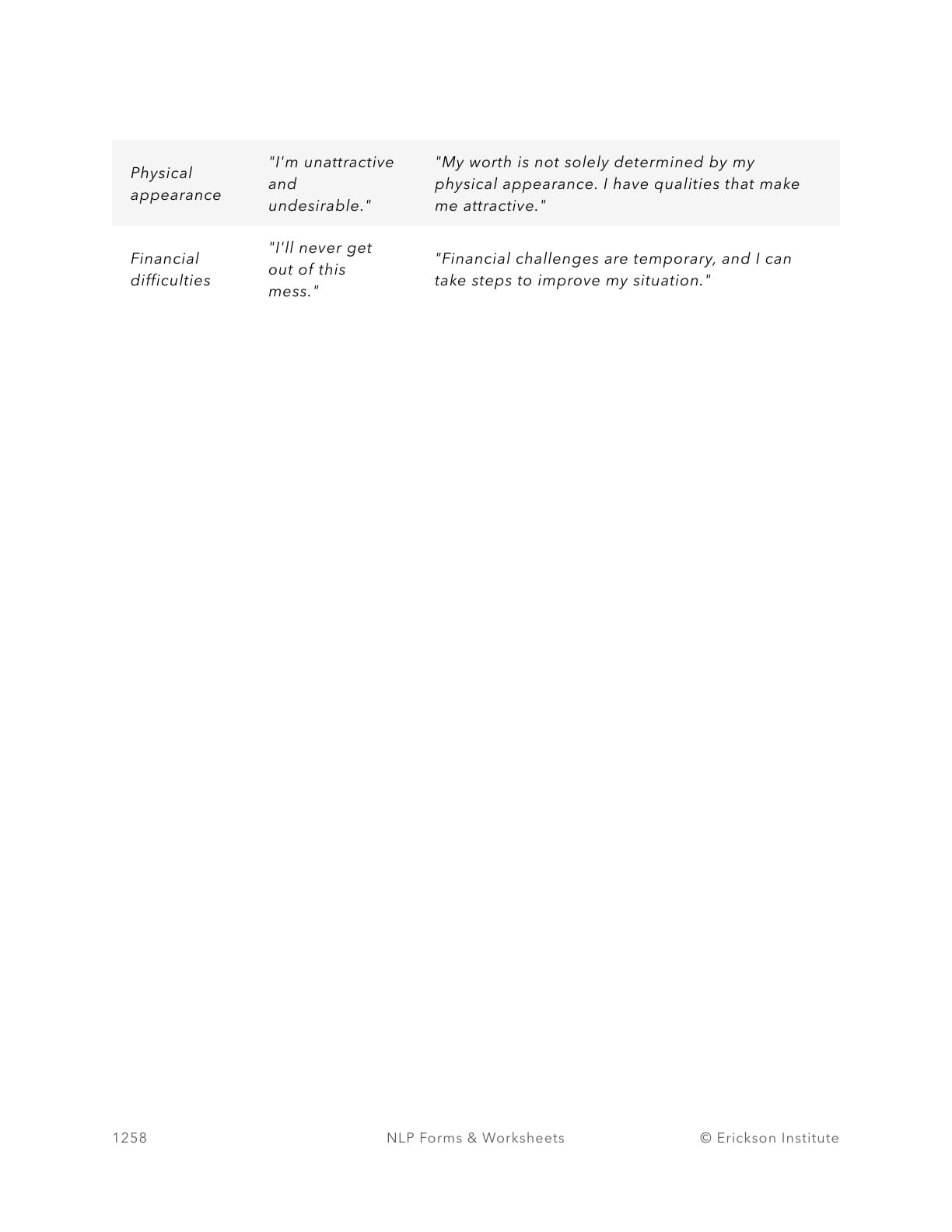
Examining the evidence supporting your depressive thoughts and identifying alternative interpretations or perspectives that are more balanced and realistic is part of the reframing process.
This form can be used by your therapist to help facilitate discussions about triggers, depressive thoughts, and potential reframes.
Through this process, you can gain a better understanding of how your thoughts affect your emotional well-being and learn how to reframe them on your own in the future.
You can gradually shift your perspective and cultivate a more positive and adaptive mindset by actively engaging with this form and exploring alternative interpretations.
Worksheet #
Source #
Access the full suite of 500 therapy and coaching templates. This worksheet features in my book, available on Amazon:
500 Practical NLP Forms, Templates & Worksheets: For Therapy, Coaching & Training