Instructions #
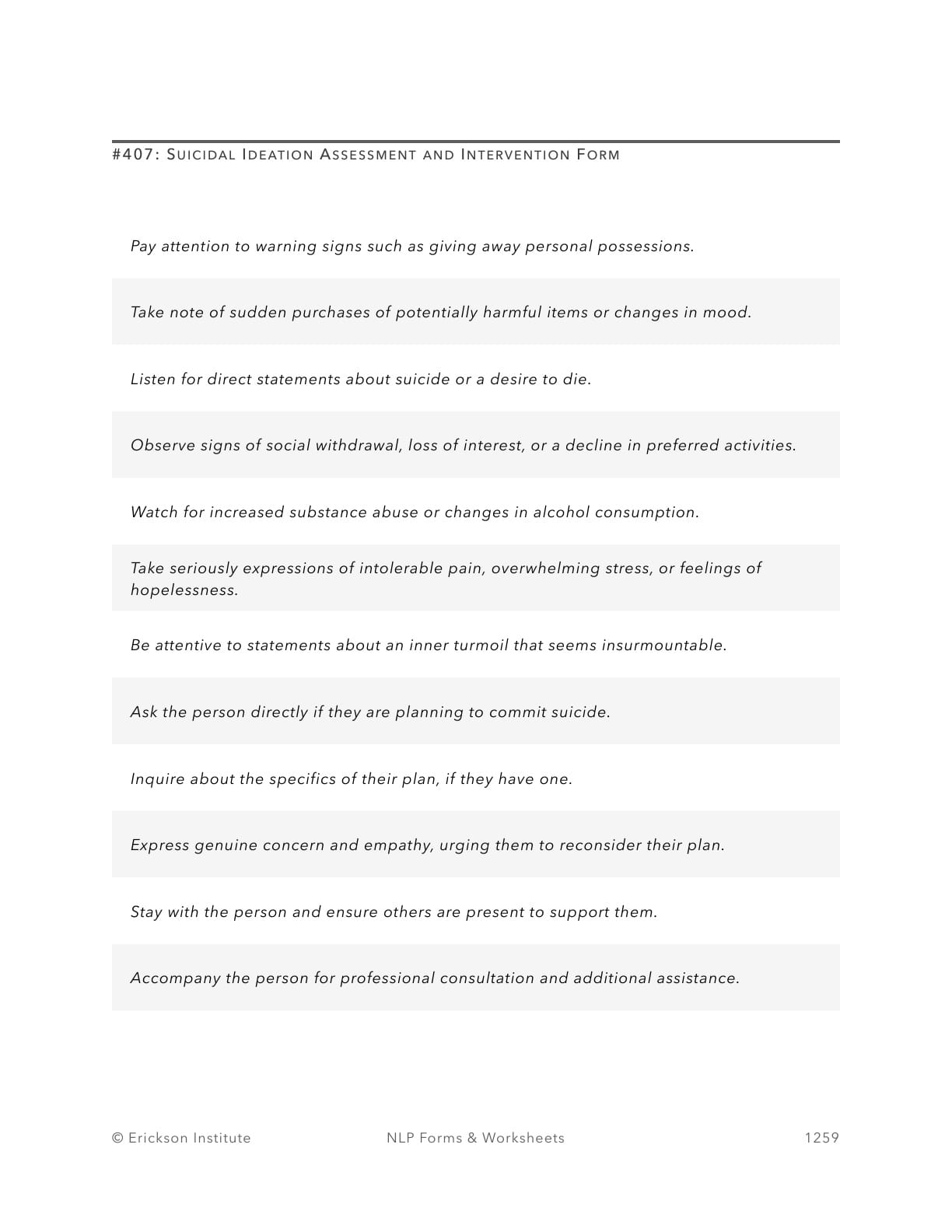
Suicidal ideation refers to suicidal thoughts or fantasies about self-harm or suicide. It is an important factor for therapists to consider because it indicates a higher level of distress and potential risk for their clients.
Suicidal ideation can range in intensity, from fleeting thoughts to detailed plans, and therapists must be vigilant in identifying potential signs.
It is your responsibility as a therapist to create a safe and supportive environment in which clients feel comfortable discussing their thoughts and emotions openly.
You can help clients express suicidal ideation without fear of being misunderstood or rejected by actively listening and remaining nonjudgmental.
Recognizing suicidal ideation symptoms, such as direct or indirect statements about wanting to die, giving away personal belongings, abrupt changes in mood or behavior, and social withdrawal, allows you to assess the level of risk and determine appropriate intervention strategies.
When the therapist notices clear signs of impending danger or a significant risk of self-harm or suicide, it is critical to notify authorities as soon as possible.
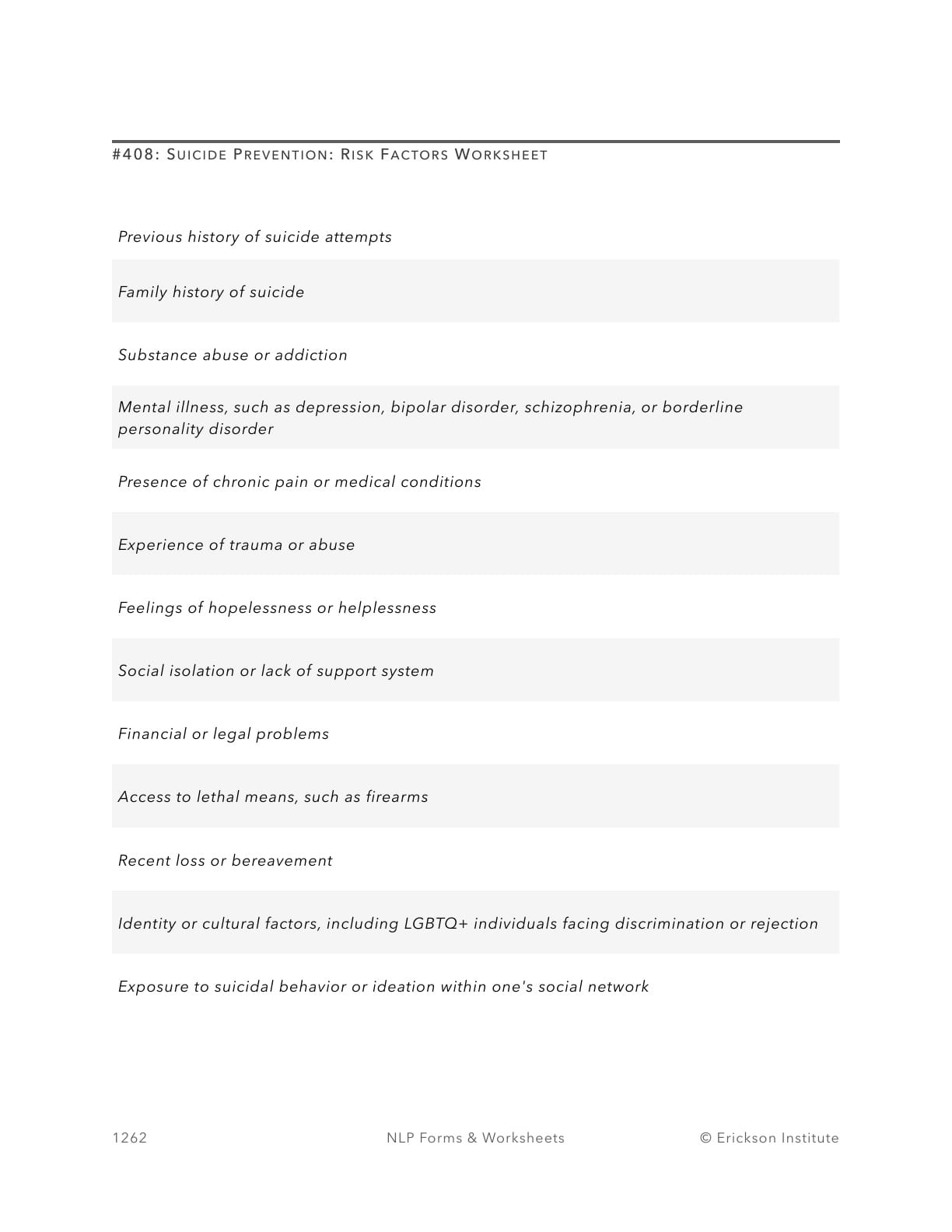
This includes situations in which the client has a detailed plan, access to lethal means, or has previously attempted suicide. In such cases, contacting emergency services or local mental health crisis teams can provide the client with immediate support and protection.
Remember that your clients’ safety and well-being should always be a top priority, and involving the proper authorities is an important step in ensuring their immediate and long-term safety.
Worksheet #


Source #
Access the full suite of 500 therapy and coaching templates. This worksheet features in my book, available on Amazon:
500 Practical NLP Forms, Templates & Worksheets: For Therapy, Coaching & Training