Instructions #
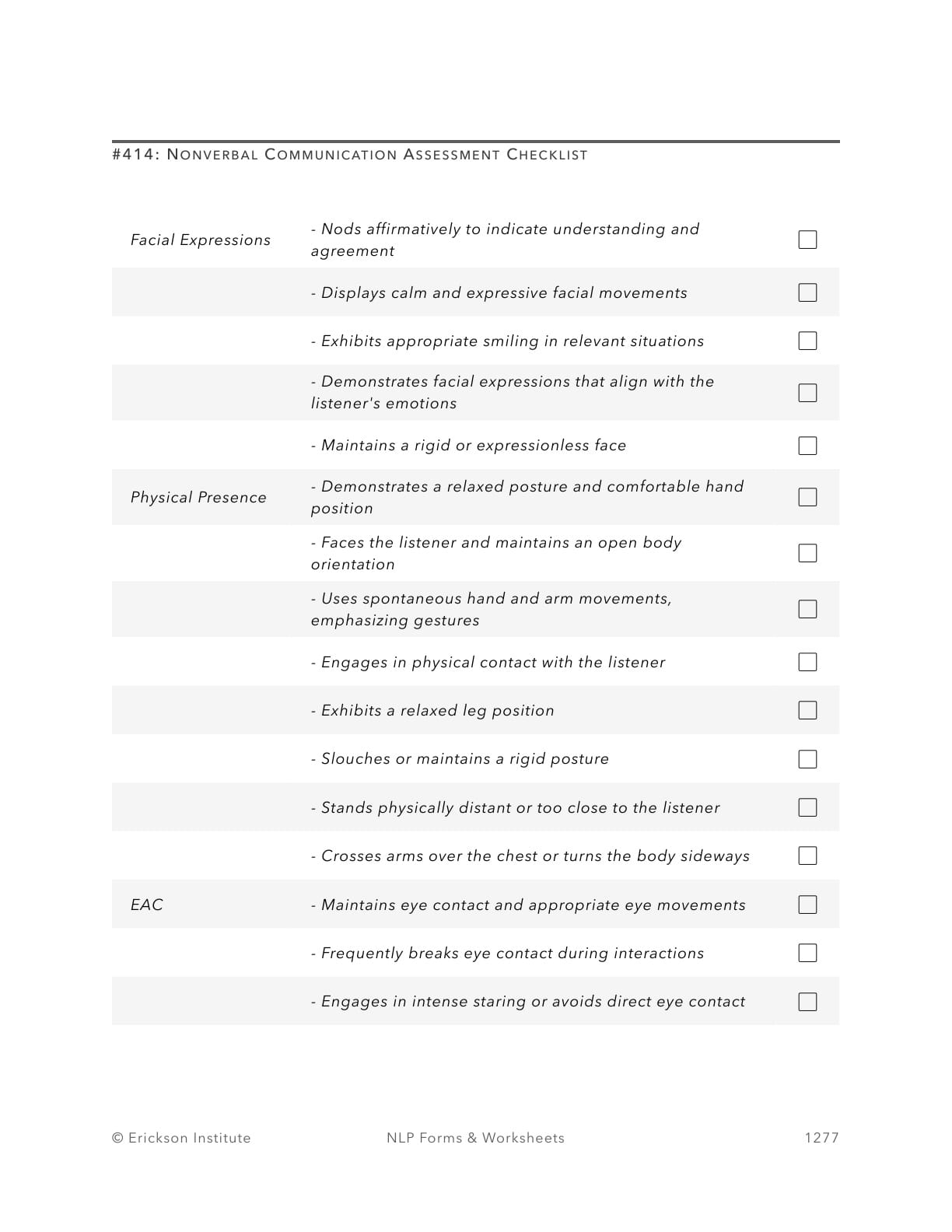
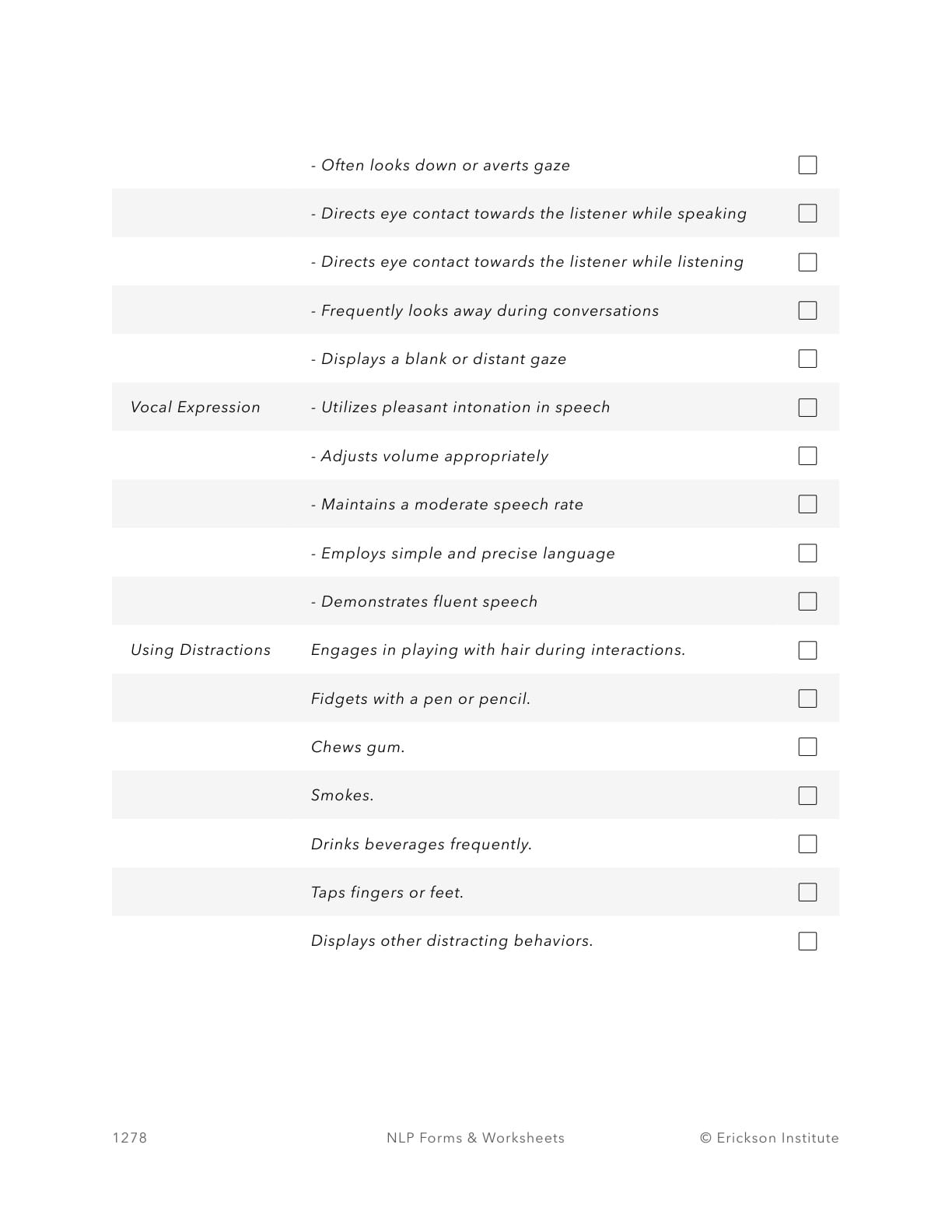
Pay close attention to your clients’ visual engagement, physical presence, facial expressions, and vocal expressions to detect nonverbal communication cues.
Take note of their eye contact, whether they maintain it or frequently break it, and whether they stare intensely or avoid direct eye contact. Examine their body posture, noting whether they are relaxed or tense, as evidenced by crossed arms or slouching.
Take note of their facial expressions, such as affirmative nodding, appropriate smiling, and matching their expressions to the emotions conveyed. Listen to their vocal expression as well, including intonation, volume, speech rate, and language use.
Nonverbal cues are essential for gaining valuable insights into clients’ emotions, attitudes, and overall communication patterns.
Nonverbal communication can reveal hidden messages, supplement or contradict verbal communication, and assist you in understanding the client’s level of engagement and emotional state.
It enables you to gain a more complete understanding of your client’s experience, allowing for more effective therapeutic interventions and promoting better client-therapist rapport.
Worksheet #
Source #
Access the full suite of 500 therapy and coaching templates. This worksheet features in my book, available on Amazon:
500 Practical NLP Forms, Templates & Worksheets: For Therapy, Coaching & Training