Instructions #
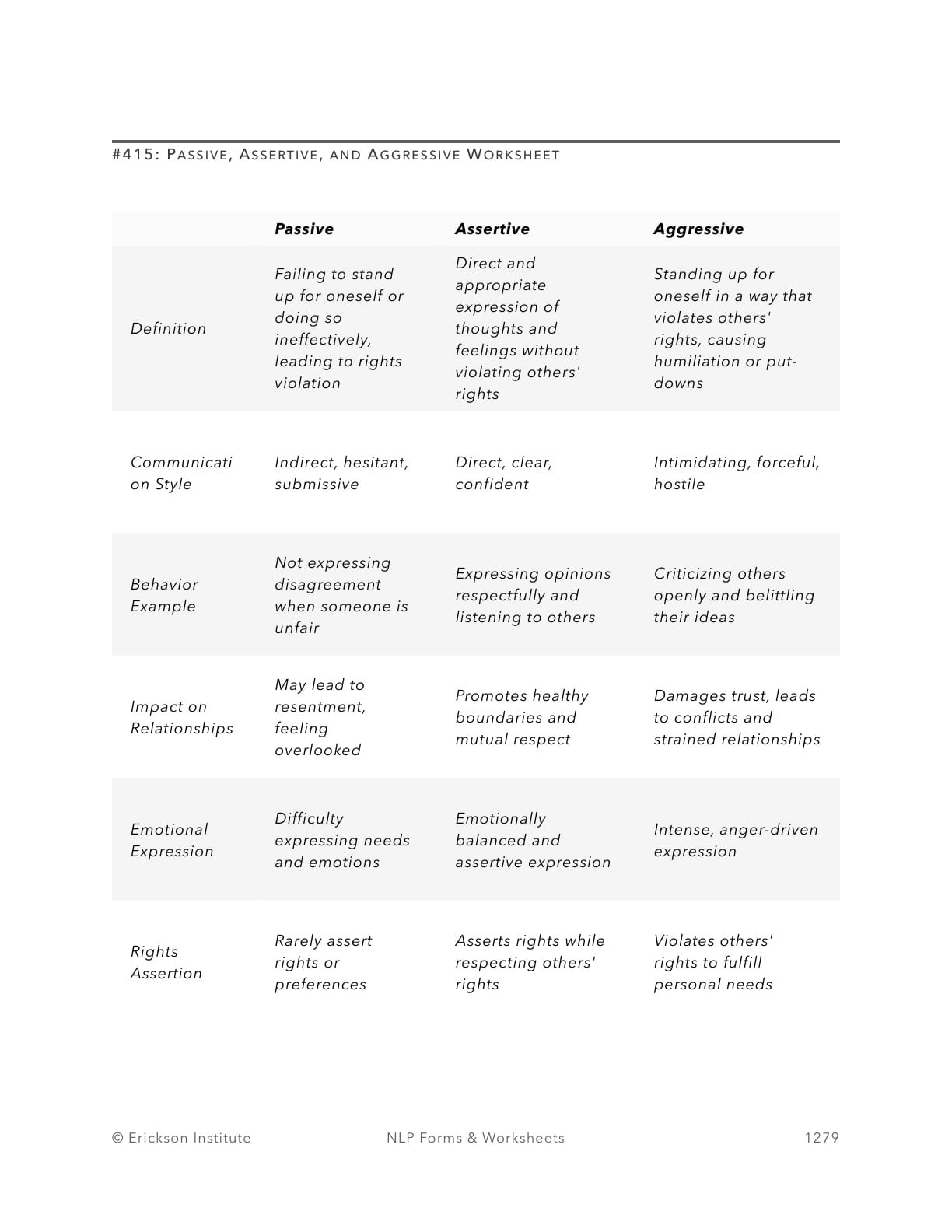
The concept of assertiveness can be conceptualized as existing on a spectrum, ranging from passive to assertive to aggressive. Every customer has a unique aggressive pattern that shapes the way they interact with others and the choices they ultimately make.
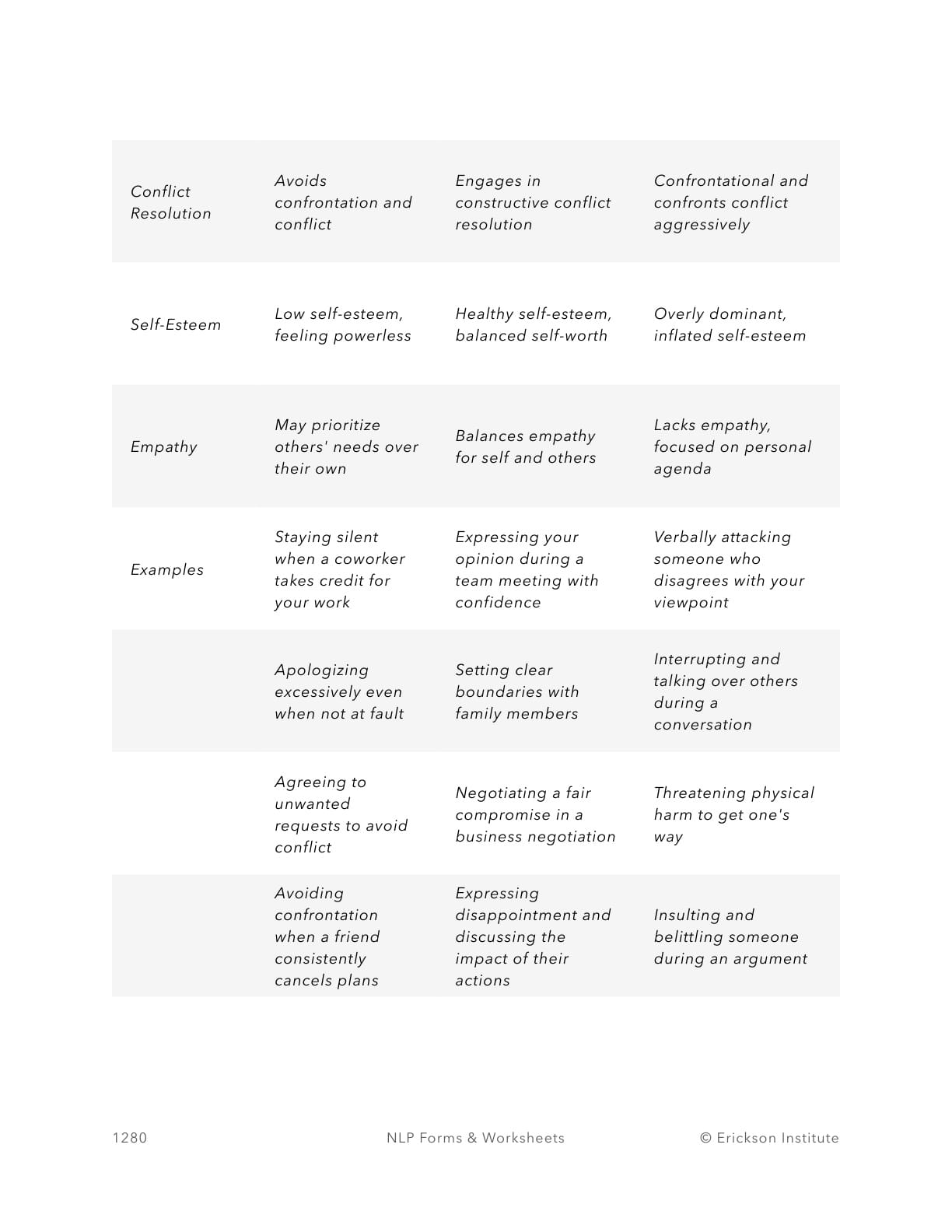
People who are passive often have trouble speaking up for themselves or effectively expressing their opinions and needs. They may try to avoid confrontation, repress their feelings, or constantly look for approval from other people.
As a direct consequence of this, they may experience a sense of being unheard or have their rights violated. People who are aggressive, on the other hand, assert themselves in ways that are harmful to others and violate their rights.
They may resort to physical violence, verbal abuse, or other forms of coercion in order to get their needs met, which frequently comes at the expense of the well-being of others.
The client’s pattern of behavior and the ways in which they deal with stress can be significantly illuminated by gaining an understanding of their assertiveness style.
When clients are passive, it can be difficult for them to set boundaries, make decisions, or advocate for themselves. They might prioritize the requirements of others over their own, and they might have trouble expressing their feelings in an open and honest manner.
On the other hand, aggressive clients may find it difficult to maintain healthy relationships because their assertiveness can cause conflict, strain, and resentment in the relationships they have with others.
During the therapy process, it is essential to identify a client’s assertiveness style and work within that style. If you understand their preferred modes of communication, you will be able to tailor therapeutic interventions to meet their individual requirements.
Clients who are passive may benefit from increased self-esteem, training in assertiveness, exercises focused on setting boundaries, and assistance in developing effective communication skills if they participate in therapy.
In therapy with aggressive clients, topics such as anger management, the development of empathy, strategies for conflict resolution, and the promotion of healthier ways of expressing needs and emotions can all be brought up and discussed.
When a client’s personality is helped to develop into one that is more assertive, it makes it easier for them to strike a balance between advocating for themselves and respecting the rights of others.
They are able to express their thoughts, feelings, and needs in a confident manner, which contributes to the development of healthier relationships, an increase in self-confidence, and an improvement in overall well-being.
Working within the framework of a client’s assertiveness style allows you to guide clients toward assertive behaviors while also taking into account the specific strengths, challenges, and personal growth goals that are unique to each individual client.
Worksheet #
Source #
Access the full suite of 500 therapy and coaching templates. This worksheet features in my book, available on Amazon:
500 Practical NLP Forms, Templates & Worksheets: For Therapy, Coaching & Training