Instructions #
The human body and mind are inextricably linked, which is an essential component of overall health and wellness. Our mental, emotional, and experiential states, as well as the events that make up our lives, have a significant bearing on the state of our bodies, and vice versa.
One of the most fascinating aspects of this connection is the way in which suppressed feelings can show up as biological adaptations to illness and disability.
When we are confronted with powerful feelings such as rage, fear, sadness, or embarrassment, our bodies react by activating a system called the stress response.
This sets off a chain reaction of physiological changes in the body, one of which is the release of stress hormones like cortisol and adrenaline.
This kind of reaction can be adaptive in the short term, meaning that it can get us ready to deal with immediate dangers or difficulties.
On the other hand, if one consistently denies or represses their feelings, this can cause the body’s stress response system to become dysregulated, which in turn can lead to chronic stress.
In turn, chronic stress has far-reaching effects on the physical health of those who experience it. It weakens the immune system, impairs digestion, disrupts sleep patterns, and affects cardiovascular health.
The prolonged exposure to stress hormones can contribute to inflammation, which is associated with a wide variety of chronic conditions including cardiovascular disease, autoimmune disorders, and even certain types of cancer.
To add insult to injury, repressing one’s feelings does not make them go away entirely. Instead, they may present themselves as physical symptoms and discomfort within the body.
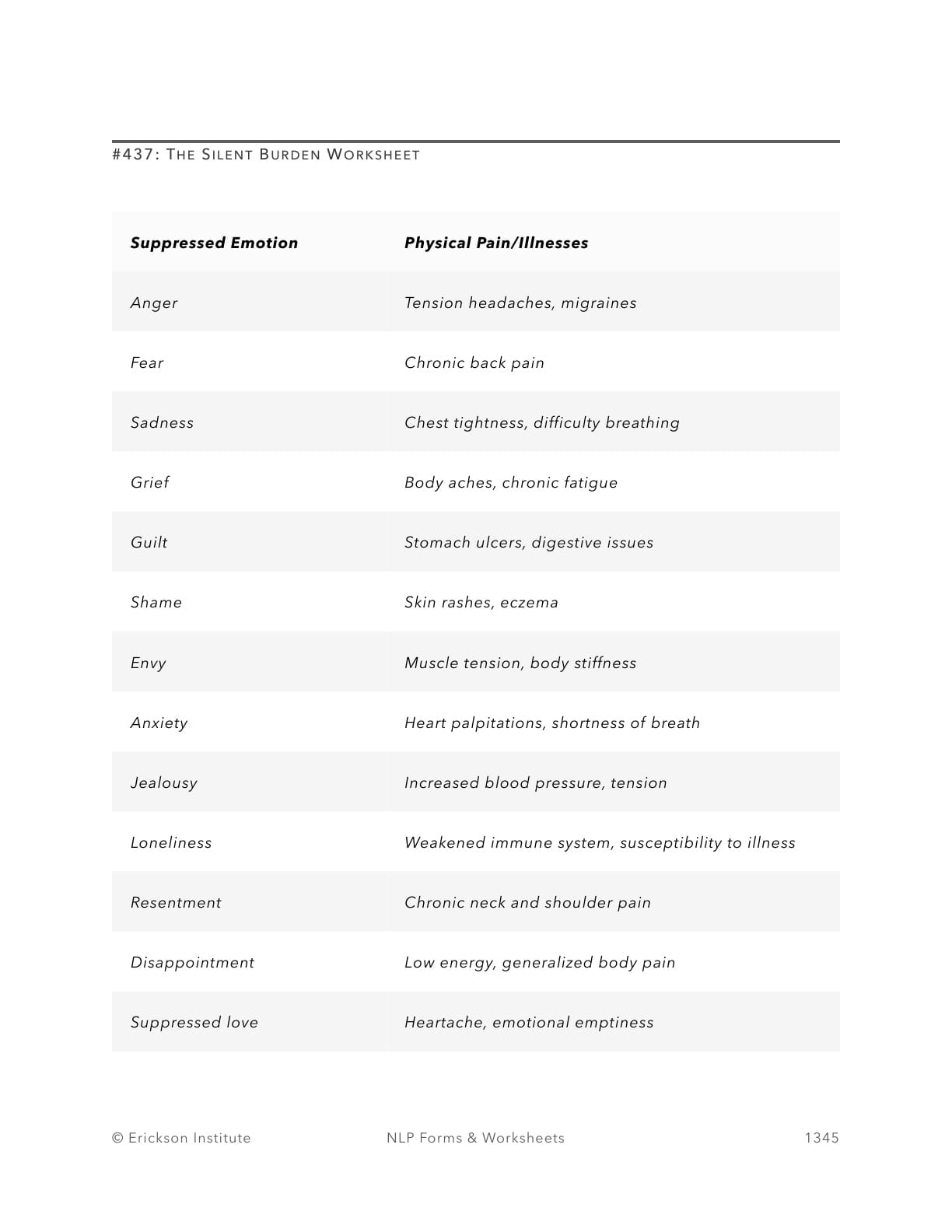
For example, repressed anger may result in tension headaches or migraines, while suppressed sadness can lead to chest tightness and difficulty breathing.
The body, in its attempt to adapt to the unresolved emotional burden, may develop chronic pain conditions like fibromyalgia or exacerbate existing musculoskeletal issues. In addition, the mind-body connection is able to function thanks to a number of different feedback loops.
It is possible for us to experience emotional distress as a direct result of physical pain or illness, and vice versa. This interconnectedness creates a cycle where repressed emotions contribute to physical symptoms, which, in turn, reinforce emotional distress.
Recognizing and addressing this mind-body interplay is essential for promoting holistic well-being.
Therapy and other mind-body approaches can help clients explore and process their emotions, allowing for the release of repressed feelings and the restoration of emotional balance.
Integrative practices such as mindfulness, meditation, and body-based therapies can facilitate the integration of emotional experiences, leading to a reduction in chronic stress and its associated physical manifestations.
By acknowledging the interconnectedness of our emotions and physical health, we can cultivate greater self-awareness, self-compassion, and resilience.
Embracing a holistic approach to well-being that values the integration of mind, body, and emotions can empower clients to lead healthier, more fulfilling lives and break free from the cycle of repressed emotions as biological adaptations towards illness and disability.
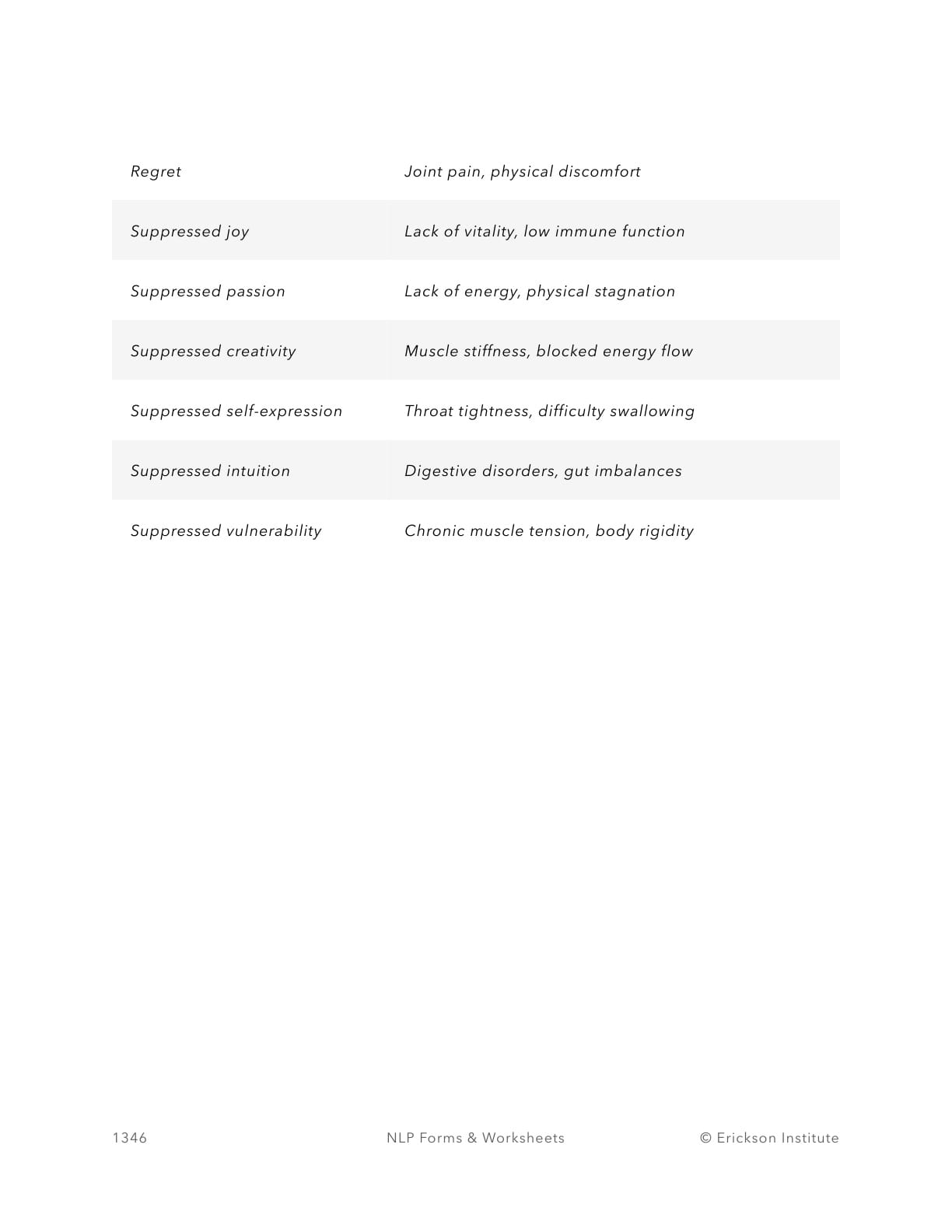
Worksheet #
Source #
Access the full suite of 500 therapy and coaching templates. This worksheet features in my book, available on Amazon:
500 Practical NLP Forms, Templates & Worksheets: For Therapy, Coaching & Training