Instructions #
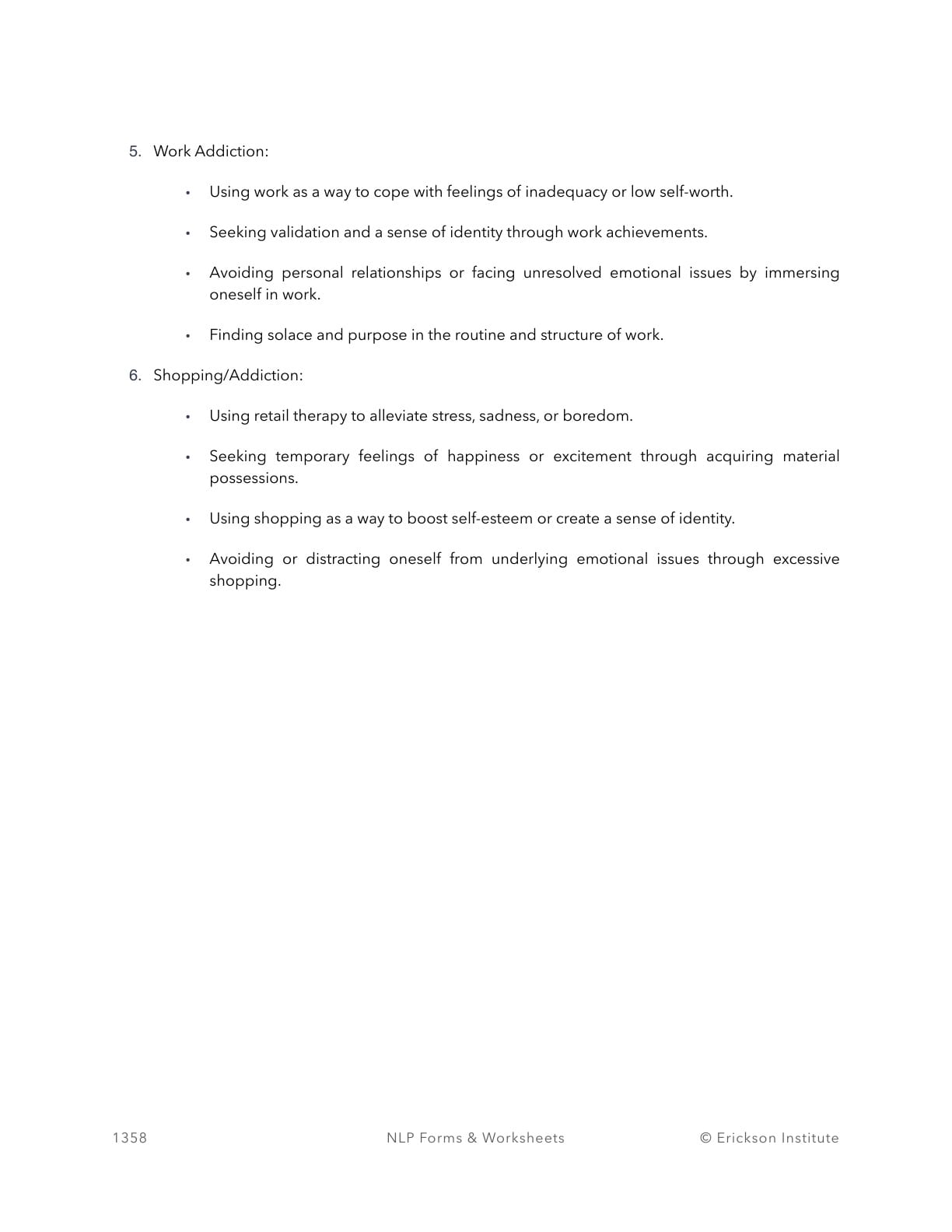
Addiction can become a coping mechanism as people try to deal with life’s challenges, emotional pain, or unresolved traumas. It provides temporary relief and a sense of control by allowing you to escape or numb unpleasant feelings, memories, or experiences.
Clients who engage in addictive behaviors may experience a brief sense of pleasure, distraction, or emotional regulation. However, addiction becomes a maladaptive coping mechanism that perpetuates a cycle of dependency over time.
It may temporarily relieve emotional distress, but it ultimately exacerbates underlying issues and prevents clients from developing healthier coping strategies.
Understanding addiction as a coping mechanism emphasizes the importance of addressing the underlying causes, emotions, and unmet needs that drive addictive behaviors, allowing clients to explore alternative, more adaptive ways of coping and achieving long-term healing and recovery.
Worksheet #

Source #
Access the full suite of 500 therapy and coaching templates. This worksheet features in my book, available on Amazon:
500 Practical NLP Forms, Templates & Worksheets: For Therapy, Coaching & Training