Instructions #
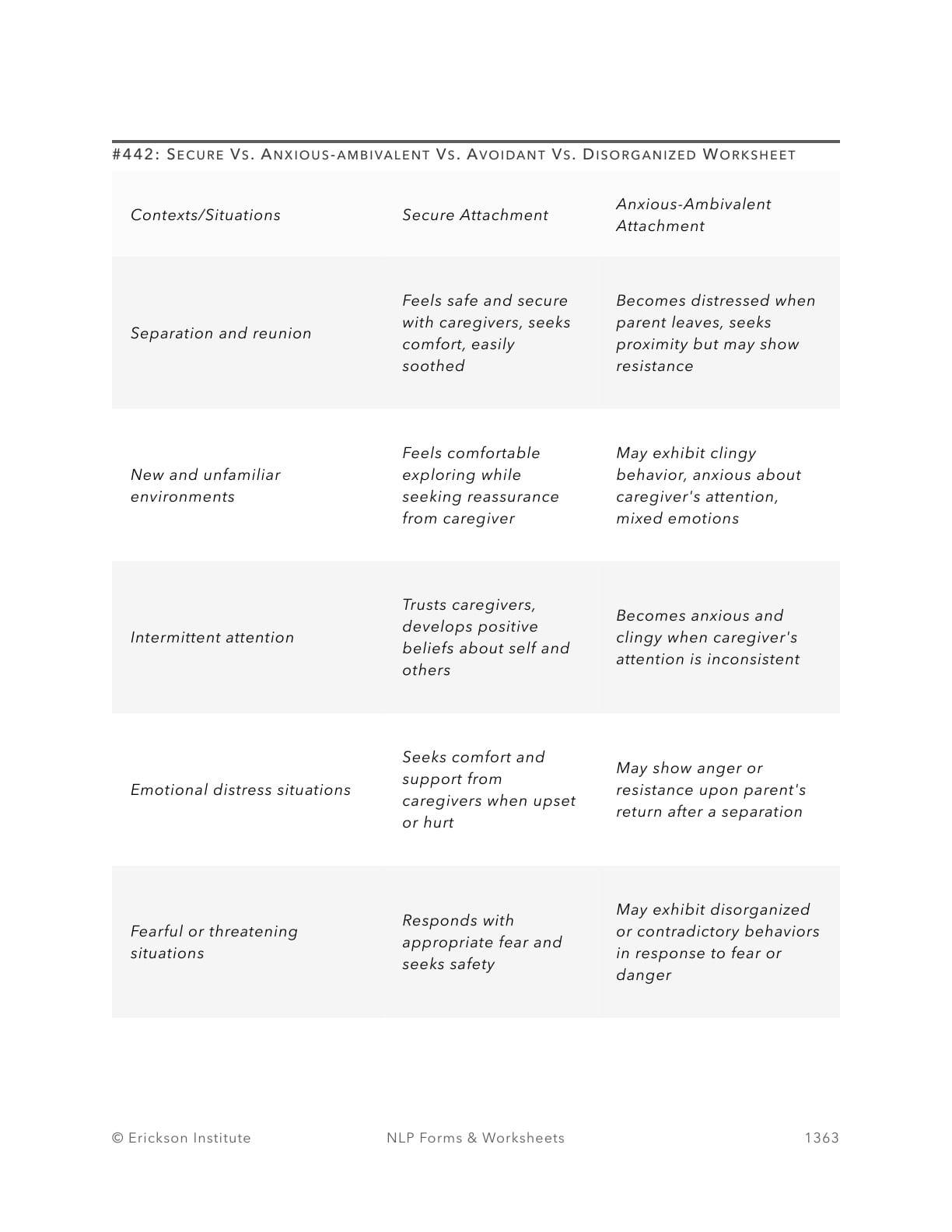
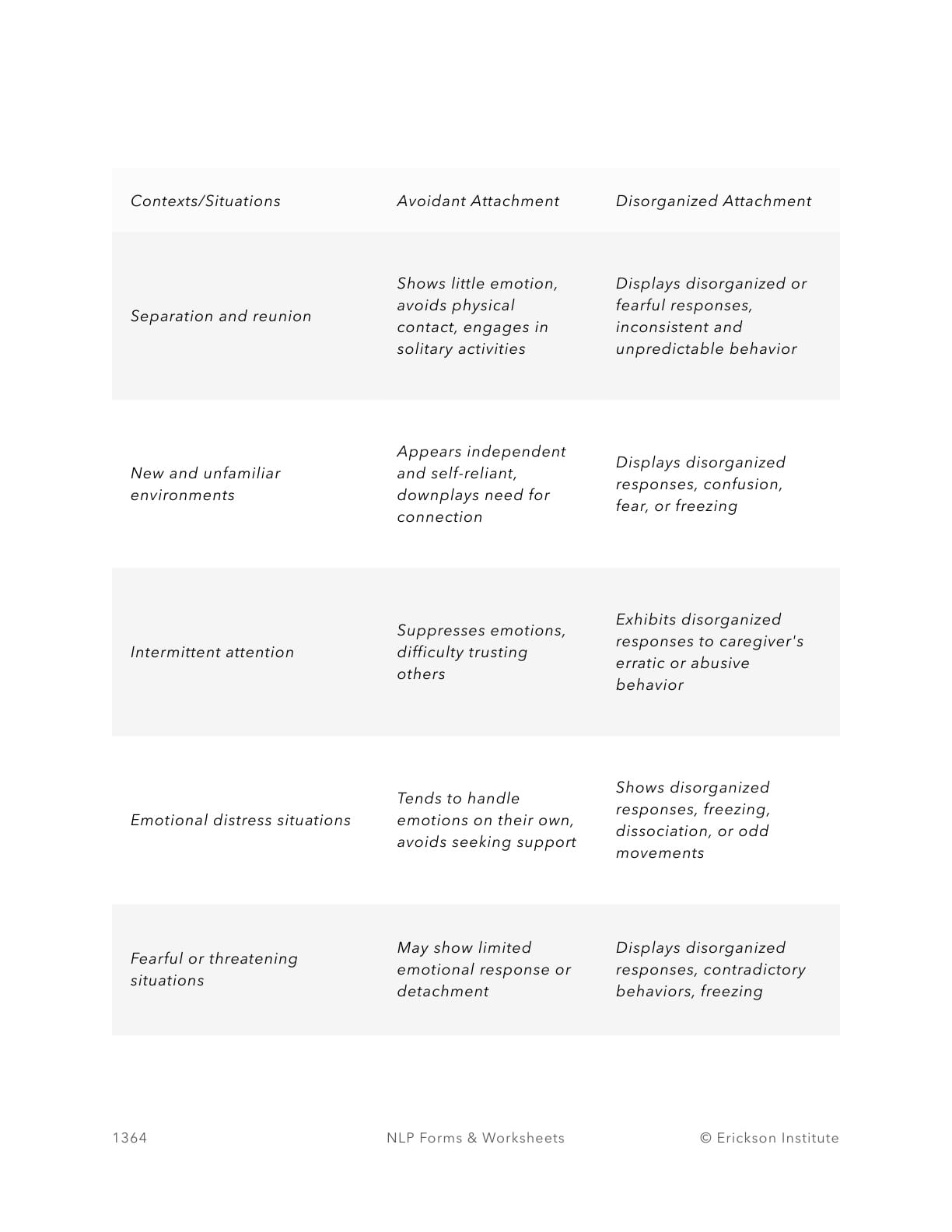
Because of its emphasis on the influence of early relationships and experiences on an individual’s development and functioning, attachment theory is highly relevant and valuable for NLP practitioners.
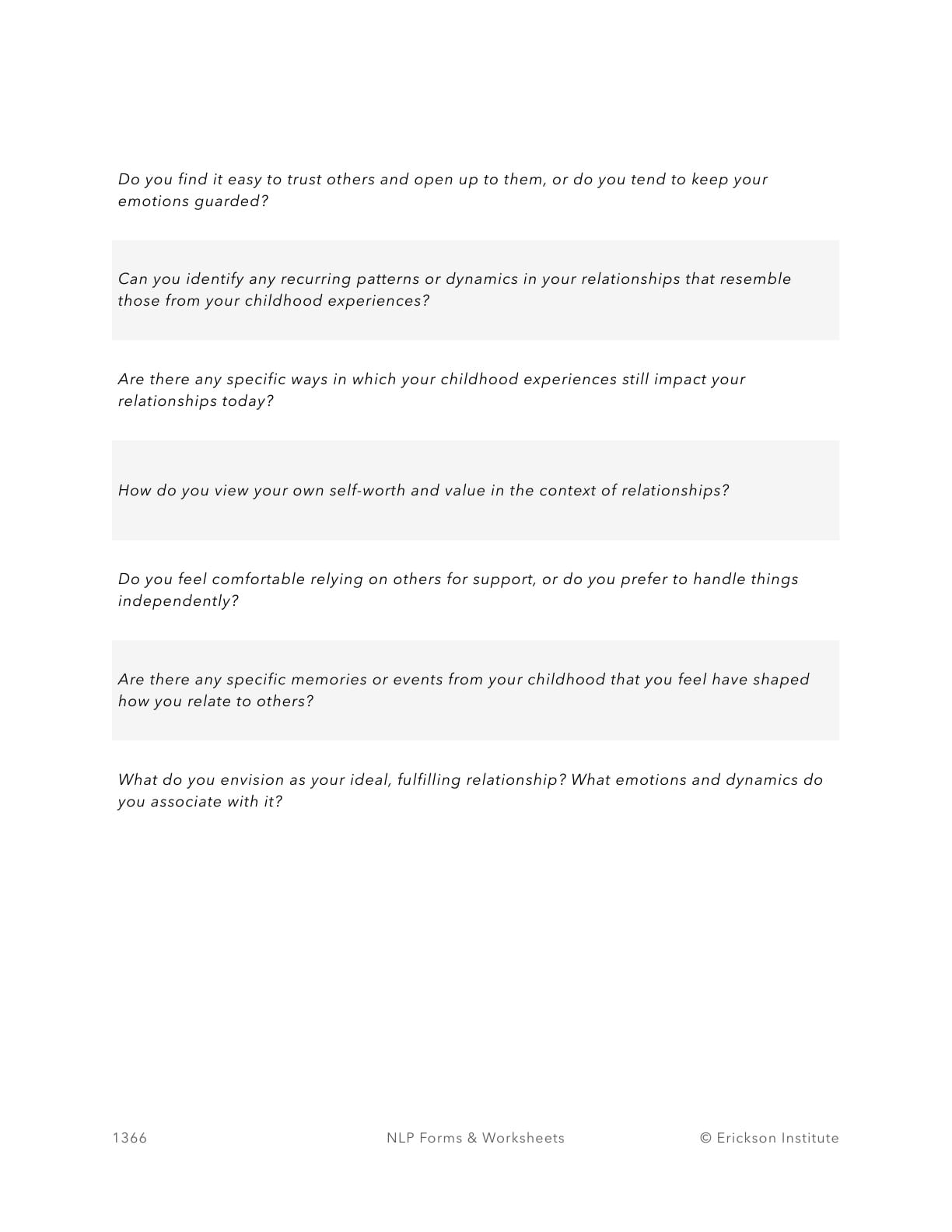
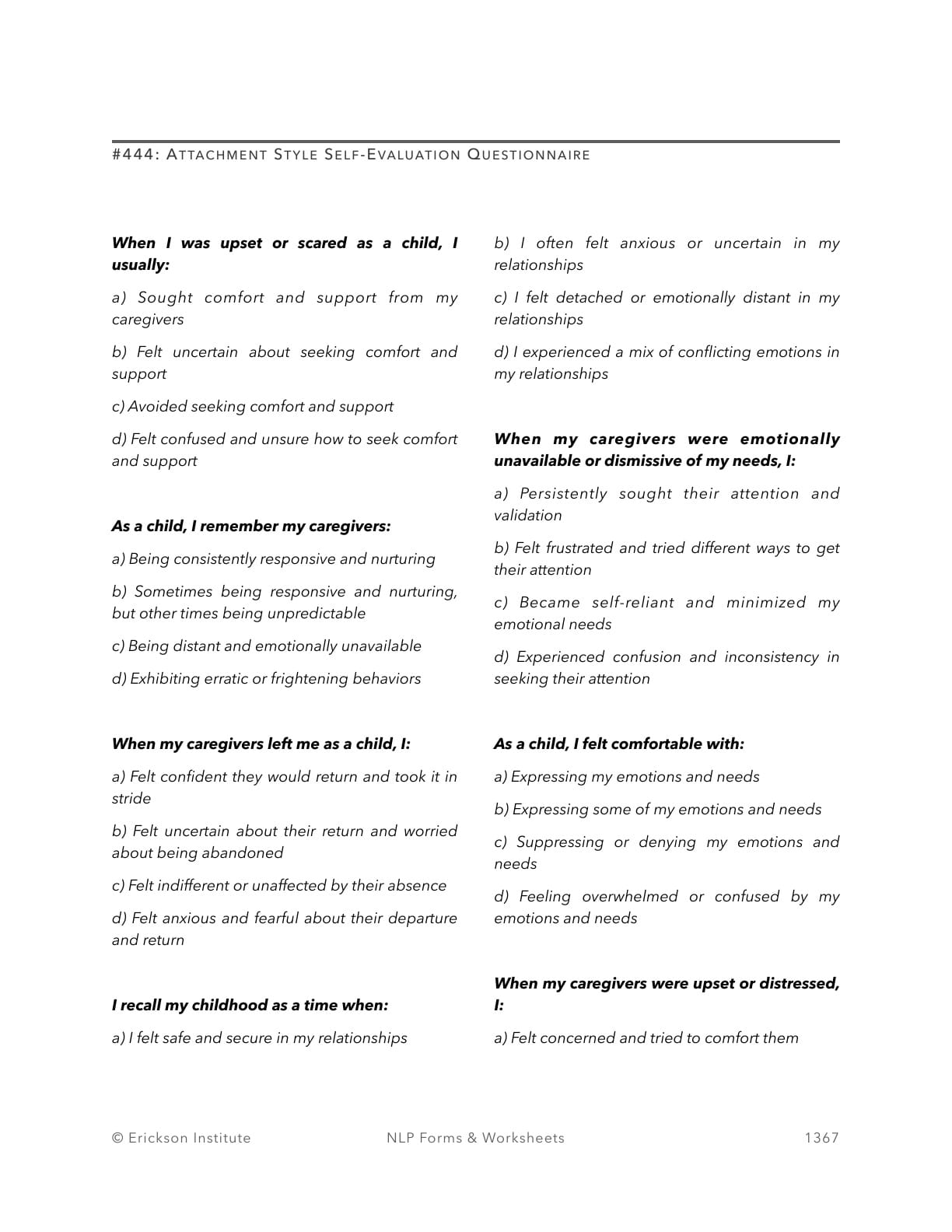
NLP practitioners can gain deeper insights into the underlying patterns and dynamics that shape a person’s interactions and responses by understanding attachment styles and their impact on an individual’s perception, beliefs, and behavior.
NLP fundamentals such as rapport building, effective communication, and understanding subjective experiences are closely related to attachment theory principles.
NLP practitioners can use this knowledge to establish a secure and encouraging therapeutic setting that encourages connection, trust, and positive change.
NLP practitioners can tailor their interventions and techniques to meet the specific needs of clients with different attachment patterns if they understand attachment styles.
Clients with an anxious-ambivalent attachment style, for example, may benefit from interventions that address their abandonment fears while also promoting feelings of security and self-worth.
Those with an avoidant attachment style may benefit from interventions that assist them in exploring and processing emotions, as well as developing healthier ways of relating to others.
NLP techniques can also be used to help people reframe negative beliefs and perceptions formed as a result of early attachment experiences.
NLP practitioners can help clients transform their internal representations and create new empowering meanings and associations by using techniques like reframing, anchoring, and timeline therapy.
Worksheet #

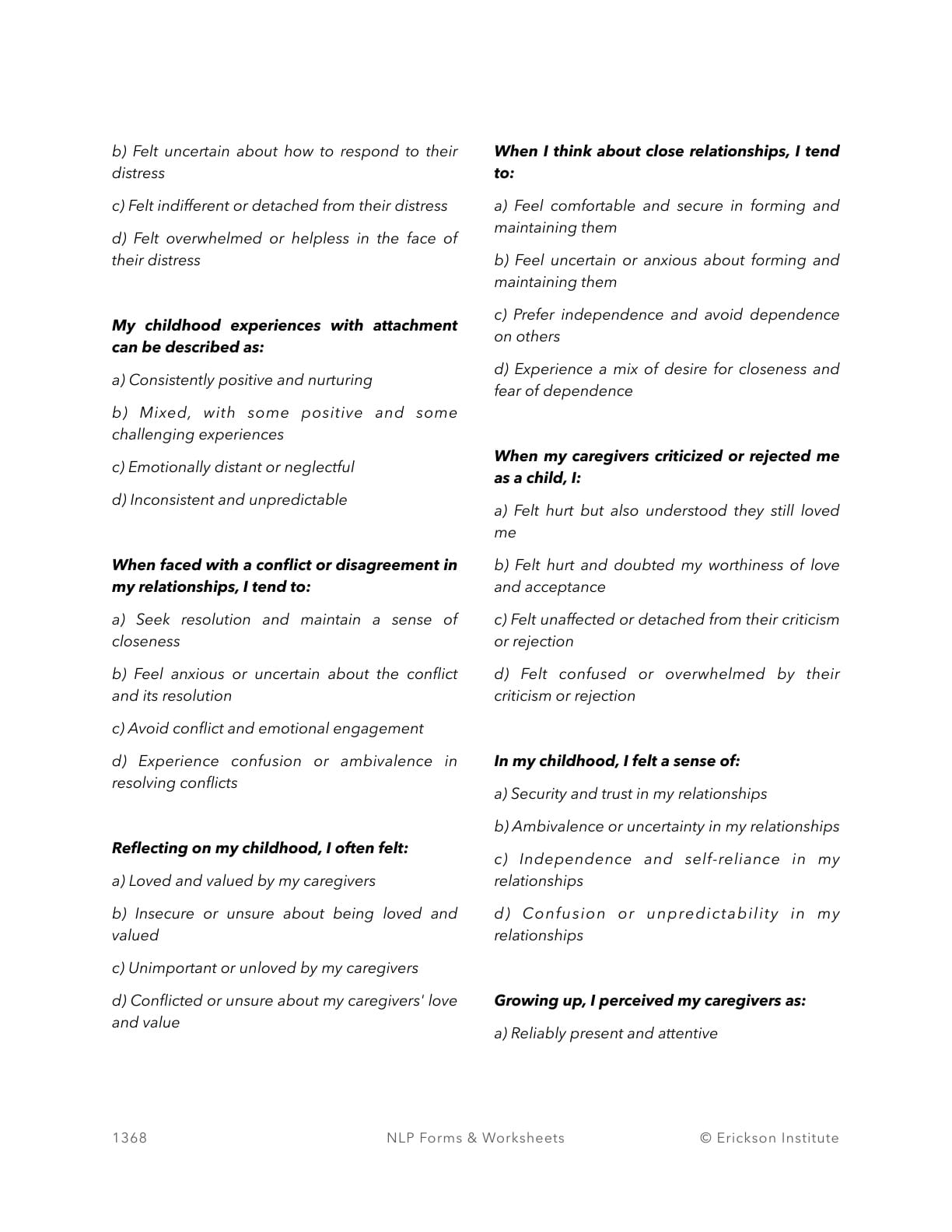
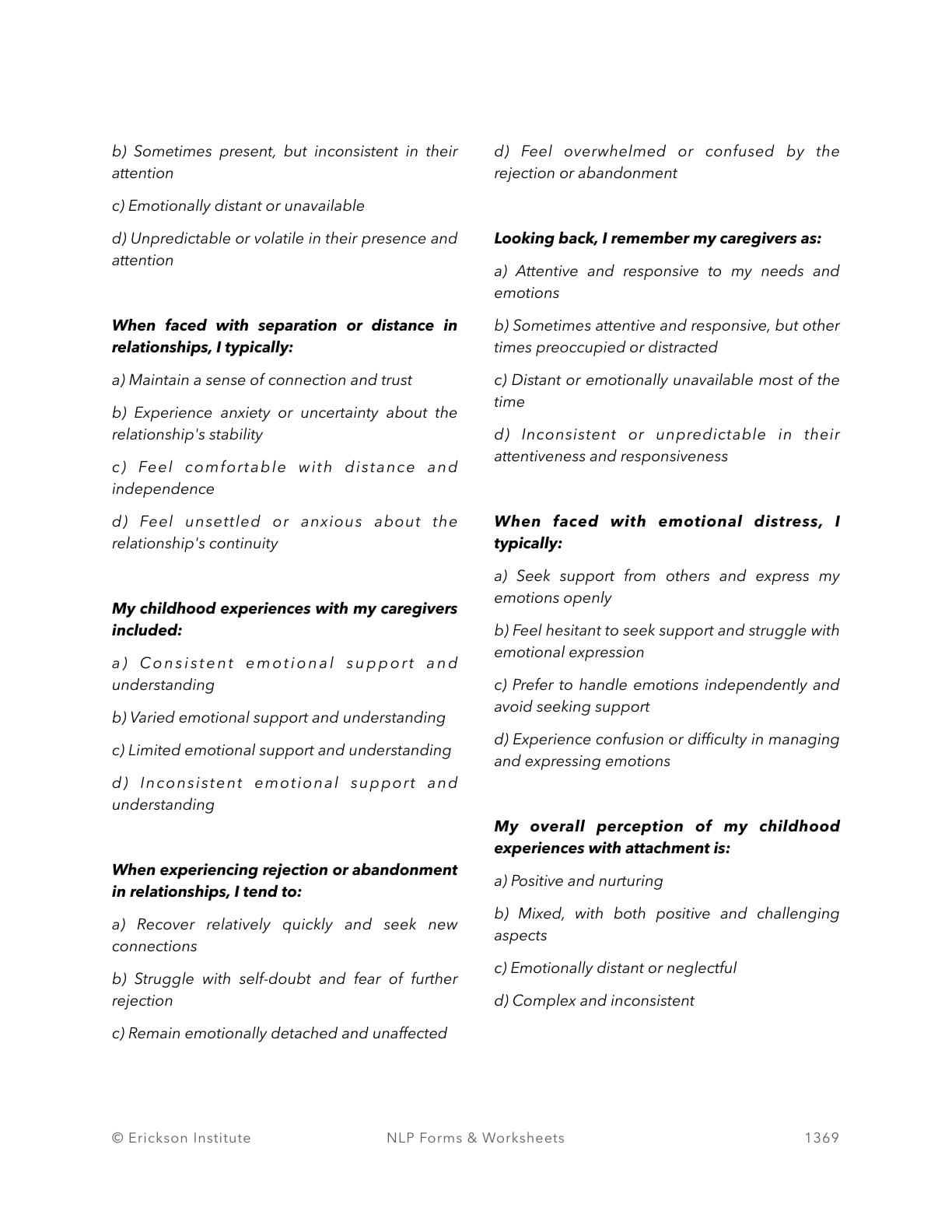

Source #
Access the full suite of 500 therapy and coaching templates. This worksheet features in my book, available on Amazon:
500 Practical NLP Forms, Templates & Worksheets: For Therapy, Coaching & Training