Instructions #
The process of effectively comprehending, expressing, and channeling the emotion of anger is referred to as “anger management,” which is a term used to describe the process.
It acknowledges that rage is a normal, ongoing, and unavoidable aspect of the human experience that cannot be eradicated entirely. Instead, the emphasis is placed on the acquisition of skills and methods that can be used in a productive manner to manage anger management.
As an emotion, anger serves as a signal or indicator that something is wrong or that certain boundaries have been crossed. This can be the case when certain limits have been violated.
It is an essential component of our range of emotional expression, and any attempt to stifle or eradicate it entirely would be unrealistic as well as potentially harmful to our health.
Instead, the purpose of anger management is to help people become more self-aware and gain mastery over their responses to anger. This gives people the ability to channel their anger into actions that are beneficial and productive.
When we accept the fact that we will experience anger on a regular basis, we are able to direct our focus on the impulsive ways in which we react to it.
When we experience these automatic responses, we have the opportunity to intervene and select more healthy ways of coping with the emotion that we are experiencing.
Clients can learn to identify triggers, challenge negative thought patterns, regulate physiological responses, and learn to express their anger in a way that is both assertive and effective through the use of anger management techniques.
Managing anger requires the development of a variety of coping skills, such as taking slow, deep breaths, practicing mindfulness, rethinking one’s perspective, coming up with creative solutions to problems, and learning effective communication methods.
These techniques give people the ability to navigate anger in a way that fosters personal development, strengthens relationships, and reduces the negative consequences that are frequently associated with losing control of their anger.
Worksheet #
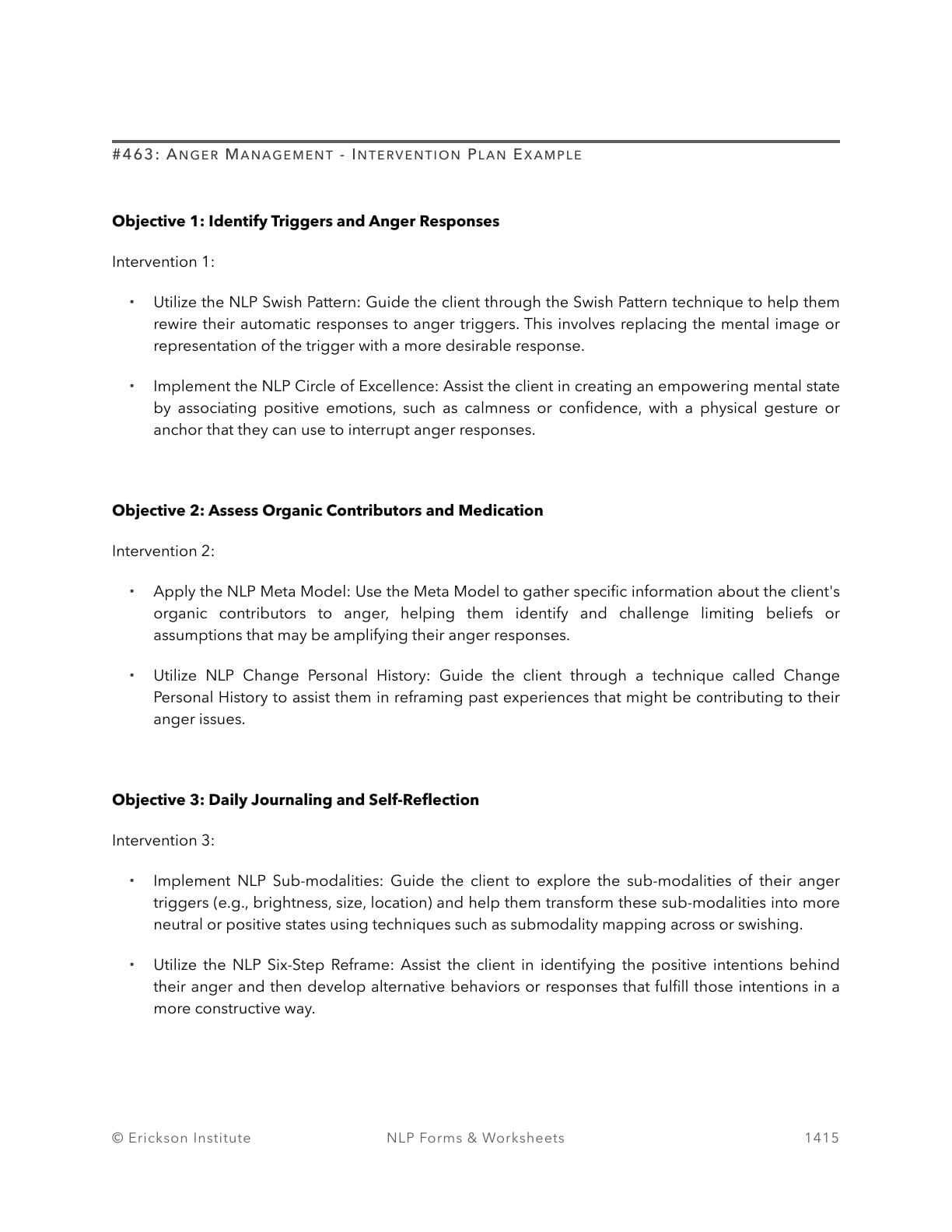
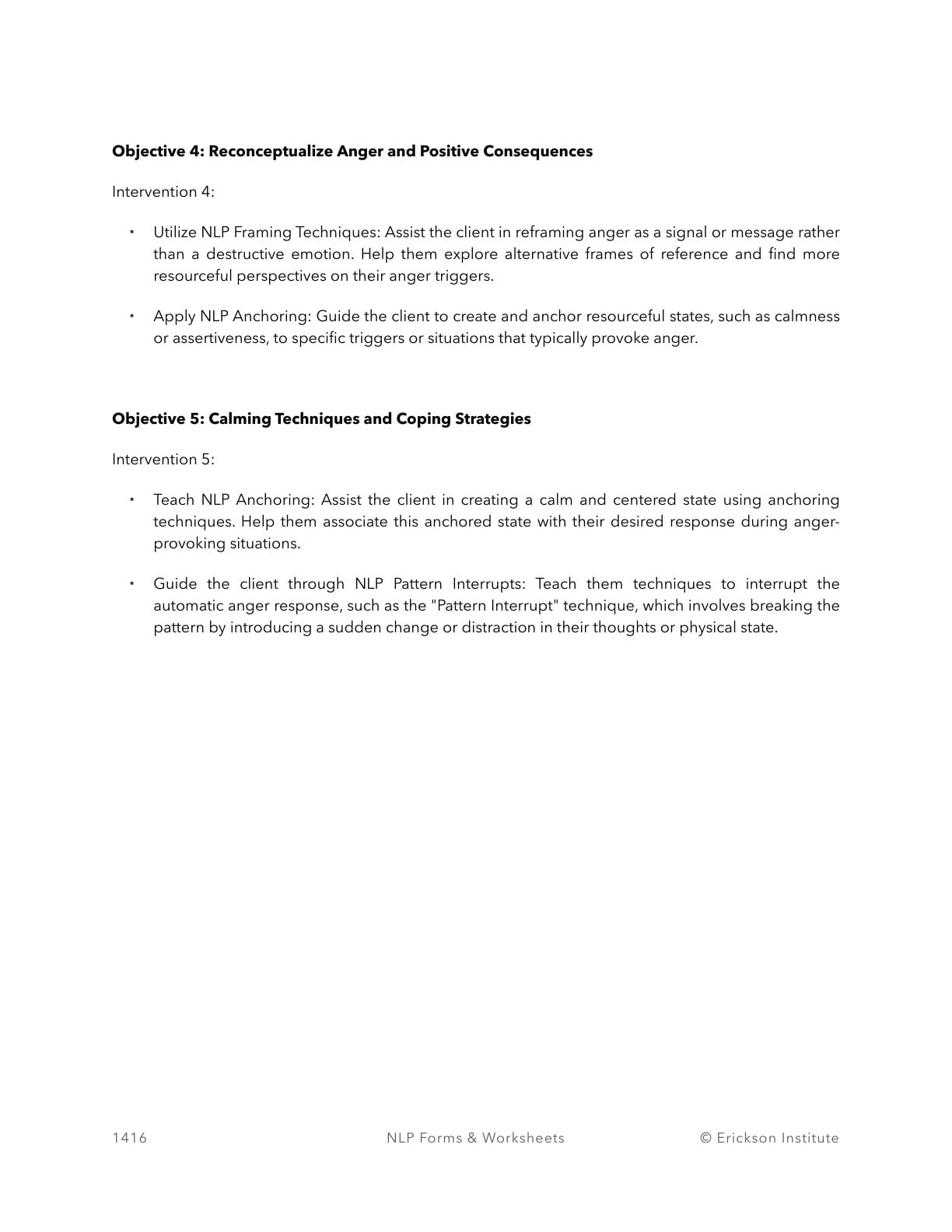
Source #
Access the full suite of 500 therapy and coaching templates. This worksheet features in my book, available on Amazon:
500 Practical NLP Forms, Templates & Worksheets: For Therapy, Coaching & Training