Instructions #
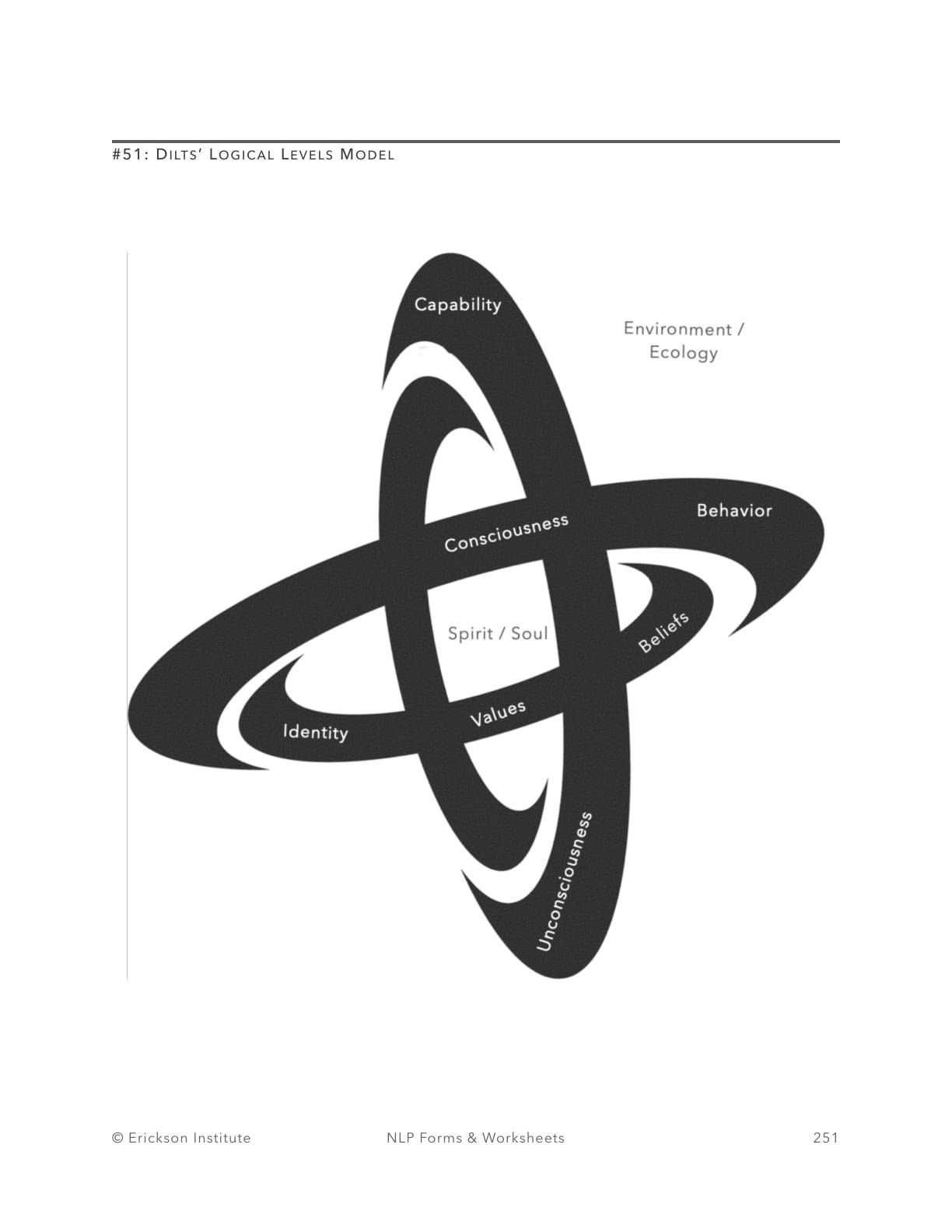
In neurolinguistic programming (NLP), Dilts’ logical levels concept provides a framework for understanding and effecting change in various aspects of our lives.
We can gain insights into how our environment, behavior, beliefs, values, and identity shape our experiences and outcomes by exploring the various levels. At the most fundamental level, there is the environment.
This includes the external factors that surround us, such as our physical surroundings, the people with whom we interact, and the events in our lives.
Because it establishes the context in which we operate, our environment has a significant impact on our behavior and experiences. We develop behaviors as we move up the hierarchy. This level refers to our specific actions and behavioral patterns.
It includes the visible actions and habits that we engage in within our surroundings. The context in which we find ourselves, as well as the feedback we receive from our actions, influence our behavior. We have the level of capabilities and skills above behavior.
This level denotes our knowledge, skills, and abilities to engage in specific behaviors. It encompasses our abilities and knowledge in various areas of life. Beliefs and values are one level higher.
Beliefs are our assumptions and interpretations of ourselves, others, and the world around us. They shape our perception and influence our decision-making. Our deeply held principles and ideals, on the other hand, guide our choices and actions.
Finally, we have identity at the highest level. Our sense of self, self-image, and core identity traits are all part of our identity. It represents the lowest level of the logical hierarchy and has an impact on all levels below it.
Worksheet #
Source #
Access the full suite of 500 therapy and coaching templates. This worksheet features in my book, available on Amazon:
500 Practical NLP Forms, Templates & Worksheets: For Therapy, Coaching & Training