Instructions #
The process outlined is designed to help clients address and resolve internal conflicts, also known as parts conflicts. These conflicts occur when different aspects or parts within a person have conflicting desires or perspectives.
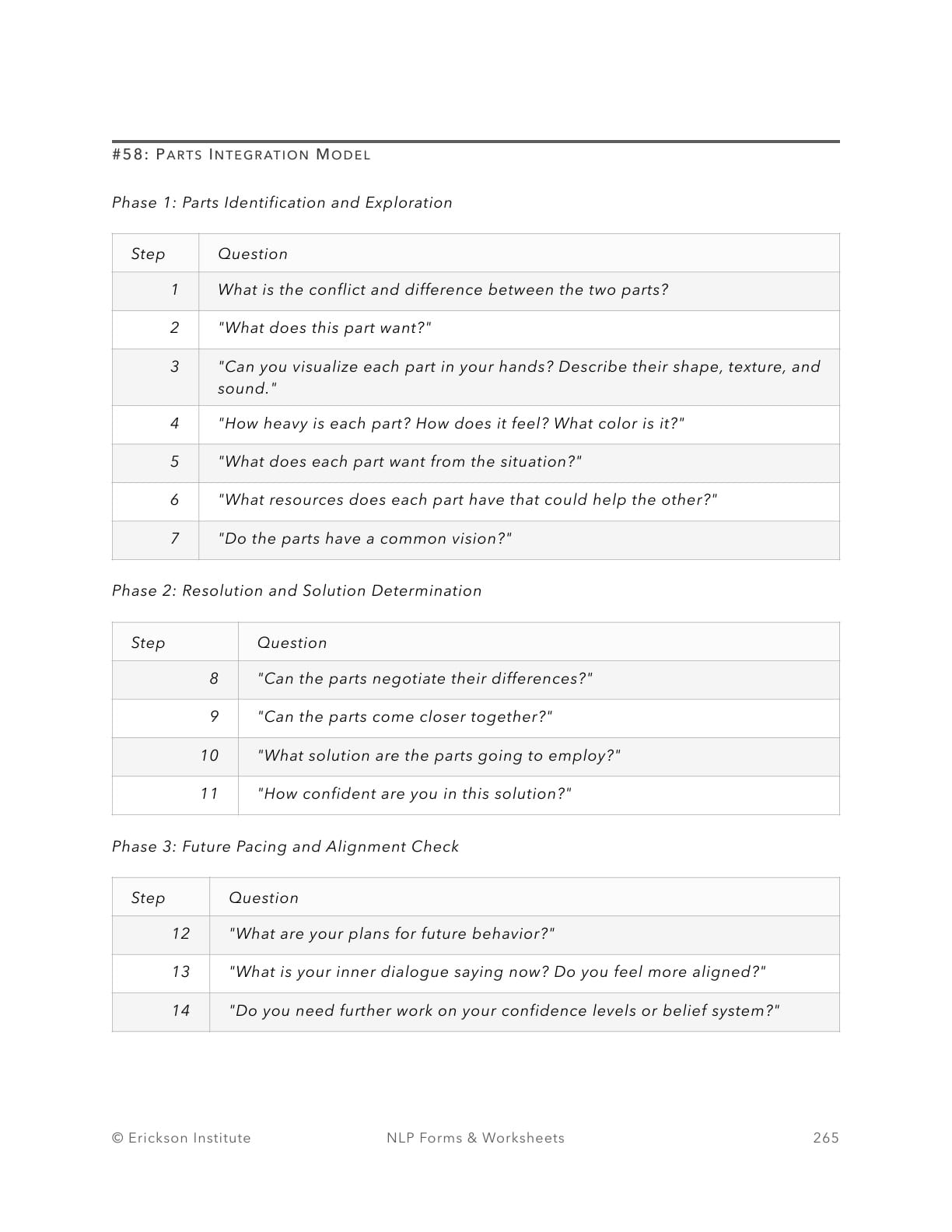
The first phase of the process involves identifying and exploring the conflicting parts. By asking questions, clients are encouraged to define the conflict and gain a clear understanding of the differences between the parts.
Visualizing each part and exploring their characteristics helps clients to dissociate from the situation and gain clarity on their internal dynamics. In the second phase, the focus shifts towards resolving the conflict.
The parts are encouraged to negotiate their differences and find common ground. This process involves exploring the resources each part possesses that could support the other part, as well as identifying any shared visions.
Once the parts have moved closer together and a potential solution emerges, clients are prompted to determine which solution they are going to employ. Confidence levels in the chosen solution are checked to ensure that clients feel comfortable moving forward.
In the final phase, known as future pacing, clients are encouraged to plan their future behavior based on the chosen solution.
They are then asked to listen to their inner dialogue to assess whether they feel more aligned and whether any remaining issues with confidence or belief systems need to be addressed.
Worksheet #
Source #
Access the full suite of 500 therapy and coaching templates. This worksheet features in my book, available on Amazon:
500 Practical NLP Forms, Templates & Worksheets: For Therapy, Coaching & Training