Instructions #
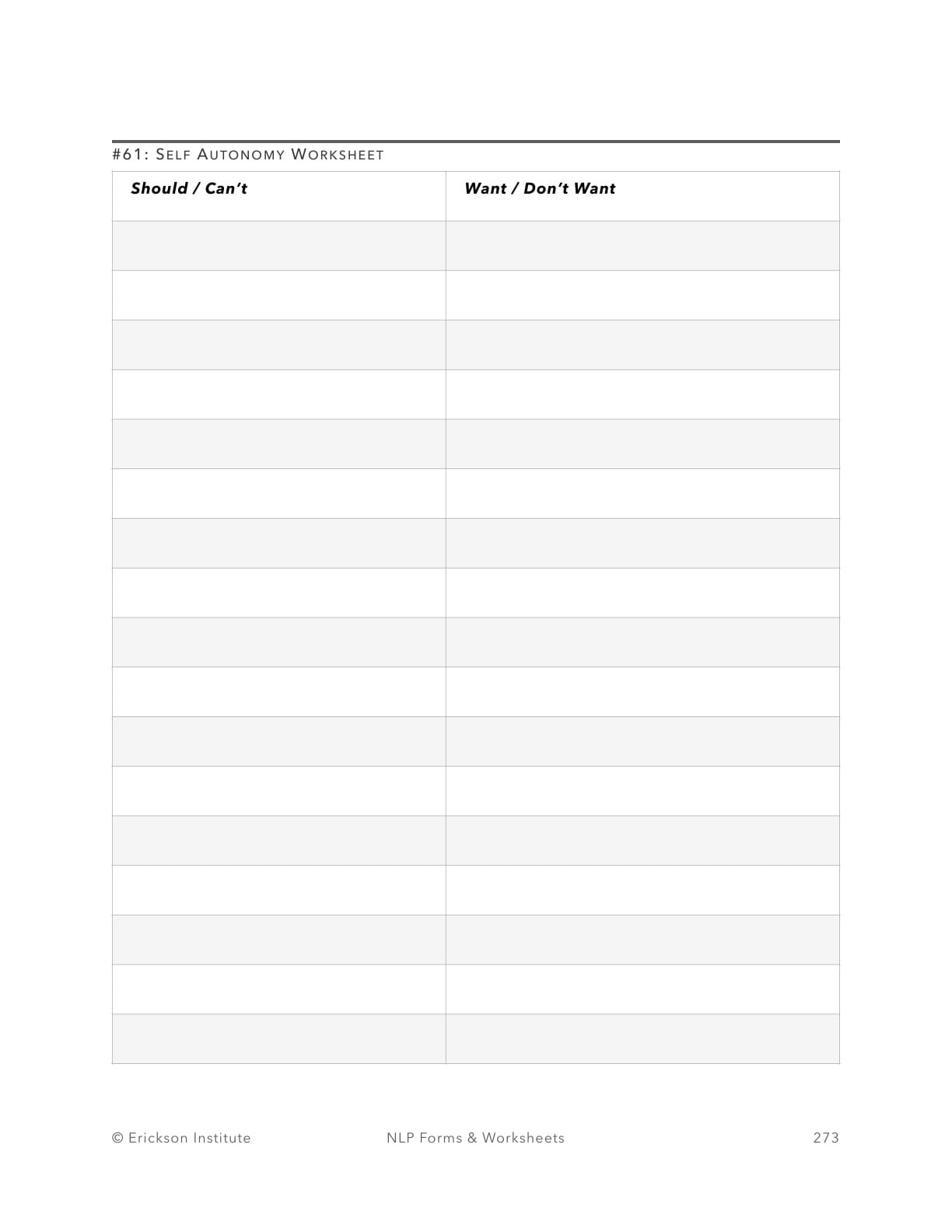
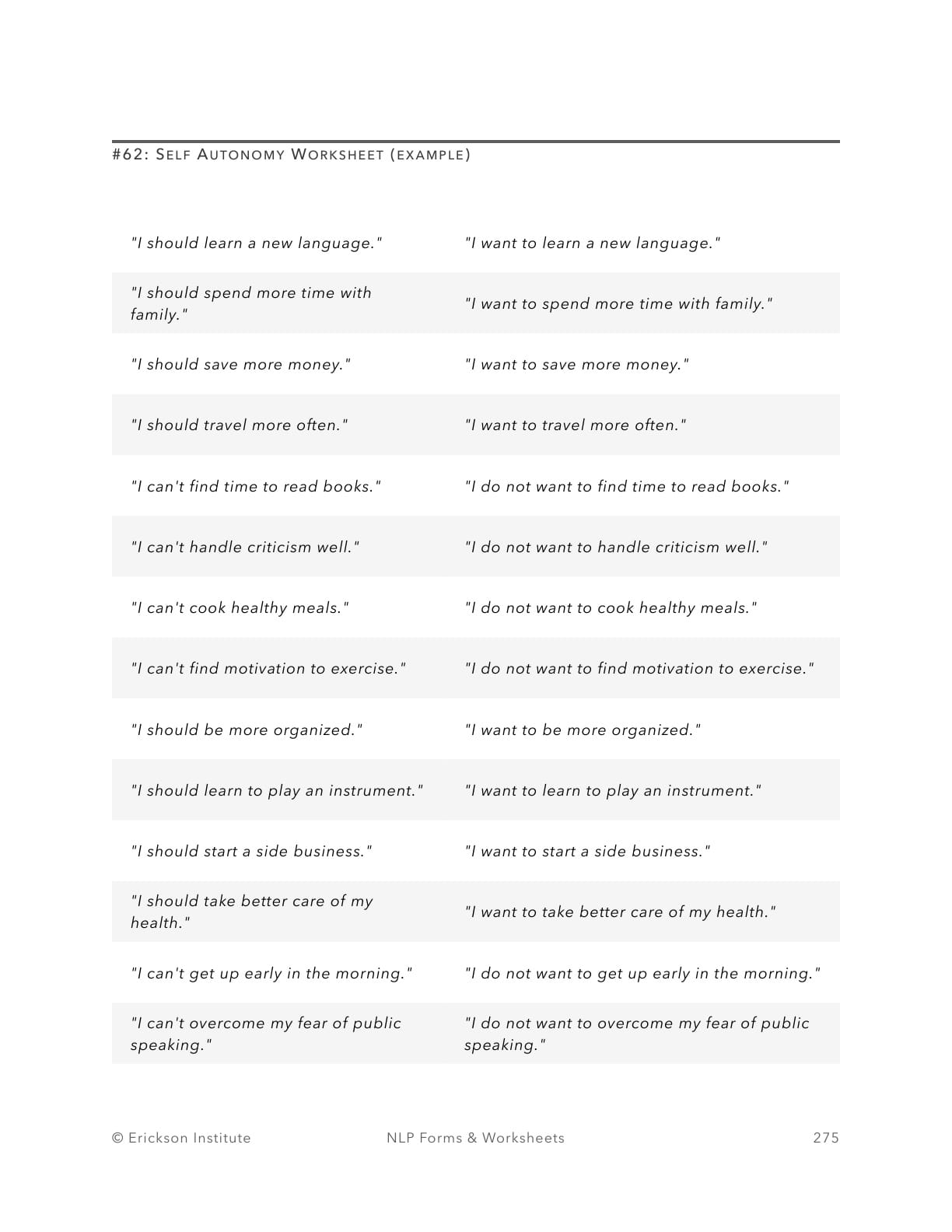
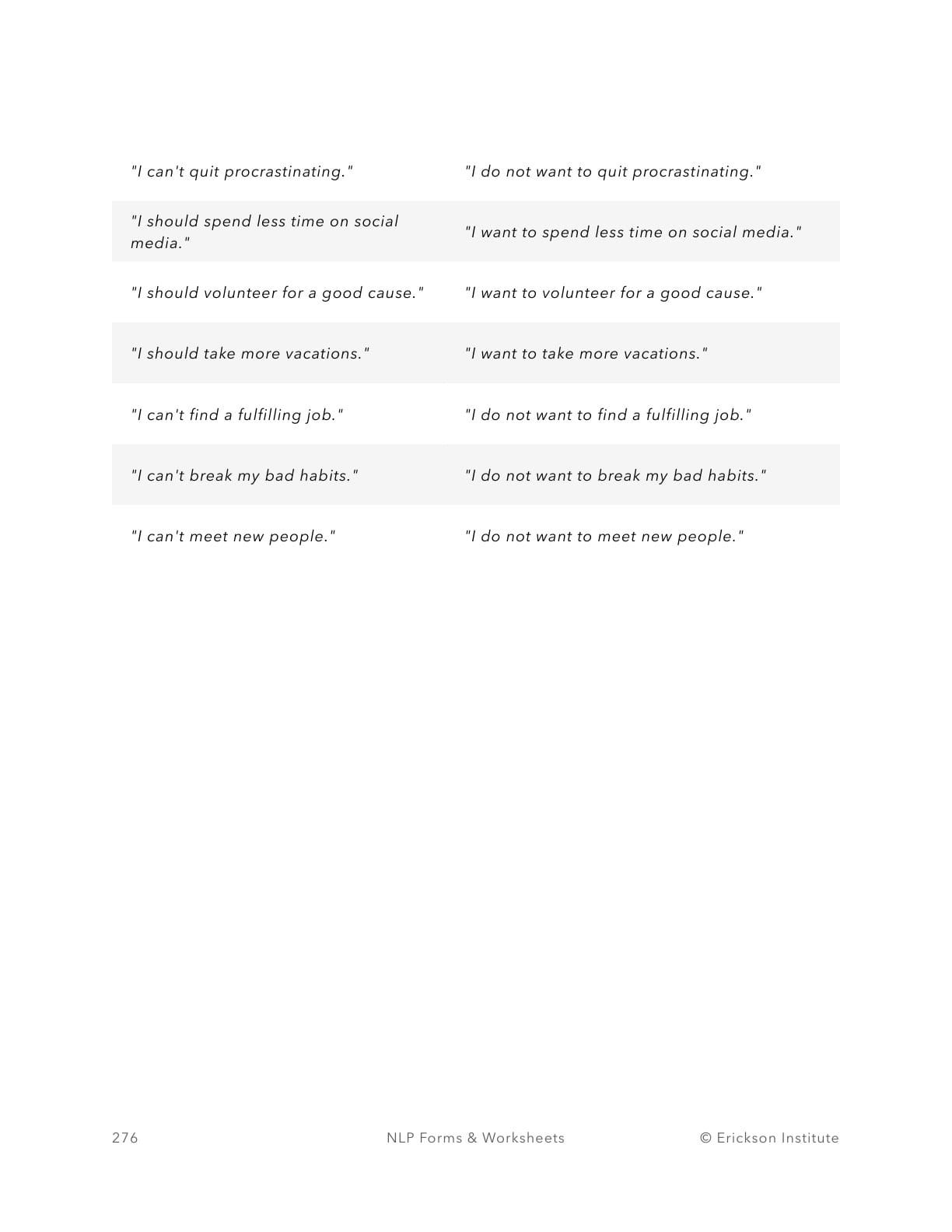
Shifting from “I should” to “I want” and from “I can’t” to “I don’t want” allows people to take control of their decisions and behaviors. By focusing on personal desires rather than external expectations, this approach alleviates unnecessary stress.
When people say “I want” rather than “I should,” they are expressing their autonomy and personal preferences. This shift frees them to make decisions based on their intrinsic motivation rather than external obligations.
Clients feel more empowered and in control of their actions when they recognize their own desires and aspirations. Similarly, replacing “I can’t” with “I do not want” helps people recognize that they have a choice in their behaviors.
It shifts the emphasis from constraints to personal preferences. Clients can make intentional decisions aligned with their values and priorities by acknowledging what they do not want.
This approach reduces stress by encouraging clients to own their behavioral choices, removing the burden of “shoulds,” and allowing clients to pursue what truly matters to them.
Furthermore, this mindset shift has the potential to transform procrastination into motivation because people are more likely to take action when they genuinely want to pursue their goals and aspirations.
Worksheet #
Source #
Access the full suite of 500 therapy and coaching templates. This worksheet features in my book, available on Amazon:
500 Practical NLP Forms, Templates & Worksheets: For Therapy, Coaching & Training