Instructions #
When clients face traumatic events or significant criticism during their formative years, they may develop dissociation as a way to cope with overwhelming emotions or to create distance from painful memories.
Dissociation involves a disconnection from aspects of one’s thoughts, feelings, or experiences, which can lead to a fragmented or dissociated sense of self.
These defense mechanisms, originating from past experiences, can shape how clients perceive and interact with the world around them. They become habitual patterns of behavior and ways of relating to oneself and others.
Over time, these defense mechanisms can hinder personal growth, hinder emotional well-being, and create a sense of disconnection from one’s authentic self.
Worksheet #
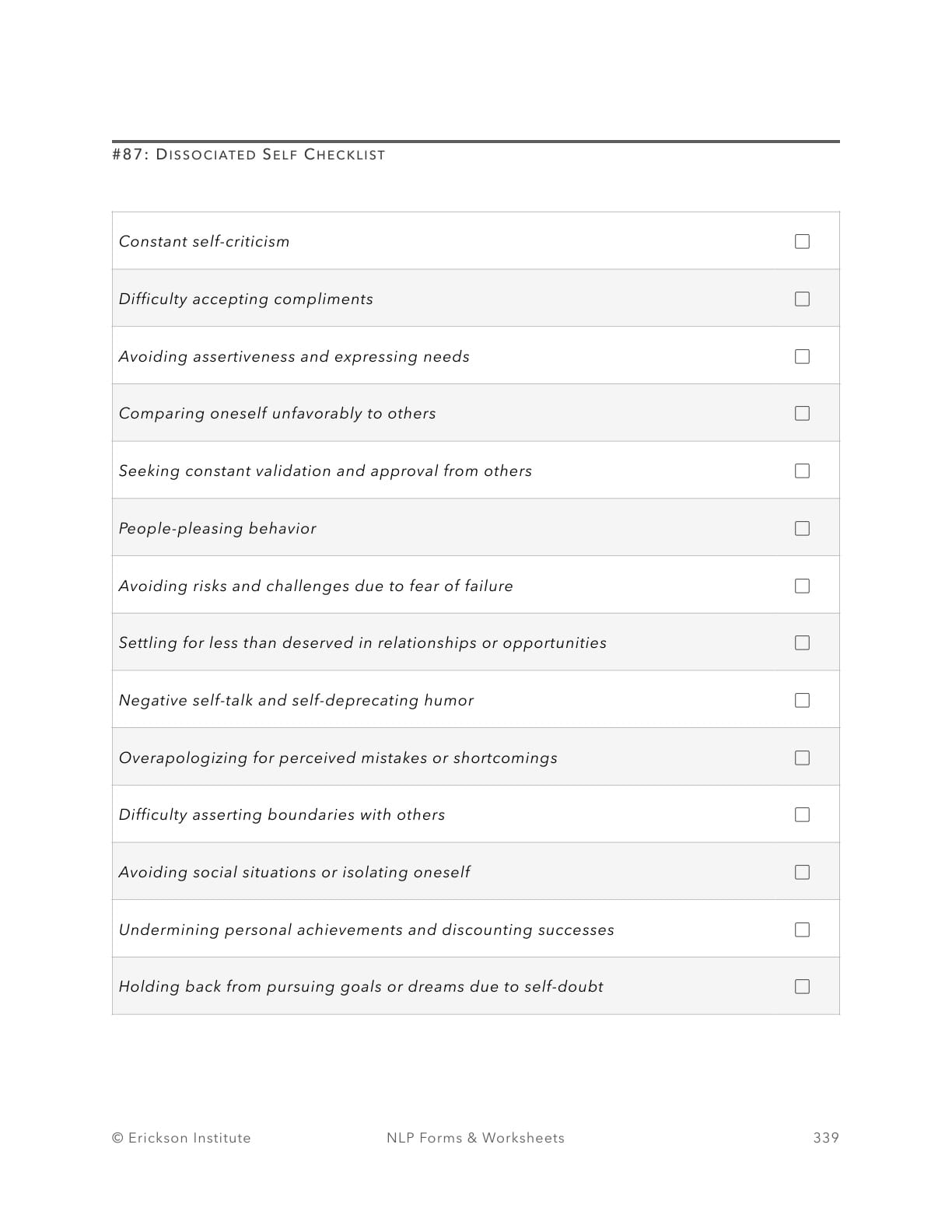
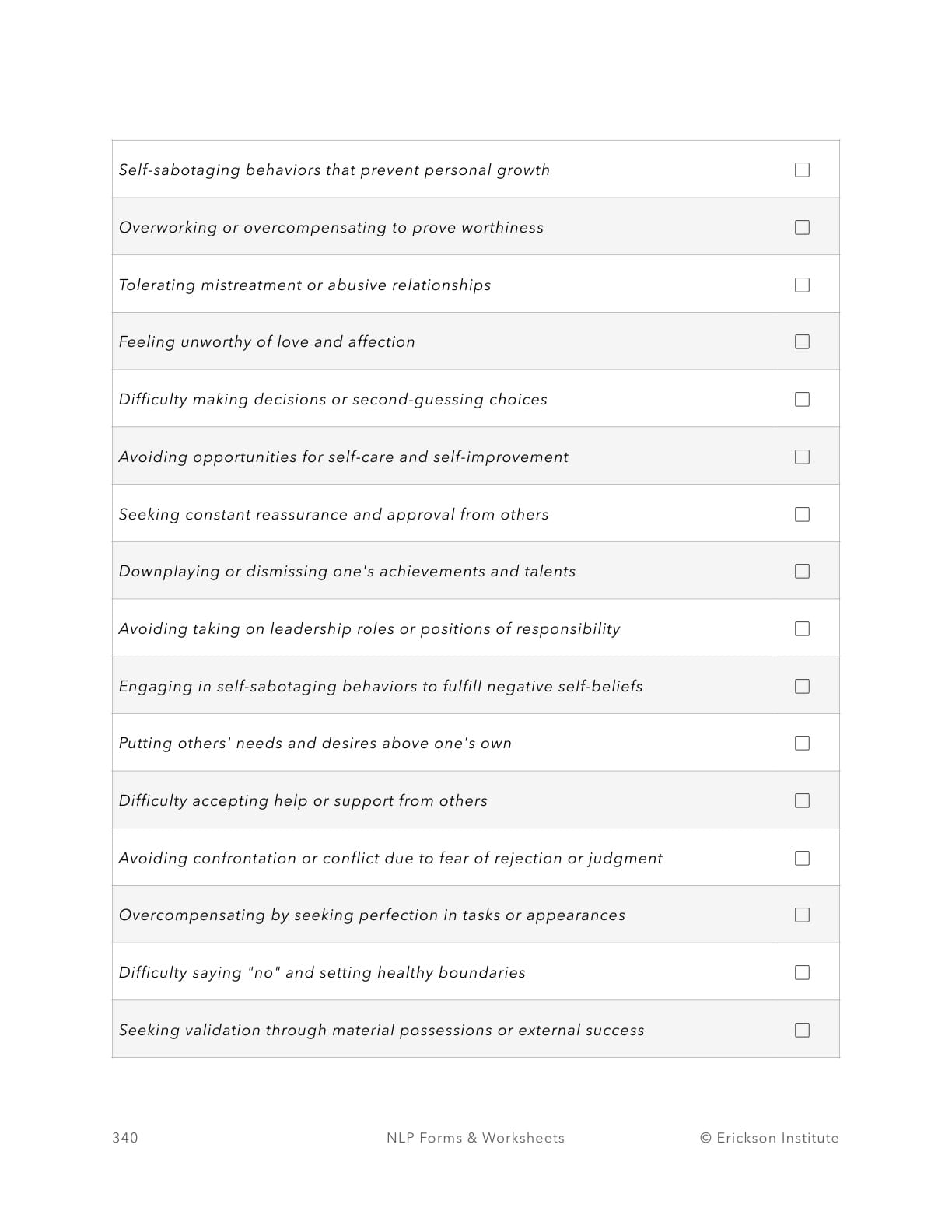
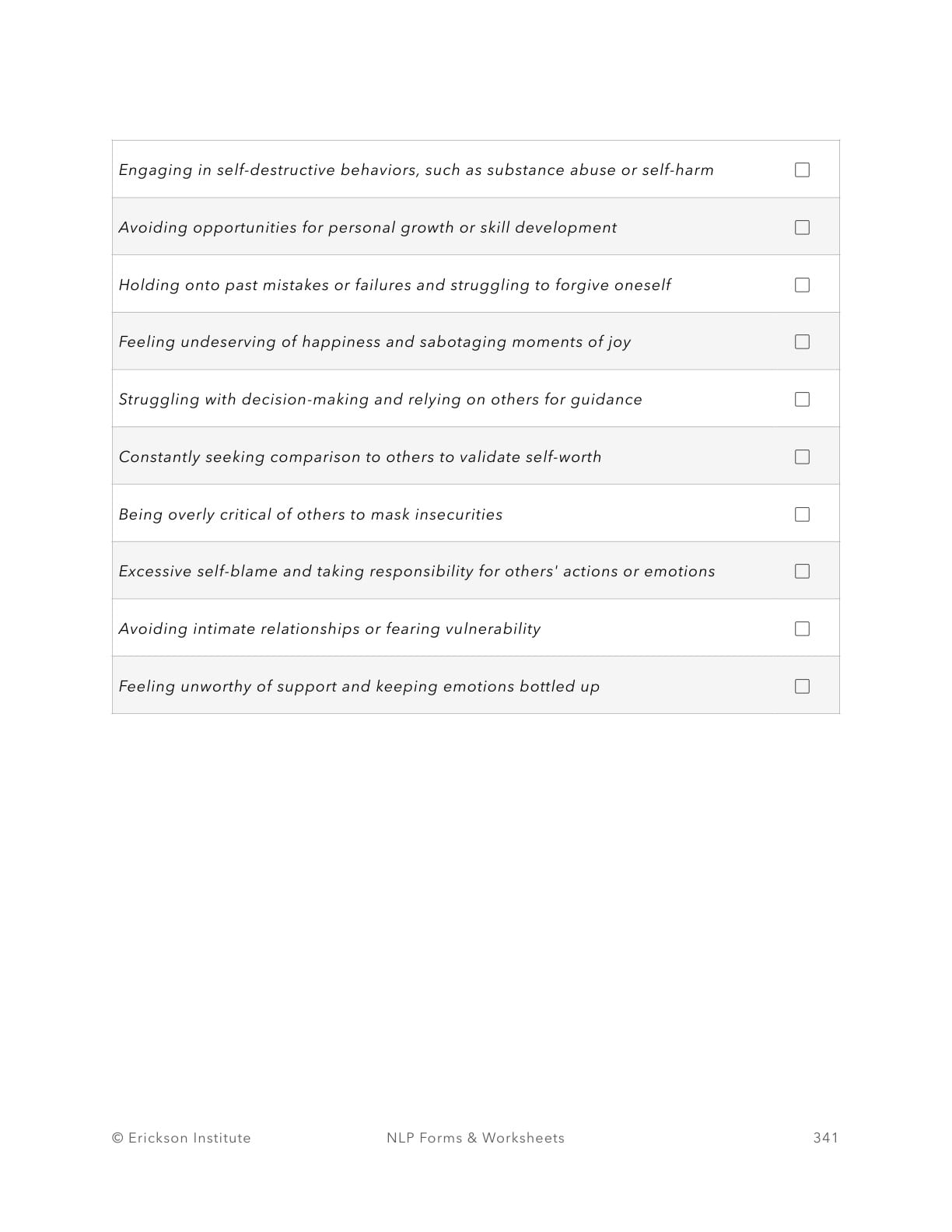
Source #
Access the full suite of 500 therapy and coaching templates. This worksheet features in my book, available on Amazon:
500 Practical NLP Forms, Templates & Worksheets: For Therapy, Coaching & Training